Small business owners and local contractors across Malaysia will now receive 300 litres of subsidised diesel each month through dedicated fleet cards, marking a significant policy adjustment to the government's targeted fuel subsidy rollout that commenced on July 1. The new arrangement addresses a critical shortfall in the original programme structure, which had primarily benefited two specific economic sectors while overlooking the needs of smaller operators running essential local services.
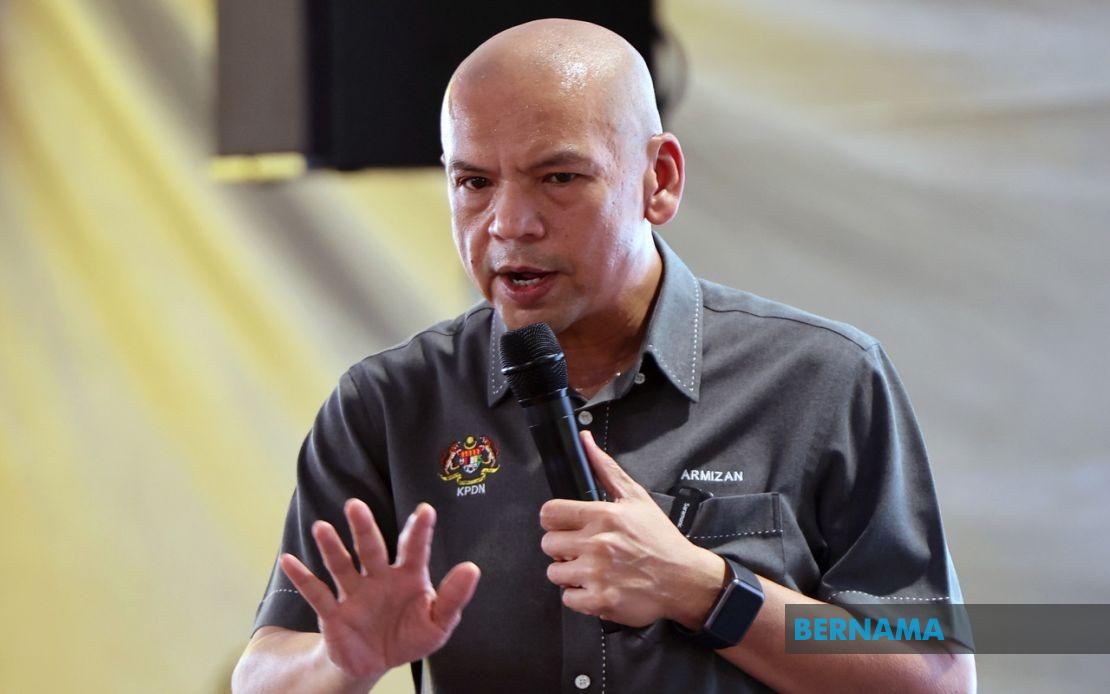
Domestic Trade and Cost of Living Minister Datuk Armizan Mohd Ali unveiled the measure during a visit to Kampung Sekalong in Menumbok, Sabah, explaining that this flexibility was designed to reduce financial strain on micro-entrepreneurs who operate registered business vehicles under partnership or sole proprietorship arrangements. The intervention came after the ministry identified that many small business owners faced considerable difficulties attempting to secure assistance through individual applications, leaving them disadvantaged as larger transport operators benefited from the subsidy programme.
The Subsidised Diesel Control System, which forms the backbone of the government's fuel price management strategy, originally concentrated support on two primary sectors: public transport operators and goods or consumer necessities transport providers. However, this two-pillar approach inadvertently excluded countless small businesses—from construction contractors to agricultural suppliers to rural delivery services—whose vehicles remained essential to local economies but fell outside the defined categories. Recognising this implementation gap, Armizan's ministry successfully lobbied the Federal Cabinet to approve the supplementary support mechanism specifically for these overlooked operators.
The fleet card distribution method represents a deliberate administrative choice, providing transparent tracking of fuel consumption while preventing diversion to ineligible users or black-market sales. Each registered small business entity will draw its monthly 300-litre allocation through the card system, allowing government agencies to monitor usage patterns and ensure genuine business application. This approach balances fiscal responsibility with practical support, offering meaningful relief without creating the sprawling bureaucracy that individual application systems might have generated.
Armizan emphasised that the government maintains flexibility regarding subsidy implementation in Sabah, Sarawak, and Labuan, stating that any policy modifications must navigate three critical considerations. The first priority remains shielding ordinary Malaysians from excessive cost pressures; the second involves rigorous vigilance against subsidy leakage to unintended recipients or illegal commerce; and the third factor encompasses the government's broader fiscal constraints and budget sustainability. These competing demands have shaped the current programme design and will continue guiding future refinements as officials gather operational experience and feedback from affected communities.
Strengthening delivery mechanisms in remote interior regions of East Malaysia represents a particular challenge that the government is addressing through mobilised state-level agencies. Rather than relying solely on federal infrastructure, the policy enlists local government bodies to manage registration processes and verify eligibility across dispersed communities where communication and transportation barriers might otherwise hinder participation. This devolution of responsibility recognises that state authorities possess better ground-level awareness of legitimate business operators and can more efficiently identify deserving beneficiaries in outlying settlements.
The subsidy programme's rollout across Sabah, Sarawak, and Labuan reflects the government's commitment to supporting rural and semi-urban economies in these geographically expansive states, where fuel costs represent a disproportionately significant operating expense. Small construction firms, agricultural suppliers, fishing-related businesses, and local transport operators in these regions depend heavily on diesel-powered vehicles, and elevated fuel prices can rapidly erode already-thin profit margins. The 300-litre monthly quota, while not unlimited, provides meaningful operational relief without creating unsustainable fiscal commitments.
Beyond the subsidy initiative, Armizan's ministry is simultaneously pursuing broader rural development through the MADANI Foster Village Programme, which aims to narrow the infrastructure gap separating urban and rural communities. During his Sabah visit, the minister allocated RM500,000 to Kampung Sekalong for five integrated projects designed to improve residents' quality of life and economic prospects. These initiatives include constructing a multi-purpose community hall, rehabilitating village road networks, building and repairing drainage infrastructure through culvert projects, installing solar-powered lighting systems, and creating a distinctive village landmark to enhance local identity and tourism appeal.
The Kampung Sekalong projects exemplify the government's integrated approach to rural revitalisation, combining immediate infrastructure improvements with longer-term community development. By coordinating fuel subsidy assistance for small businesses with simultaneous investment in essential services—roads, water systems, electricity, and gathering spaces—the ministry seeks to create enabling conditions for sustainable local economic activity. The completion timeline of two to three months demonstrates the administration's commitment to rapid implementation, moving beyond planning announcements toward tangible improvements visible to rural communities.
This represents the ministry's third MADANI Foster Village initiative, following earlier projects in Mukim Kaiduan, Papar in 2024 and Mukim Tikam Batu, Kedah in 2023. The programme's expansion signals the government's recognition that reducing urban-rural disparities requires sustained, systematic investment rather than sporadic interventions. Each village receives tailored infrastructure packages aligned with local needs, ensuring resources address genuine community priorities rather than following standardised templates.
For Malaysian small business operators across East Malaysia, the diesel subsidy programme combined with rural infrastructure development offers tangible relief from cost pressures that have accumulated as global energy prices remain elevated. The government's acknowledgment that original subsidy structures excluded legitimate micro-entrepreneurs suggests willingness to adapt policies when implementation reveals unintended omissions. As the programme settles into operational patterns, state-level agencies will gather crucial data regarding uptake, usage patterns, and effectiveness in supporting intended beneficiaries, information that should inform subsequent policy adjustments.
The broader significance extends beyond fuel subsidies, signalling an administrative shift toward recognising rural and small business economies as integral to Malaysia's development architecture rather than peripheral concerns. By explicitly designing support mechanisms for operators left behind by headline subsidy programmes, and by maintaining dialogue about implementation challenges, the government demonstrates responsiveness to frontline economic realities. Southeast Asian policymakers attempting to balance fiscal discipline with targeted support may find instructive lessons in Malaysia's iterative approach to subsidy delivery and rural investment coordination.

