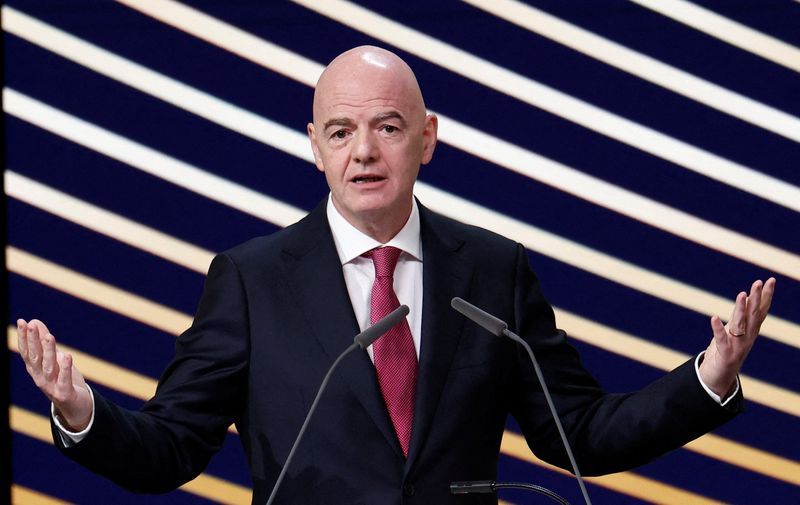
Gianni Infantino's path to retaining the FIFA presidency increasingly depends not on securing the backing of established football powers, but rather on maintaining the loyalty of smaller and emerging nations that have become reliant on the world governing body's financial support and institutional access. The Swiss official confronts the most serious challenge of his tenure following explicit withdrawal of confidence from UEFA and CONCACAF over his controversial proposal to introduce private equity investment into the World Cup structure, a move that has fractured the organisation's leadership and opened the door to his potential removal before the scheduled April election.
The political arithmetic at FIFA presents a striking contrast to traditional power dynamics in global sports governance. All 211 member associations possess identical voting rights regardless of their footballing prowess, economic resources, or historical significance, creating an unusual democratic landscape where nations like Bhutan and Vanuatu carry the same electoral weight as France, Germany, or Brazil. This structural equality, combined with Infantino's systematic distribution of development resources to football's poorest corners, has constructed a substantial coalition of support among countries that have benefited enormously from his decade-long tenure and the dramatic expansion of FIFA's financial commitments to national associations.
Wales became the first national federation to formally revoke its support for Infantino on Monday, while UEFA signalled its intention to pursue legal action against the FIFA president regarding the contentious private equity initiative. The European confederation, representing 55 nations, has already undertaken to boycott all FIFA tournaments should the stake sale proceed, and possesses the theoretical capacity to unilaterally trigger an Extraordinary Congress where Infantino's presidency could be subjected to a confidence vote. However, translating European muscle into a successful removal campaign presents formidable obstacles, since opponents would require signatures from at least 20 percent of FIFA's membership to formally request such an extraordinary session.
The financial incentive structure underpinning Infantino's political resilience deserves careful examination. Throughout the current World Cup cycle extending to 2026, member associations have been eligible to claim development grants of up to three million dollars, representing a substantial increase from the preceding allocation. For wealthy nations with established professional leagues, sophisticated infrastructure, and robust domestic television revenues, these funds constitute marginal additions to existing resources. For Vanuatu, Bhutan, and dozens of comparable nations across Asia, Africa, the Pacific, and the Caribbean, such grants represent transformative investments in their footballing infrastructure and their capacity to participate meaningfully in international competition.
Vanuatu exemplifies the profound impact of Infantino's patronage system. The island nation of approximately 340,000 people received a development grant of 4.15 million dollars from FIFA that enabled the construction of a 6,500-seat stadium in Port Vila, completed in 2022. Beyond infrastructure, the Vanuatu Football Association secured for its president a seat on FIFA's Executive Council as one of eight vice-presidents, providing unprecedented institutional access and global visibility for a nation that would otherwise command negligible influence in international sport. Brian Kaltak, Vanuatu's first professional footballer, articulated the perspective of many players from emerging footballing nations when observing that Infantino's leadership had fundamentally expanded opportunities for third-world countries to develop competitive programmes and participate in global tournaments.
The distribution of FIFA's financial largesse follows recognisable patterns across the developing world. Training facilities, gymnasium complexes, coaching education programmes, and tournament participation grants have proliferated throughout Asia, Africa, the Caribbean, and the Pacific under Infantino's administration. National associations in these regions lack the domestic revenue streams available to established football federations in Europe and South America and would struggle to finance equivalent infrastructure and programming without FIFA's direct support. This dependency relationship operates as a political stabiliser, creating powerful disincentives for smaller nations to join coalitions seeking to unseat an incumbent president who has demonstrated commitment to their development priorities.
Critics contend that this funding model perpetuates a problematic dynamic wherein FIFA leadership trades financial power for political acquiescence, effectively insulating incumbent administrators from accountability mechanisms that might operate in more evenly distributed power environments. The concentration of electoral leverage among nations with minimal alternative funding sources creates structural imbalances that complicate efforts to build consensus for institutional reform or leadership change. Infantino's strategy of distributing resources strategically across the football's periphery has constructed a coalition of member nations whose material interests align with his continued tenure, regardless of their abstract commitment to governance principles or their views on controversial proposals such as private equity involvement in the World Cup.
The timeline for potential removal proceedings introduces additional strategic considerations. An Extraordinary Congress must convene within three months of a formal request signed by representatives of at least 42 member associations. This compressed timeframe provides rival candidates limited opportunity to organise campaigns, raise resources, or construct competing coalitions across the global membership. Infantino's existing networks of support, cultivated through years of strategic investment in emerging football nations, would operate at considerable advantage relative to hastily assembled opposition movements attempting to coordinate across diverse continents and football cultures.
UEFA's theoretical capacity to unilaterally trigger an Extraordinary Congress through unanimous support from its 55 members does not automatically translate into victory in a subsequent confidence vote. European federations would require substantial support from African, Asian, and Pacific confederation members to achieve the majority necessary to remove the incumbent president. Building such a coalition would demand either compelling alternative candidates capable of matching Infantino's resource commitments or construction of a more principled consensus around institutional governance that transcends narrow financial interests. The difficulty of achieving either objective underscores the central political reality: Infantino's survival calculus extends far beyond Europe's traditional football establishment.
The unfolding crisis reveals fundamental tensions within FIFA's institutional architecture and the extent to which resource distribution shapes political outcomes in international sports governance. Infantino's approach of channelling development funding to nations with minimal alternative sources has operated simultaneously as enlightened football policy and as sophisticated political capital accumulation. Smaller nations benefit materially from expanded investment in their football infrastructure and competitive participation, while the FIFA president consolidates electoral support that provides durable protection against challenges emanating from football's established centres. For emerging footballing nations throughout Asia, Africa, and the Pacific, the calculation remains straightforward: Infantino has delivered tangible benefits and expanded their influence within FIFA's institutional structures, providing rational grounds for maintaining support irrespective of controversies surrounding his governance style or specific proposals.
The resolution of this political crisis will likely demonstrate whether traditional football powers can overcome the electoral mathematics embedded in FIFA's democratic structure. European confederations may pursue legal strategies targeting the private equity proposal directly, attempting to prevent implementation regardless of Infantino's electoral fate. Alternatively, UEFA and its allies might accept that removing Infantino requires either identifying a successor capable of sustaining comparable development commitments to emerging nations or constructing a coalition united by governance principles rather than material interests. The complexity of these calculations explains why Infantino's tenure, despite facing unprecedented institutional opposition, remains substantially more secure than headlines suggesting crisis might initially imply.

