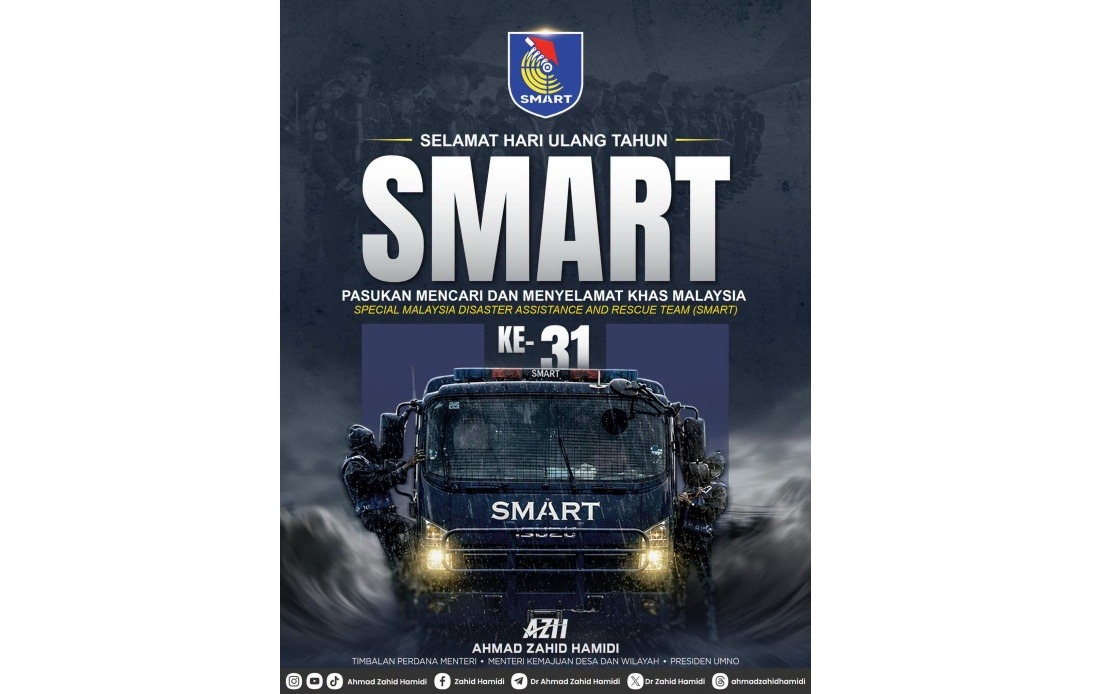
Malaysia's premier disaster response unit, the Special Malaysia Disaster Assistance and Rescue Team (SMART), is moving to secure recertification as a Heavy Urban Search and Rescue (Heavy USAR) team under the stringent standards of the International Search and Rescue Advisory Group (INSARAG). The recertification effort, announced by Deputy Prime Minister Datuk Seri Dr Ahmad Zahid Hamidi, underscores the nation's commitment to maintaining its position as one of the world's foremost humanitarian disaster relief organisations and reflects broader ambitions to enhance Malaysia's standing in international emergency management circles.
The importance of this recertification process extends beyond mere bureaucratic formality. INSARAG's External Reclassification (IER) process serves as the gold standard for validating rescue team capabilities globally, requiring teams to meet rigorous operational, technical and logistical benchmarks. For Malaysia, retaining this designation carries significant strategic value, signalling to the international community that the nation possesses world-class disaster response capacity and can be relied upon as a partner during regional crises. Such recognition also enhances Malaysia's soft power credentials, positioning it as a responsible global citizen committed to humanitarian principles and mutual assistance during emergencies.
SMART's journey to elite status began with tragedy. The catastrophic collapse of the Highland Towers condominium in December 1993 exposed critical gaps in Malaysia's ability to respond to large-scale urban disasters. That disaster claimed 48 lives and revealed the vulnerability of urban centres to structural failures. The subsequent establishment of SMART on August 1, 1995, represented a decisive government response to that tragedy, transforming national vulnerability into institutional strength. For nearly three decades, the team has evolved from a domestic response capability into an internationally deployable asset that reflects Malaysia's technical sophistication and human resource quality.
The numerical achievements underscore SMART's exceptional standing. When the team first achieved Heavy USAR certification in 2016, it became only the 46th team worldwide to attain this elite classification. Within the Asia-Pacific region, SMART ranked eighth among all Heavy USAR teams, while in Southeast Asia it held the second position—a remarkable achievement for a nation whose rescue infrastructure was largely improvised just two decades earlier. These rankings demonstrate that Malaysia has not merely established a functional rescue organisation but has built something that competes directly with the most developed nations' disaster response capabilities.
Deputy Prime Minister Ahmad Zahid Hamidi's public endorsement reflects the political significance attached to SMART's recertification bid. As Chairman of the National Disaster Management Committee, his backing provides institutional weight and underscores that the government views disaster preparedness as a priority area. His reference to SMART's efficiency, discipline and teamwork speaks to qualities that transcend technical competence—they reflect organisational culture and human factors that enable teams to function effectively under extreme stress. These intangible dimensions often prove decisive in determining whether rescue missions succeed or fail when seconds matter and lives hang in balance.
The humanitarian dimension of SMART's work extends beyond Malaysia's borders. The team operates under the call sign MAS-1 in international deployments and has participated in disaster relief operations across Southeast Asia and beyond. This international engagement serves multiple purposes: it provides practical experience in managing large-scale emergencies, it builds relationships with disaster management agencies in neighbouring countries, and it positions Malaysia as a reliable partner in regional security cooperation. In an era of increasing climate-related disasters, such capabilities become increasingly valuable to all nations in the region.
Recertification requirements demand sustained institutional investment. Maintaining Heavy USAR status requires continuous training, equipment modernisation, recruitment of skilled personnel and investment in specialised infrastructure. The team must demonstrate proficiency across multiple domains including structural engineering assessment, confined space rescue, hazard awareness and victim extraction under challenging conditions. These capabilities cannot be maintained through occasional refresher courses; they require sustained institutional commitment and adequate funding allocation. The fact that SMART pursues recertification indicates that Malaysia's government continues to prioritise this investment despite competing budgetary pressures.
The recognition also carries implications for Malaysian regional diplomacy. In Southeast Asia, disaster response cooperation has become increasingly important as climate change intensifies weather-related emergencies. Thailand's devastating floods, the Philippines' typhoons and Indonesia's earthquakes regularly demonstrate the region's vulnerability to natural disasters. Nations with certified Heavy USAR capacity become natural partners in coordinated regional response efforts. SMART's certification strengthens Malaysia's ability to lead or participate meaningfully in multilateral disaster management initiatives, potentially enhancing its diplomatic influence in ASEAN forums.
Personnel considerations remain central to SMART's success. The Deputy Prime Minister's emphasis on acknowledging the courage, determination and sacrifice of team members reflects understanding that elite rescue organisations are ultimately human enterprises. SMART personnel routinely place themselves in dangerous situations—entering collapsed structures, navigating hazardous environments and working extended hours under psychological stress—to save others. This demands not just technical training but psychological resilience and sustained commitment. Retaining certification validates that Malaysia continues attracting and developing personnel capable of meeting these extraordinary demands.
The recertification process itself provides valuable benchmarking opportunities. External assessment by INSARAG evaluators offers independent evaluation of SMART's capabilities and identifies areas requiring improvement or investment. This external validation process is far more valuable than internal assessments alone, as it brings international expertise and comparative standards based on experience with dozens of rescue teams globally. The evaluation process therefore functions as both accountability mechanism and capacity-building exercise.
Looking forward, SMART's recertification bid reflects Malaysia's maturation as a nation capable of managing complex modern challenges. Three decades have passed since the Highland Towers tragedy forced Malaysia to confront its unpreparedness. The establishment and development of SMART represents institutional learning from that crisis. Today's pursuit of recertification demonstrates sustained commitment to excellence rather than temporary response to emergency. This reflects broader governmental and societal evolution toward treating disaster preparedness as ongoing responsibility rather than reactive afterthought.

