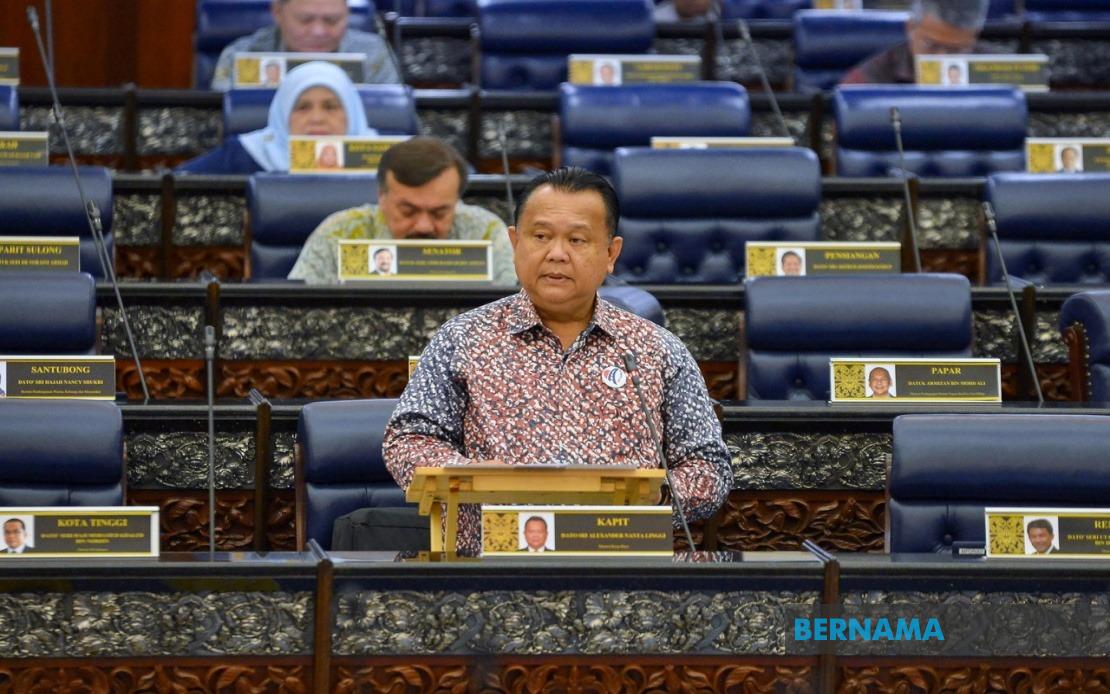
The government's Smart Lane initiative, operational across designated sections of the North-South Expressway since 2023, continues to demonstrate measurable success in alleviating traffic bottlenecks during peak periods and major holidays. Works Minister Datuk Seri Alexander Nanta Linggi revealed in a parliamentary question-and-answer session that the scheme has produced congestion reductions ranging from 30 to 50 per cent, based on comprehensive monitoring data compiled by the Malaysian Highway Authority (LLM). The initiative represents a novel approach to flexible lane management, allowing authorities to dynamically allocate road space according to real-time traffic demand rather than maintaining fixed lane designations.
The effectiveness of Smart Lane becomes particularly pronounced during traditionally congested periods when road networks experience heightened pressure from commuter and holiday travellers. Nanta's disclosure addressed concerns raised by Zakri Hassan, the Member of Parliament for Kangar representing Perikatan Nasional, who questioned whether the initiative adequately safeguarded motorcyclists and ensured passenger comfort during implementation. The minister's response emphasized that rigorous safety assessment mechanisms operate continuously across Smart Lane zones, with technical evaluations designed to protect all road users regardless of vehicle type. This dual focus on efficiency and safety reflects broader government efforts to modernize expressway management while maintaining public confidence in new traffic technologies.
Accident statistics paint a particularly favourable picture regarding Smart Lane safety performance. Between January and May of this year, only 36 accident incidents occurred across 12 Smart Lane deployment locations during weekday operations, a notably low figure relative to the substantial traffic volumes passing through these corridors. Remarkably, motorcyclists—the demographic group initially raising safety concerns—experienced fewer accidents on Smart Lane sections compared to conventional highway stretches. Nanta attributed this counterintuitive outcome to behavioural modifications among riders, who exercise heightened caution when navigating shared lanes alongside four-wheeled vehicles. The data suggests that the mere presence of mixed-vehicle configurations encourages more defensive riding practices, potentially reducing collision risks despite the apparent complexity of dynamic lane sharing.
A detailed analysis of accident causation within Smart Lane zones reveals that human factors, rather than infrastructure deficiencies, constitute the primary accident drivers. Users consistently fail to adhere to established safety protocols, including improper use of emergency lanes before or after designated Smart Lane stretches, execution of dangerous lane transitions, and unauthorized vehicle stops within active traffic flow. These findings indicate that technological infrastructure itself functions effectively when operators comply with prescribed procedures. The accident pattern underscores the necessity for sustained public education campaigns that reinforce proper Smart Lane navigation techniques, particularly for first-time users unfamiliar with dynamic lane management systems. Government agencies face an ongoing challenge in translating technical safety features into widespread behavioural compliance among the diverse motoring public.
Regulatory frameworks governing Smart Lane operations incorporate multiple layers of safety oversight to address emerging risks and sustain long-term operational integrity. The LLM has mandated that highway concessionaires engage independent road safety auditors to execute comprehensive stage 5 road safety audits on five-year cycles. These periodic evaluations extend beyond simple accident tallying to encompass holistic safety assessment across Smart Lane implementation domains. Audit scopes deliberately transcend exclusive focus on motorcyclists, recognizing that comprehensive safety enhancement requires examination of all user categories and operational variables. The audit findings subsequently drive targeted improvement initiatives designed to systematically reduce accident probability and enhance overall system reliability. This structured approach to continuous assessment reflects international best practices in highway safety management and demonstrates governmental commitment to evidence-based policy refinement.
Technological advancement constitutes another pillar supporting Smart Lane optimization efforts. The Malaysian Highway Authority and relevant concessionaire organizations are progressively expanding closed-circuit television (CCTV) infrastructure incorporating sophisticated artificial intelligence capabilities. These enhanced camera systems operate beyond traditional human monitoring, leveraging AI algorithms to detect real-time traffic density patterns with unprecedented accuracy and responsiveness. Intelligent traffic density detection enables automated system adjustments that optimize lane allocations in response to immediate conditions rather than predetermined schedules. The integration of AI-driven analytics promises enhanced traffic flow coordination, potentially unlocking additional congestion reduction opportunities beyond currently documented performance metrics. This technology upgrade pathway positions Malaysia's expressway network among regionally advanced systems, particularly relevant as Southeast Asian nations increasingly compete to provide superior transportation infrastructure attracting regional commerce and investment.
The Smart Lane initiative holds particular significance for Malaysian motorists navigating frequently congested corridors during festive seasons and weekend periods. For many commuters, the North-South Expressway represents the primary high-speed link connecting Malaysia's major urban centres, making congestion reduction tangible improvements to quality of life. Traditional fixed-lane configurations prove inflexible when traffic flow patterns shift dramatically, such as during Eid holidays when directional imbalances create severe bottlenecks in one direction while underutilizing capacity in the opposite direction. Smart Lane's dynamic approach theoretically addresses this inefficiency by reallocating capacity to match demand fluctuations. The 30-50 per cent congestion reduction translates to substantial time savings for millions of travellers annually, with downstream economic benefits accruing through reduced fuel consumption, lower transportation costs, and improved commercial logistics efficiency.
For motorcyclists specifically, the Smart Lane initiative presents a nuanced safety proposition requiring careful public understanding. While accident statistics demonstrate that motorcyclists experience fewer collisions on Smart Lane sections compared to conventional routes, this outcome depends critically on rider behaviour and compliance with safety protocols. The apparent safety advantage could rapidly deteriorate if motorists become complacent or if public awareness campaigns fail to reinforce proper technique. Education initiatives must explicitly address the psychological factors influencing rider decision-making, acknowledging that motorcyclists in mixed-vehicle environments cannot rely solely on vehicle size or protective barriers. Instead, successful Smart Lane participation for two-wheeled vehicles demands enhanced situational awareness and disciplined adherence to lane discipline rules. Regional transportation authorities, particularly in Southeast Asia where motorcycles comprise substantial traffic populations, observe Malaysia's Smart Lane experience as a potential model for their own congestion mitigation strategies.
Expansion prospects for Smart Lane technology across additional expressway sections remain under active consideration as early deployment results accumulate. The demonstrated congestion reduction metrics and manageable safety profile provide compelling justification for broader implementation, potentially transforming how Malaysia manages traffic flow across its extensive toll highway network. Successful expansion would require proportionate investment in AI-equipped monitoring systems, independent safety audit capacity, and public education infrastructure. The government's commitment to continuous technological upgrading and structured safety assessment suggests that expansion decisions will reflect evidence-based analysis rather than purely political considerations. International recognition of Malaysia's Smart Lane initiative could enhance the nation's positioning as a regional transportation technology leader, potentially generating export opportunities for Malaysian expertise and systems in neighbouring countries facing similar congestion challenges.
Looking forward, the sustainability of Smart Lane benefits depends fundamentally on maintaining public compliance with operating protocols and sustaining technological infrastructure investment. While initial results prove encouraging, potential complacency among authorities or erosion of public safety discipline could undermine gains achieved since 2023. Continuous data analysis, periodic technology upgrades, and adaptive regulatory refinement will determine whether Smart Lane represents a lasting solution to Malaysia's expressway congestion or merely a temporary expedient. The initiative's success ultimately reflects not technological sophistication alone, but rather successful integration of engineering, regulation, and public behaviour management. As Malaysia continues urbanizing and vehicle ownership expands, innovative traffic management approaches like Smart Lane become increasingly indispensable for maintaining economic competitiveness and quality of life in major urban corridors.

