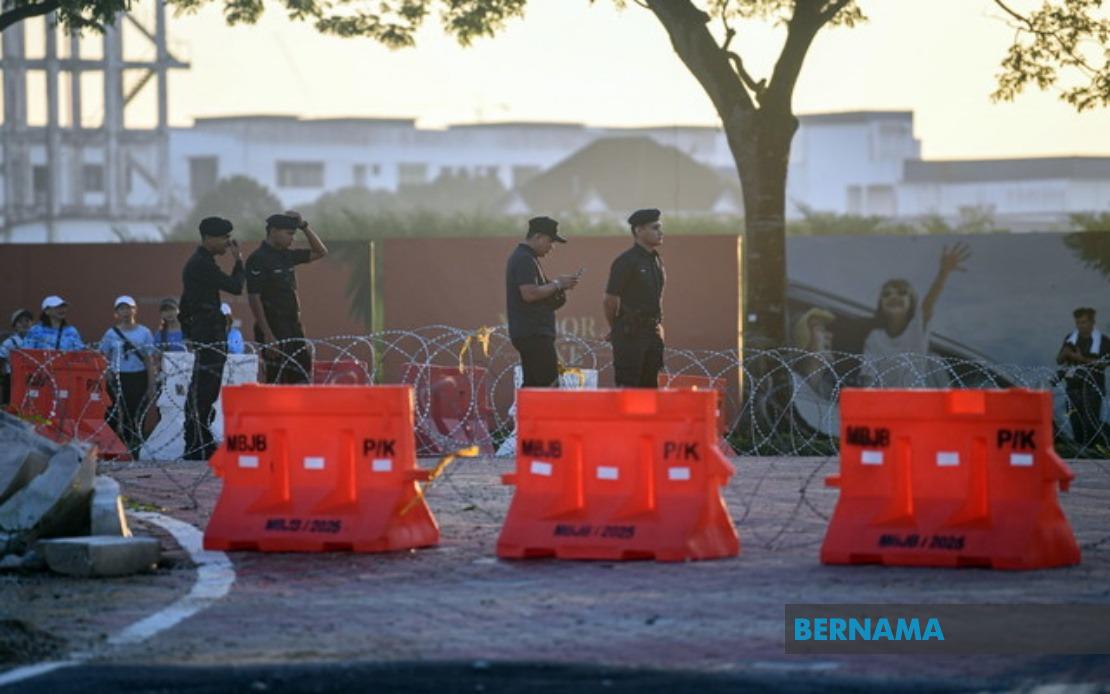
Johor's 16th state election moved into high gear on June 27 as the nomination process unfolded across 56 designated centres throughout the state, with favourable weather conditions supporting an orderly and incident-free day. The Election Commission managed the receipt of nomination papers from 9am to 10am, with staff completing final preparations at polling stations before the official window opened. Political enthusiasm was evident from early morning, as party supporters began gathering at several venues as soon as 7.30am to demonstrate backing for their preferred candidates, setting the tone for what promises to be a closely contested battle for control of the state assembly.
The Election Commission had deployed security personnel at every nomination centre to maintain decorum and prevent disruptions, reflecting standard protocols for such high-stakes electoral exercises. The coordination across all 56 locations proceeded without notable complications, suggesting efficient administrative management of what represents one of Malaysia's larger state-level contests. The orderly nature of the proceedings reflected the maturity of Malaysia's electoral machinery, though the early congregation of supporters at various centres underscored the intensity of political competition in this southern state.
The Malaysian Meteorological Department's forecast provided a welcome backdrop for the nomination exercise, with predictions of dry conditions persisting through most of Johor's districts during morning hours. Afternoon thunderstorms were anticipated in scattered areas, though these were unlikely to impede the nomination process given its completion window. Such weather patterns are typical for Johor during the monsoon transition period, and forecasters indicated that conditions would remain manageable for voters and election officials throughout the nomination period.
The Johor State Legislative Assembly comprises 56 seats, making this election a significant contest by Malaysian standards. The state assembly's dissolution on June 1 set in motion the electoral calendar, with the Election Commission establishing July 7 as the date for early voting and July 11 as polling day. This timeline provides candidates with roughly two weeks of campaigning after nomination closure, a standard duration for state-level races in Malaysia that balances electoral momentum against campaign fatigue.
Electoral data released by the Election Commission reveals the scale of participation expected in this contest. A total of 2,727,926 registered voters are eligible to cast ballots, comprising 2,703,175 ordinary voters alongside 12,041 military personnel and their spouses, and 12,710 police personnel and their spouses. These figures underscore Johor's significance within Malaysia's electoral landscape, as the state accounts for a substantial portion of the country's overall voting population. The inclusion of military and police voters reflects Malaysia's institutional arrangements whereby security force personnel maintain voting rights while remaining operationally neutral during elections.
For Malaysian political observers, the Johor election carries implications extending beyond state boundaries. As the nation's second-largest state by population and a traditional stronghold of the Barisan Nasional coalition, the outcome will offer insights into evolving voter preferences and the effectiveness of various political strategies. The nomination day proceedings, marked by their smoothness and organisational competence, suggest that the Electoral Commission has implemented lessons learned from previous contests and adapted procedures accordingly.
The early mobilisation of party supporters demonstrates the high stakes attached to this election from the perspective of competing political organisations. Johor has historically been regarded as a political bellwether for national trends, with results here frequently interpreted as indicators of broader electoral sentiment across Malaysia. The enthusiasm displayed on nomination day hints at intensive campaigning anticipated over the coming fortnight, with major parties likely to deploy substantial resources and senior leadership into the state.
The staggered approach to voting, with early ballots cast on July 7 prior to the main polling day on July 11, reflects contemporary best practices in electoral administration. Early voting provisions accommodate those with mobility constraints, security personnel, and others unable to vote on the primary polling date, thereby potentially expanding overall participation rates. This institutional innovation has become standard across Malaysian state elections, demonstrating the gradual evolution of electoral procedures toward greater accessibility.
As Johor moves forward toward July's voting, the smooth execution of nomination procedures on June 27 establishes a positive foundation for the electoral process. The coordination among election officials, security personnel, and local administrators suggests that the remaining phases of the election—campaigning, early voting, and polling day itself—are likely to proceed with similar professionalism. For political parties, the nomination day results have already provided initial indications of candidate viability and competitive dynamics in individual constituencies, intelligence that will shape campaign strategy throughout the fortnight ahead.

