Authorities in Kelantan have exposed a significant shift in how smuggling syndicates operate across Malaysia's northern borders, with criminal networks now deliberately fragmenting migrant movements into smaller units to slip past security checkpoints. The discovery emerged during a coordinated enforcement operation that resulted in the detention of thirteen Myanmar nationals, revealing an adaptation strategy that presents fresh challenges for border control agencies already stretched across vast frontier regions.
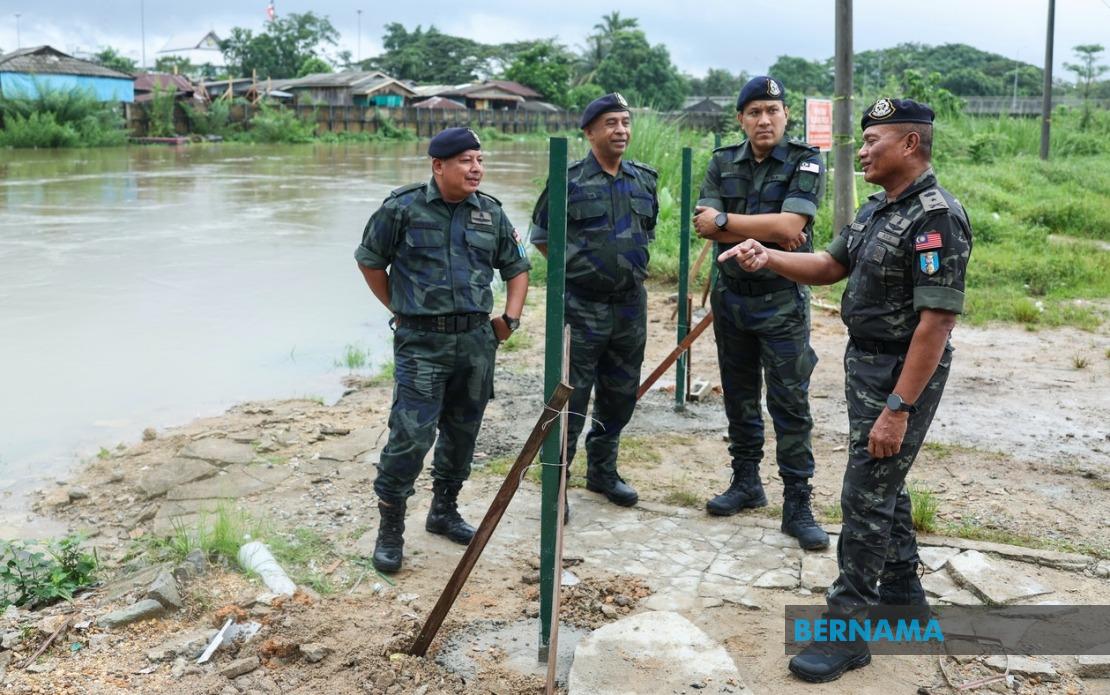
The General Operations Force's Southeast Brigade, operating under the operational command of SAC Ahmad Radzi Hussain, conducted the enforcement action in Kampung Banggol Kemian, Pasir Mas, working in tandem with the Criminal Investigation Division from the district police headquarters. The operation, designated Operasi Taring Wawasan Kelantan and executed by the GOF's 8th Battalion, commenced in the early morning hours at approximately 3.30 am following intelligence that prompted personnel to investigate a Proton Exora displaying suspicious characteristics in the locality.
When security personnel approached the vehicle, the driver demonstrated immediate recognition of the threat and abandoned the conveyance, disappearing into adjoining forest terrain where he ultimately evaded capture. However, the vehicle itself yielded significant evidence, with a subsequent inspection uncovering four Myanmar nationals occupying the rear compartment. These individuals possessed no legitimate travel documentation and were immediately apprehended, marking the initial phase of what would become a multi-stage operation throughout the morning.
The tactical dimension became apparent within the hour, when searchers penetrating the surrounding forest discovered an additional nine Myanmar nationals resting in the wooded area. These individuals represented the next wave of the smuggling operation, having apparently just completed an unauthorized crossing through the Golok River boundary from Thailand mere hours earlier. The deliberate spacing of arrivals highlighted a fundamental change in how smuggling organisations now approach the logistical challenge of moving undocumented persons across Malaysia's land frontiers.
According to statements provided by those detained, the entire group had been conveyed from Thailand by two unidentified transporters who operated under a deliberate dispersal strategy. Rather than concentrating migrants in a single vehicle or convoy, a tactic that increases vulnerability to detection, the smugglers had adopted a graduated release mechanism, dropping passengers at staggered forest locations. This approach significantly reduces the visibility of any single movement and diminishes the likelihood that security forces, even when alerted to activity in a region, can intercept the entire operation in one engagement.
The arrested individuals, ranging in age from twenty to thirty-seven years, all indicated they harboured employment intentions focused on the greater Kuala Lumpur metropolitan region. This detail carries particular significance for Malaysian labour authorities and social policy officials, as it suggests the smuggling networks maintain established demand networks among employers seeking undocumented workers in the capital's construction, manufacturing, and service sectors. The existence of employment expectations implies coordination between international smuggling operations and domestic labour exploitation systems.
Beyond the human dimension, the enforcement action resulted in the seizure of assets employed in the trafficking operation itself. The Proton Exora vehicle, valued at approximately RM30,000, was impounded as suspected transport infrastructure utilised in the human smuggling enterprise. The vehicle's relatively modest value suggests the smuggling economy operates on thin profit margins, using accessible commercial transport rather than specialised equipment, yet maintaining sufficient financial capacity to acquire and operate such assets repeatedly across multiple operations.
All thirteen detainees have been transferred to the jurisdiction of the district police Criminal Investigation Division for processing and additional investigative work conducted under the Immigration Act 1959/63, specifically Section 6(1)(c), which addresses the harbour and transportation of undocumented foreign nationals. This legislative framework forms the primary enforcement mechanism available to Malaysian authorities for prosecuting smuggling activities, though critics argue its penalties and enforcement intensity have not kept pace with the growing sophistication of criminal networks.
The operational evolution described by GOF commanders reflects broader regional trends in human smuggling. As border security technology and personnel deployment have intensified across Southeast Asia, particularly in response to public concern regarding undocumented migration, criminal networks have responded not by abandoning operations but by adapting their methodologies. The shift toward smaller group movements represents a rational criminal response to enhanced detection capabilities, spreading operational activity across extended timeframes and geographic areas in ways that stretch law enforcement resources thinner.
For Malaysia specifically, which faces persistent pressure from the Myanmar humanitarian crisis and ongoing displacement in neighbouring Thailand, this tactical adjustment complicates already difficult border management challenges. The Kelantan-Thailand border region, historically a transit point for irregular migration, appears to have become a testing ground for new smuggling methodologies that may gradually spread to other frontier areas including Perlis and Terengganu.
The incident underscores the structural limitations of enforcement-only approaches to managing irregular migration. While security operations generate important intelligence and temporarily disrupt smuggling networks, the underlying demand for undocumented labour in Malaysia and supply of economically desperate populations willing to undertake dangerous journeys remain unaddressed. Regional cooperation frameworks and coordinated labour policy reforms may prove necessary complements to border enforcement strategies.

