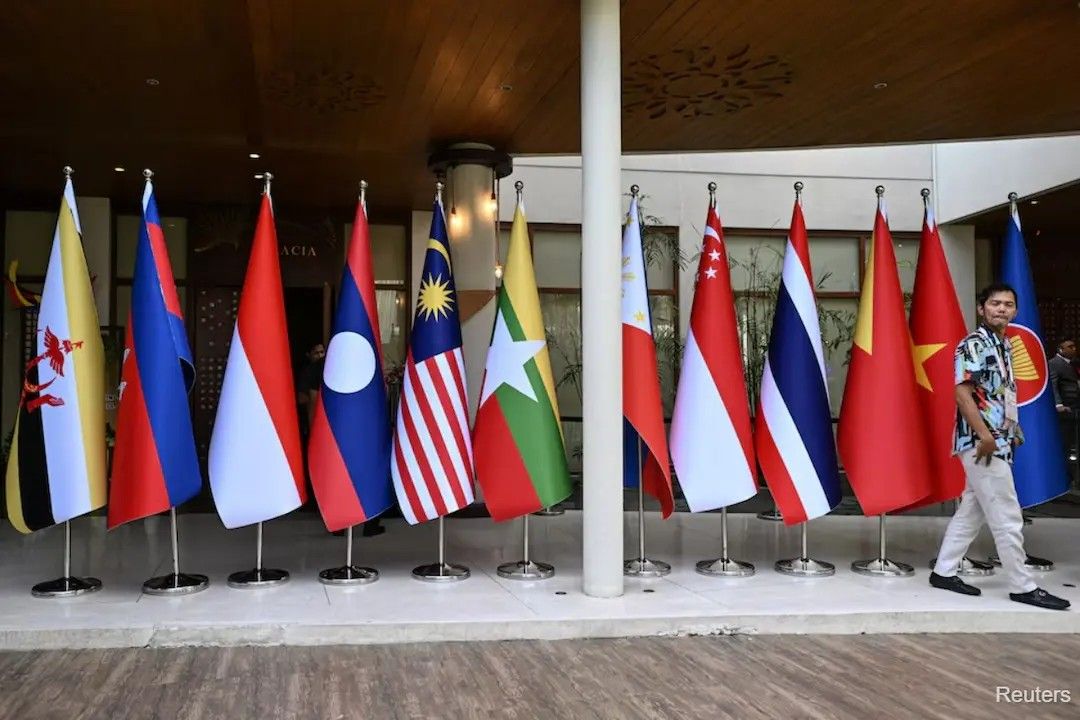
Senior diplomats from Southeast Asia gathered in Manila this week against a backdrop of intensifying maritime friction, with the United States and China locked in competing narratives over contested territorial waters that have become increasingly volatile. The arrival of US Secretary of State Marco Rubio in the Philippine capital coincided with fresh accusations of dangerous conduct by Chinese personnel at one of the region's most sensitive flashpoints, highlighting how swiftly geopolitical tensions can overshadow collaborative efforts among regional governments.
The immediate trigger for heightened alarm was a physical confrontation between Philippine and Chinese sailors at Second Thomas Shoal on Monday, marking the first serious naval encounter in recent months. According to Manila's account, personnel from the China Coast Guard physically assaulted Filipino seamen near a vessel that functions as a military garrison on this strategically significant underwater feature. Beijing offered a contrasting version of events, contending that the Philippines deliberately provoked the situation by dispatching personnel in inflatable craft to approach a Chinese vessel. These competing claims underscore the fundamental disconnect in how the two nations interpret their obligations and rights in these waters.
Rubio's presence in Manila carried significant symbolic weight, arriving with a clearly articulated message about American regional interests and commitments. In a newspaper opinion piece published Tuesday morning, the secretary of state emphasised Washington's dedication to upholding freedom of navigation throughout Southeast Asian waters and stressed the defensive security framework the United States has maintained across the region. His language proved remarkably direct in naming China as the implicit threat, cautioning that if these vital maritime passages fell under the control of an authoritarian power disposed to weaponising trade relationships, both American and ASEAN nations would confront unprecedented risks to their autonomy, territorial integrity, and long-term prosperity.
The geopolitical stakes involved extend far beyond symbolic posturing or nationalist sentiment. The South China Sea represents one of the world's most economically crucial maritime corridors, facilitating trillions of dollars in international commerce annually. China's territorial claims, which encompass virtually the entire body of water despite lacking legal foundation under international law, directly challenge the principle of open ocean access that undergirds global trade systems. This reality resonates particularly acutely with Southeast Asian nations heavily dependent on maritime commerce, including Malaysia, Singapore, and Vietnam, whose economic futures depend substantially on unobstructed passage through these routes.
While Rubio adopted a confrontational rhetorical stance regarding Chinese behaviour, he simultaneously indicated willingness to engage in direct conversations with China's foreign minister Wang Yi, who was also scheduled to attend the Manila meetings. This calculated flexibility suggested that despite sharp disagreements over specific incidents and broader strategic orientation, diplomatic channels remained theoretically open. Such pragmatism reflects the complex position the United States occupies in regional affairs, seeking simultaneously to constrain Beijing's assertiveness and maintain communication pathways that might prevent miscalculation.
The diplomatic initiative toward negotiating a binding Code of Conduct between ASEAN member states and China has represented the primary multilateral mechanism for managing South China Sea tensions, yet recent events cast further shadows over prospects for meaningful progress. Many regional analysts have long expressed scepticism that negotiations would produce an agreement with genuine enforcement mechanisms or substantive constraints on unilateral action. The latest confrontation at Second Thomas Shoal appears unlikely to enhance momentum toward such an accord, potentially deepening existing frustrations among nations seeking more robust multilateral safeguards.
Beyond maritime disputes, this week's gathering occurs amid broader energy security challenges affecting the region's stability and prosperity. The Philippines declared a national energy emergency in March and has been compelled to diversify fuel sourcing in unprecedented ways, including purchasing petroleum from Russia as traditional supply relationships face disruption. The arrival of Russian Foreign Minister Sergei Lavrov in Manila on Tuesday underscored how Middle Eastern conflicts, particularly the renewed hostilities in the Strait of Hormuz, reverberate through Southeast Asian economies. Energy security emerged as a priority agenda item, with renewed emphasis on advancing the ASEAN Framework Agreement on Petroleum Security and facilitating fuel-sharing arrangements among member states to enhance collective resilience.
Among the most intractable challenges confronting ASEAN foreign ministers remains the question of Myanmar's political future and the country's status within the organisation. Since Myanmar's military junta consolidated power in 2021, the nation has remained formally excluded from senior-level ASEAN gatherings as civil conflict has claimed tens of thousands of lives and created humanitarian catastrophe. The bloc's efforts to implement a five-point peace framework have foundered amid accusations of military obstinacy and insufficient progress toward democratic restoration. Philippine President Ferdinand Marcos advanced proposals during May meetings in Cebu for refining ASEAN's approach, yet fundamental disagreements persist regarding whether engagement strategies remain viable.
Thailand has emerged as the strongest advocate within ASEAN for Myanmar's reintegration, motivated partly by its geographic proximity, the refugee populations sheltering within its borders, and long-standing bilateral relationships. Thai Foreign Minister Sihasak Phuangketkeow signalled openness to high-level engagement, suggesting Myanmar's military leadership under Min Aung Hlaing might visit Bangkok in August. This position reflects Bangkok's philosophy that prolonged isolation counterproductively hardens positions rather than encouraging modification of conduct. Sihasak articulated the Thai perspective eloquently, contending that after five years of separation, renewed dialogue and reciprocal explanation represented the only viable pathway forward.
Yet significant resistance to Thailand's inclusive approach persists throughout the bloc, particularly among nations concerned that premature diplomatic rehabilitation might effectively legitimise military rule without securing meaningful commitments toward democratic recovery. Malaysian Foreign Minister Mohamad Hasan articulated this principled objection in May, declaring his country's continued opposition to elevated diplomatic engagement while Myanmar's ruling junta persists in systematic oppression of its population. This division within ASEAN itself reflects the broader challenge these nations face: balancing humanitarian concerns and principled opposition to military dictatorship against the desire for regional stability and the practical difficulties of maintaining indefinite exclusionary policies.
The Manila gathering thus confronts multiple overlapping challenges simultaneously—managing great power competition in strategically vital waters, addressing regional energy vulnerabilities, and navigating the deeply contentious Myanmar question—each sufficiently complex to dominate an entire diplomatic summit. Success would require deft navigation of competing priorities and difficult compromises, while failure risks allowing these interconnected tensions to further fragment the already-strained cohesion that has traditionally characterised ASEAN's collective approach to regional challenges. The week ahead would reveal whether Southeast Asian nations could maintain sufficient unity to advance common interests while managing their divergent security relationships and conflicting policy preferences regarding Myanmar's future.

