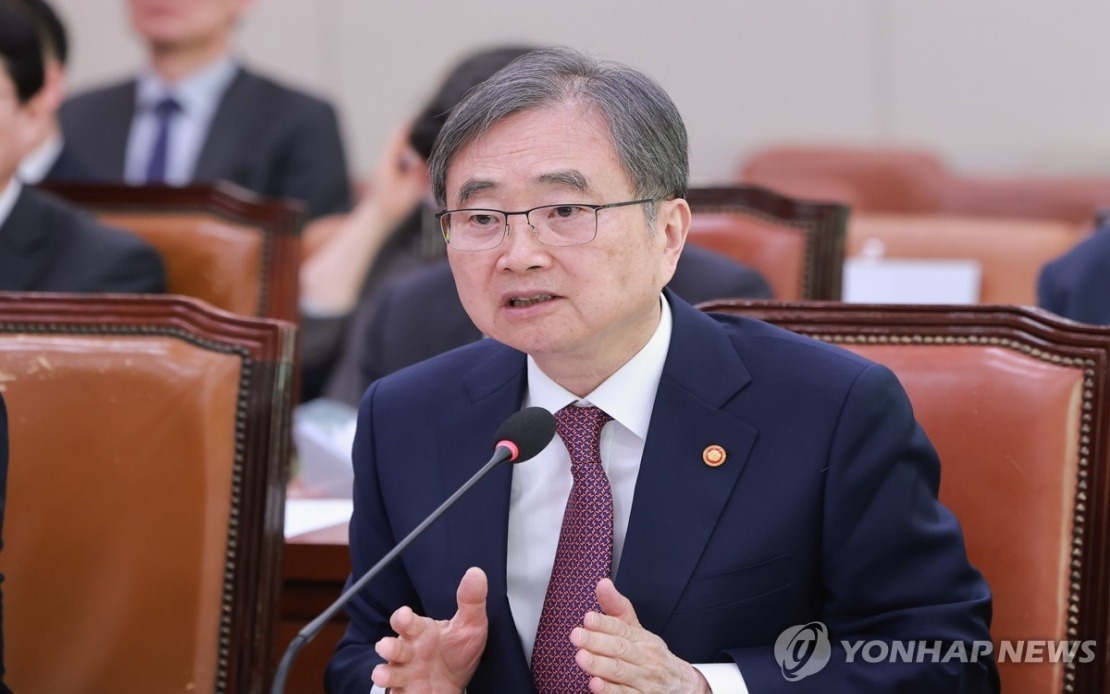
South Korea's Foreign Minister Cho Hyun revealed an unusual diplomatic hiccup on Wednesday when he disclosed that Seoul had learned of planned reductions to joint military exercises with the United States through President Donald Trump's social media announcement, rather than through official government channels. Speaking before parliament's foreign affairs and unification committee, Cho confirmed that neither South Korean nor American government officials had prior knowledge of Trump's August 16 post announcing significant cuts to their shared military operations, leaving the country's leadership scrambling to respond to a decision of considerable strategic importance.
The disclosure underscores the unpredictable nature of contemporary diplomacy, where major geopolitical decisions affecting regional security can be communicated through informal public platforms rather than traditional diplomatic protocols. For Malaysia and other Southeast Asian nations closely monitoring the stability of the Korean Peninsula and US strategic commitment to the region, the incident raises questions about the reliability and consistency of American defence partnerships, particularly when policy announcements bypass established consultation mechanisms that typically govern military cooperation between allied nations.
According to South Korea's Joint Chiefs of Staff, the duration of the Ulchi Freedom Shield exercise, a major summertime joint operation involving both nations, will be compressed from its originally scheduled August 17-27 window to just August 17-21. This represents a significant reduction in scope and duration for an exercise that serves as a cornerstone of South Korea-US security coordination and demonstrates military readiness against potential North Korean threats. The compressed timeline disrupts months of planning and coordination, potentially affecting the exercise's ability to effectively test command structures, communication systems, and operational protocols.
Foreign Minister Cho attempted to mitigate the impression of diplomatic surprise by emphasising that South Korea's Defence Minister Ahn Gyu-back had begun consulting with American counterparts immediately after Trump's announcement appeared online. Cho characterised the situation as an ongoing dialogue rather than a unilateral decision imposed by Washington without Korean input. However, the fact that such consultations commenced only after the public announcement suggests a departure from standard diplomatic procedure, where major defence policy decisions are typically negotiated confidentially before being communicated to the public and media.
The Ulchi Freedom Shield exercise encompasses multiple operational components essential to maintaining South Korea-US defensive capabilities. These include field manoeuvres involving troops on the ground, computer-simulated command post exercises allowing military leaders to test strategic decision-making under crisis scenarios, and civil defence drills preparing civilian infrastructure and personnel for potential conflict situations. Each component plays a specific role in validating the alliance's operational preparedness, and the abbreviated timeline raises questions about whether the reduced exercise can adequately accomplish all planned objectives.
Commander of the US Forces Korea Xavier Brunson's visit to South Korea's defence ministry building on Tuesday, following Trump's announcement, appeared designed to facilitate damage control and restore normal bilateral military coordination channels. These face-to-face discussions provide an opportunity to clarify American intentions, discuss implementation details, and outline any adjustments needed to maintain the robustness of the allied defence posture. Such high-level military-to-military engagement typically occurs before major policy shifts, making the timing of Brunson's visit notable as a corrective measure rather than standard consultation.
For regional observers in Southeast Asia, the incident illustrates the uncertainties that can arise within defence alliances when presidential preferences and social media announcements supersede institutional diplomatic processes. Countries like Malaysia that maintain security relationships with various powers, including the United States, may view this episode as a cautionary example of how unilateral policy pronouncements can create diplomatic friction and operational complications. The ability to predict and prepare for allied military decisions becomes compromised when traditional warning and consultation channels are bypassed.
Trump's instruction to the Pentagon to scale back joint South Korea-US military exercises signals a potential shift in American approach to Korean Peninsula security, though the full rationale behind the decision remained unclear from the public announcement. Whether the reduction reflects budgetary considerations, a desire to reduce military tensions with North Korea, or other strategic calculations, its communication through social media rather than formal diplomatic channels created unnecessary confusion and raised questions about how future defence decisions might be announced.
The broader implications extend to Seoul's confidence in the reliability of American security commitments at a time when North Korean military capabilities continue advancing. South Korea invests heavily in joint exercises as a means of validating integrated command structures with American forces and ensuring seamless operational coordination should conflict occur. Any reduction in exercise scope or frequency potentially diminishes the value of these preparations and signals changing priorities within the US commitment to the alliance.
Cho's parliamentary testimony acknowledged the unusual circumstances while attempting to frame the situation as manageable through continued consultation. This diplomatic balancing act reflects Seoul's delicate position of needing to maintain strong alliance ties with Washington while publicly addressing domestic concerns about whether the United States remains a reliable security partner. The incident will likely prompt broader discussions within South Korea about diversifying security partnerships and enhancing independent defence capabilities, considerations that carry implications for broader regional security dynamics in Northeast and Southeast Asia.
Moving forward, South Korean and American officials will need to reestablish more structured communication protocols to prevent similar incidents where major defence decisions become public before allied governments have completed proper consultations. The need for such reassurances underscores how unconventional announcement methods can undermine the diplomatic foundations upon which military alliances depend, even when the underlying decision itself may prove strategically sound.

