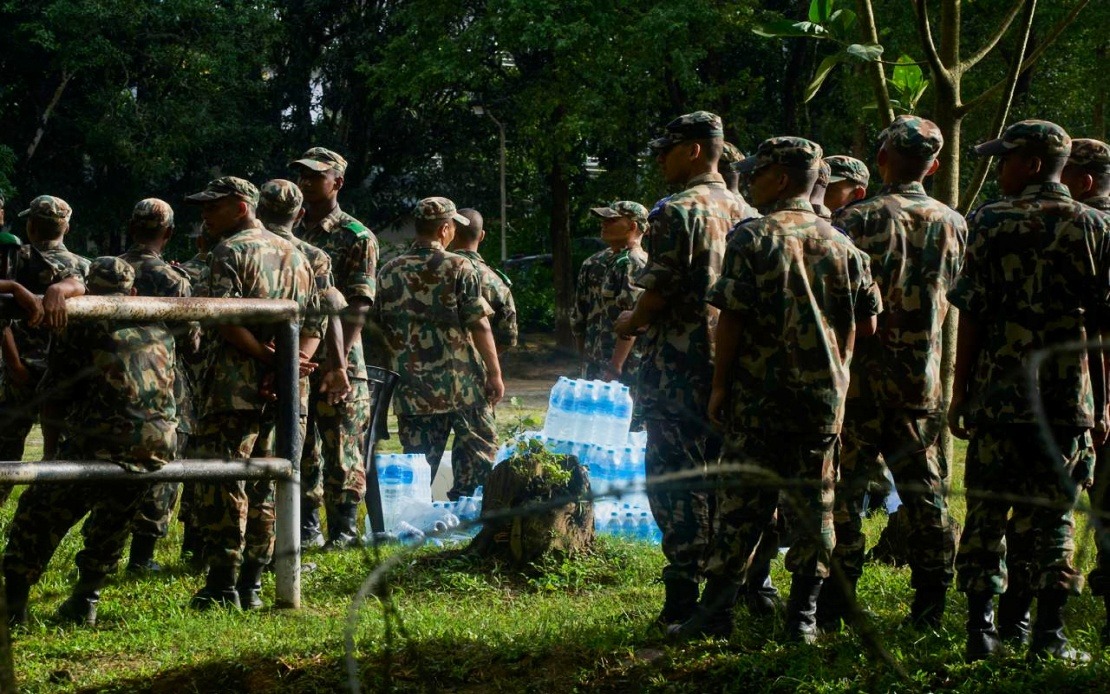
South Korea's government has mobilized an emergency response operation in Nepal following a humanitarian crisis that has claimed the lives of numerous people and left hundreds unaccounted for. The Foreign Ministry announced the dispatch of a dedicated rescue team comprising officials from multiple government agencies, including representatives from the Foreign Ministry alongside police and fire authorities. This 11-member contingent departed Seoul on Thursday with the objective of reaching Nepal's capital Kathmandu by evening, where it will coordinate with local authorities and private sector partners already conducting search operations.
Nine South Korean nationals remain missing after a catastrophic natural disaster struck a construction zone in Nepal's Rasuwa district on Wednesday. The missing workers include six employees from Doosan Enerbility Co., a major industrial plant engineering firm, and three staff members of Korea South-East Power Co., a state-owned power generation enterprise. These individuals were stationed at a hydropower plant construction site when massive flash flooding and mudslides swept through the region, overwhelming the work area with little warning. The sudden onset of the disaster, exacerbated by the mountainous terrain and challenging weather conditions, made immediate evacuation difficult for those caught in the affected zone.
Beyond the nine individuals still unaccounted for, the situation involves other Korean workers whose fates have been confirmed. Ten additional Doosan Enerbility employees who had initially become stranded in the vicinity were successfully located and confirmed alive, though they continue waiting for formal evacuation from the disaster area. These workers, along with approximately 200 foreign nationals employed across the broader construction project, managed to move away from the immediate impact zone before conditions deteriorated further. The successful evacuation of this larger group demonstrates the scale of international involvement in the infrastructure development project, with workers from multiple countries present at the site.
The Upper Trishuli-1 hydropower plant represents a substantial investment in Nepal's energy infrastructure. Located on the Trishuli River approximately 70 kilometres northwest of Kathmandu, this 216-megawatt facility began construction in January 2022 with a target completion date of year-end 2024. The project's timeline now faces significant jeopardy following the infrastructure damage and operational disruptions caused by the flooding. Industry analysts anticipate substantial delays to the facility's commissioning schedule, with reconstruction and remediation work expected to consume considerable time and resources before the plant can resume progress toward commercial operation.
The disaster's humanitarian toll extends far beyond the nine missing South Koreans. According to international reports, the flooding and associated mudslides killed at least 160 people across the affected regions of Nepal's north-central Himalayan zone near the Nepal-Tibet border. The casualty count rises dramatically when accounting for missing persons, with 403 individuals still unaccounted for according to preliminary assessments. Notably, 341 of these missing persons are foreign nationals, underscoring the region's reliance on international labour for major infrastructure projects. This distribution reflects the global workforce composition typical of large-scale hydropower development initiatives in the developing world.
The response from Seoul demonstrates the priority South Korea places on supporting its citizens abroad during emergencies. President Lee Jae Myung has personally directed government agencies to mobilise all available resources for the search and rescue mission, signalling the political importance attached to the situation at the highest levels of state leadership. Foreign Minister Cho Hyun has committed to direct engagement with Nepal's diplomatic counterpart, seeking formal cooperation and accelerated assistance from the Nepali government. This coordinated diplomatic approach aims to overcome potential bureaucratic obstacles and ensure that Korean rescue teams receive full access and support from local authorities managing the broader disaster response.
The private companies involved have similarly activated their own emergency protocols. Both Doosan Enerbility and Korea South-East Power Co. have established dedicated emergency response teams within their respective organizations and plan to deploy field-level response units to the construction site. This dual-track approach—combining government coordination with corporate resources—reflects standard practice for major incidents affecting multinational commercial operations. The two firms possess intimate knowledge of the site's geography, worker deployment patterns, and infrastructure vulnerabilities, information that proves invaluable when conducting focused search operations in challenging terrain.
For Malaysia and other Southeast Asian nations with citizens or investment interests in Nepal's infrastructure sector, this incident underscores the inherent risks associated with large-scale construction projects in geographically vulnerable areas. The Himalayan region's susceptibility to sudden flooding, particularly during monsoon seasons, presents ongoing challenges for long-term project planning and worker safety protocols. Regional contractors and investors must carefully evaluate hazard mitigation measures and emergency response capabilities when committing resources to Himalayan infrastructure development, particularly hydropower facilities dependent on water management in torrential rain environments.
The incident also raises broader questions about international labour standards and safety oversight in transnational construction projects. While major firms like Doosan and state enterprises typically maintain rigorous safety protocols, the reality of disaster management in developing nations with limited infrastructure can overwhelm even well-resourced organizations. The presence of approximately 200 foreign workers at a single site reflects the internationalization of Nepal's development sector, yet coordination challenges between multiple national authorities, private companies, and local governments can complicate emergency response. Future projects may need to incorporate enhanced early warning systems, redundant evacuation protocols, and pre-established international coordination mechanisms specifically designed to function during major natural disasters affecting multinational work sites.

