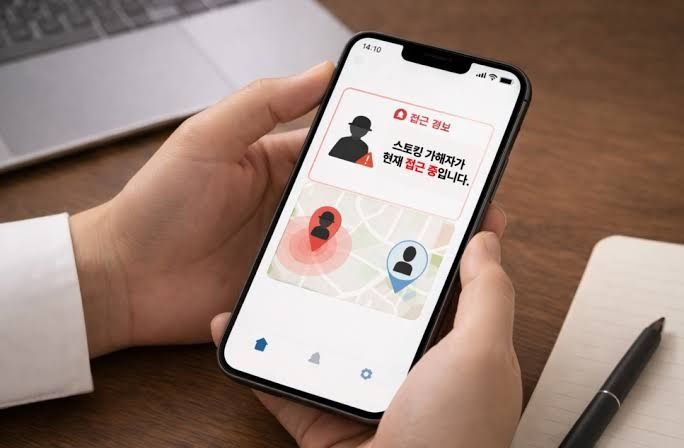
South Korea introduced a groundbreaking mobile alert system on June 24 designed to strengthen protections for stalking victims by granting them real-time visibility into the movements of individuals under electronic surveillance. The application, administered by the Ministry of Justice, represents a significant shift in how the nation approaches one of its most pressing personal safety challenges, enabling victims to track a suspected stalker's current whereabouts and direction of travel directly from their smartphones.
The development of this technology underscores growing frustration with the limitations of existing protective measures. While South Korea has long provided emergency alert devices to at-risk victims, often in smartwatch format, these tools have proven insufficient in preventing serious harm. The tragic reality underlying this initiative became apparent through alarming statistics: between 2021 and August 2025, at least 23 victims were killed or subjected to attempted murder despite having received emergency alert devices, according to Representative Lee Gwang-hee of the ruling Democratic Party of Korea. These cases exposed a critical gap in victim protection infrastructure and prompted policymakers to reconsider how technology could serve a more preventative function.
The new system builds upon electronic monitoring practices that began gaining traction in South Korea during 2024. In high-risk stalking cases, courts may now order suspects to wear electronic ankle monitors as a condition of release or bail. This mandatory tracking requirement creates the data foundation upon which the victim-access application operates. By converting monitoring information into an accessible, user-friendly platform, the government has transformed a law enforcement tool into a victim empowerment instrument. The real-time component is particularly significant; victims no longer face uncertainty about whether they are in immediate danger or whether a suspected stalker is approaching their location.
Balancing victim safety with suspects' privacy rights presented a substantial regulatory challenge. The Justice Ministry addressed these concerns through revised regulations governing electronic monitoring, which were finalized in December 2025. These amendments establish clear protocols for how location data may be collected, stored, and shared with victims while protecting suspects from unreasonable surveillance. The regulatory framework reflects South Korea's attempt to navigate the increasingly complex intersection of public safety and individual privacy in an age of ubiquitous tracking technology. Similar tensions have emerged across Southeast Asia and globally as nations grapple with deploying surveillance for protective purposes without enabling abuse.
The implications for South Korea's broader approach to tackling stalking extend beyond technology deployment. Systemic reform is also underway on the institutional level. Beginning in April 2027, the Ministry of Justice will introduce a new procedural mechanism allowing victims to petition courts directly for restraining orders, rather than requiring law enforcement agencies to initiate requests on their behalf. This change addresses a significant bottleneck in the existing system. Previously, victims depended upon police discretion and capacity to file formal restraining order applications, a process that could introduce delays or inconsistencies in protection. Direct victim petition rights would accelerate legal remedies and empower victims to take immediate action when they perceive threats.
For Malaysian readers and Southeast Asian observers, South Korea's evolving stalking prevention framework offers instructive lessons. Stalking and harassment remain serious problems across the region, yet many countries lack comprehensive, victim-centered approaches. Malaysia's legal framework addresses harassment and criminal intimidation through the Penal Code, but technological solutions and victim empowerment mechanisms remain relatively underdeveloped compared to South Korea's integrated system. The South Korean model demonstrates how sequential policy reforms—first introducing monitoring technology, then creating victim access, and finally streamlining legal remedies—can compound protective effects. Furthermore, South Korea's explicit engagement with privacy concerns through regulatory revision signals that technologically advanced protections need not come at the cost of suspects' fundamental rights.
The stalking phenomenon in South Korea has drawn substantial media and policy attention in recent years, driven partly by high-profile cases and cultural conversations about gender-based violence and women's safety. Legislative attention and victim advocacy have converged to produce tangible reforms, though the statistics cited by Representative Lee suggest that even enhanced measures represent ongoing work in progress. The willingness to implement technology-based solutions reflects both South Korea's technological sophistication and its institutional commitment to victim protection as a policy priority.
Implementation challenges remain inevitable. The effectiveness of the victim-access application will depend upon consistent judicial orders for electronic monitoring, reliable functioning of the monitoring devices themselves, and victims' awareness of and confidence in the system. Training for law enforcement and judicial personnel will be essential to ensure consistent application of the new regulations. Additionally, public education campaigns will be necessary to inform potential victims of their rights and available tools. South Korea's government has signaled its intent to pursue these implementation dimensions alongside technological and regulatory development.
The April 2027 introduction of direct victim petition mechanisms represents a further evolution in institutional responsiveness. By removing intermediaries and enabling victims to initiate legal action themselves, South Korea shifts from a law enforcement-centric model toward a victim-centered one. This structural change has profound implications for access to justice, particularly for victims who may lack confidence in police responsiveness or who need expedited protective orders. Comparative examination of these procedural reforms across jurisdictions could inform discussions in other Southeast Asian nations about strengthening victim protections within existing legal frameworks.

