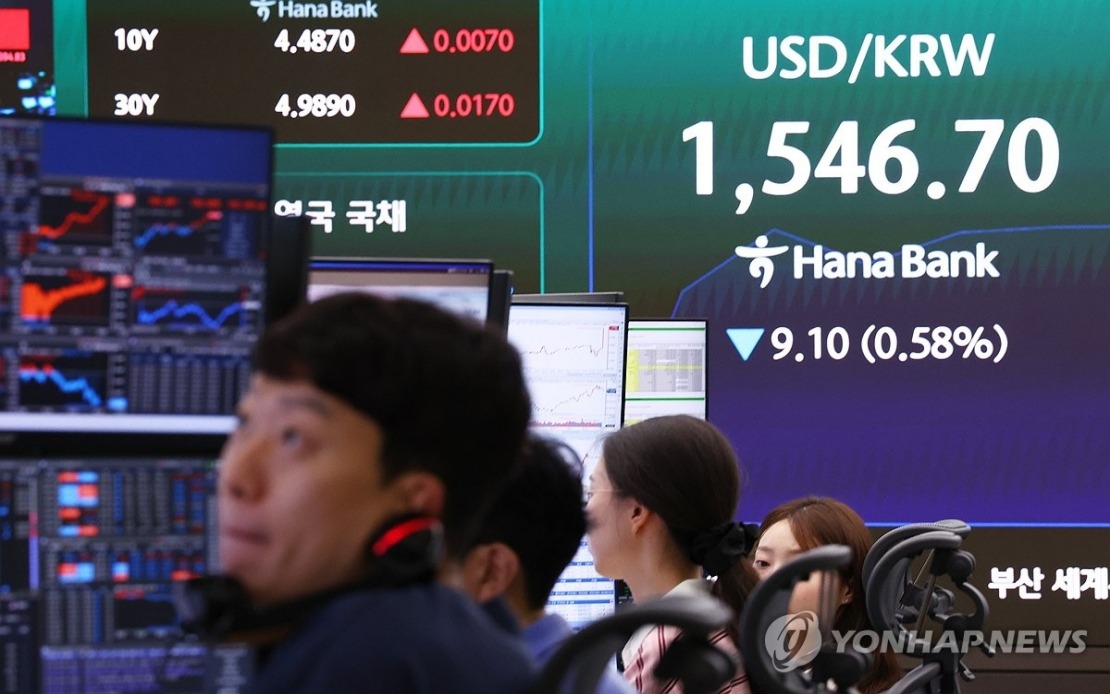
South Korea has taken another significant step to make its financial markets more accessible to international investors by launching a continuous 24-hour foreign exchange trading system, according to Finance Minister Koo Yun-cheol. The new system represents Seoul's commitment to enhancing the competitiveness of its financial sector in an increasingly globalised economy where market access and operational convenience have become crucial factors in attracting foreign capital flows.
The system became operational on Monday, with Finance Minister Koo visiting the dealing room at Hana Bank in central Seoul to mark the occasion. Unlike traditional markets that operate on fixed schedules, the new arrangement permits uninterrupted trading in the Korean won from 6 am on Monday through 6 am on Saturday, with the market closing only on weekends and the first day of each year. This structure acknowledges the reality of modern financial markets where time zone differences and the 24-hour nature of global commerce demand continuous liquidity.
The expansion builds upon an earlier modernisation effort implemented in July 2024, when authorities extended trading hours from the previous 3:30 pm closing to 2 am the following morning. That initial extension reflected growing investor demand for greater flexibility, but the new around-the-clock system removes temporal constraints almost entirely. The progression from fixed hours to extended hours and now to continuous trading illustrates how South Korea has systematically responded to market pressures and international competition.
According to Finance Minister Koo, the initiative symbolises Seoul's confidence in its macroeconomic position, citing robust external financial health and exceptional current account surpluses as indicators of underlying strength. These fundamentals provide reassurance to foreign market participants that the currency and broader economy can sustain the scrutiny and demands of continuous international trading activity without destabilising volatility.
The timing of this expansion also reflects South Korea's recent recognition within prominent international indices. The country's inclusion in the World Government Bond Index, a milestone achieved following sustained policy improvements and market development, signals to global investors that Korean financial assets deserve serious consideration alongside other developed markets. Finance Minister Koo explicitly linked this achievement to the rationale for extending trading hours, suggesting that inclusion in major international benchmarks creates momentum for further market reforms.
For Malaysian and regional observers, South Korea's approach offers instructive lessons about maintaining financial market competitiveness in Southeast Asia. As financial services become increasingly footloose and investors seek maximum operational flexibility, nations competing for capital inflows must continually upgrade their market infrastructure and accessibility. The strategy reflects a recognition that technical and institutional improvements can meaningfully influence capital allocation decisions at the margins.
The practical implications extend beyond currency trading itself. Continuous trading in the Korean won facilitates hedging operations for companies with exposure to Korean assets or operations. It enables investors to adjust positions rapidly in response to news developments without waiting for market reopening. These capabilities, while seemingly technical, translate into real cost savings and risk management benefits that accumulate across portfolios and improve market efficiency.
Bank of Korea Deputy Governor Min Soo Kwon acknowledged that the central bank would carefully monitor how the new system affects market functioning and stability. This supervisory attentiveness reflects institutional awareness that structural changes to financial markets, while generally beneficial for breadth and accessibility, can introduce novel dynamics that require careful management. Continuous trading potentially amplifies price movements during off-peak hours when liquidity concentrates among fewer participants, creating the risk of wider spreads and greater volatility in thin trading conditions.
The central bank official further emphasised coordination between monetary authorities and government financial agencies to realise the full potential of expanded trading hours. This institutional emphasis reveals that successful financial market modernisation requires alignment across multiple agencies and careful sequencing of complementary reforms. Merely extending trading hours without ensuring adequate liquidity provision, robust market infrastructure, and supportive regulatory frameworks could undermine the initiative's objectives.
For the broader region, South Korea's continuous currency trading system raises implicit questions about comparative market accessibility. As Asian financial centres compete to attract global capital and maintain regional financial influence, improvements in market hours and operational flexibility become more consequential. Investors evaluating where to deploy capital increasingly factor convenience and operational efficiency alongside traditional considerations like regulatory environment and macroeconomic fundamentals.
The expansion also reflects longer-term shifts in global financial markets toward automation and algorithmic trading, which operate without regard to traditional business hours. By accommodating continuous trading, South Korea positions itself better to capture algorithmic capital flows that route through markets offering maximum accessibility. This structural change has profound implications for how financial centres compete and which markets capture disproportionate trading volumes.
The government's emphasis on welcoming foreign investors permeates its rationale for the initiative. By removing temporal barriers to market access, Seoul removes one common objection foreign investors raise when evaluating where to concentrate trading activity. While time zone differences remain, eliminating market-hour constraints makes Korean assets more convenient to trade relative to alternatives in competing financial centres, potentially shifting marginal investment flows in Seoul's favour.
As South Korea consolidates its position as one of Asia's leading financial hubs, these incremental improvements in market accessibility accumulate into meaningful competitive advantages. The continuous won trading system, paired with inclusion in major international bond indices and ongoing regulatory modernisation, reflects a strategic approach to financial market development focused on reducing friction and accommodating evolving investor preferences in an era of globalised capital flows.

