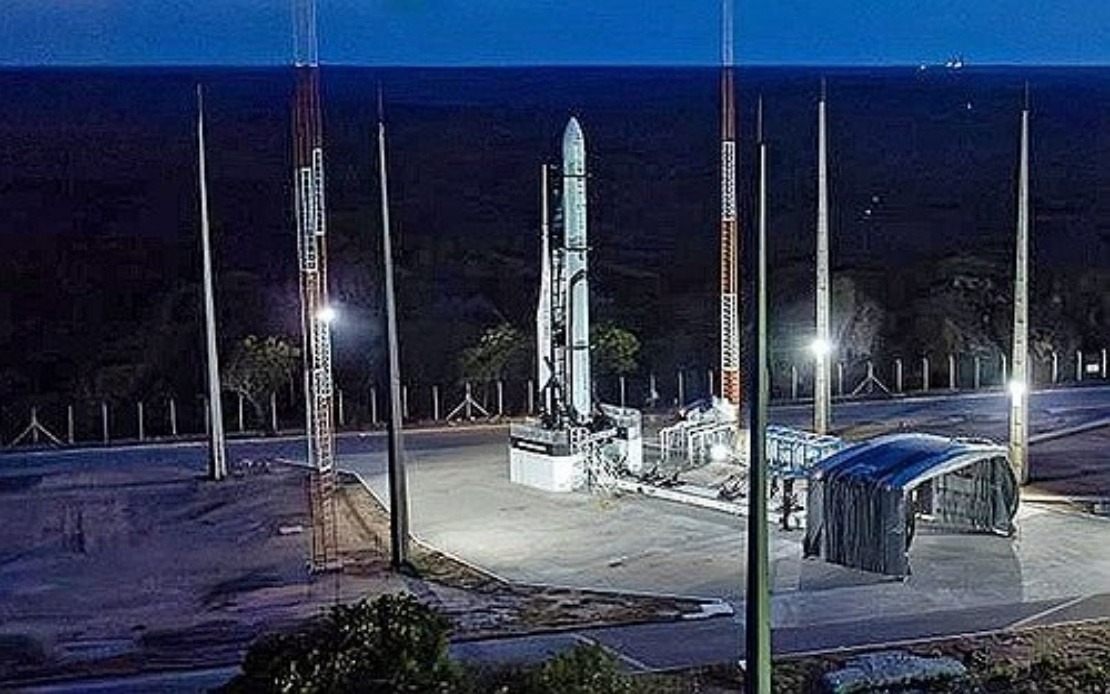
South Korea's defence ministry announced on Tuesday that it has postponed the scheduled launch of the Mir solid-fuel space rocket, citing unspecified safety issues discovered during final preparations. The rocket was set to lift off at 2 pm from a floating platform positioned off the southern coast of Jeju Island, representing a significant milestone in the country's drive toward indigenous space capabilities. The cancellation marks a setback for a programme that Seoul views as strategically vital to its national security posture.
While the ministry provided limited details about the specific problems that triggered the postponement, it confirmed that a comprehensive review of launch preparations had identified multiple concerns requiring resolution. Officials stated that a new launch schedule would be communicated once these safety matters have been addressed, though no timeline was provided. This cautious approach reflects the high stakes involved in testing advanced military-grade aerospace technology, particularly given South Korea's ongoing security tensions with North Korea.
The Mir programme represents South Korea's effort to develop an independent solid-propellant launch system capable of deploying reconnaissance satellites into low-Earth orbit at altitudes below 500 kilometres. Development of the vehicle began in 2021, with the programme undergoing extensive testing phases throughout 2022 and 2023. Those earlier trials evaluated three-stage configurations only, making the planned four-stage test a crucial step toward operational capability. The delay suggests that South Korea is unwilling to compromise on safety validation, even as geopolitical pressures mount for rapid advancement.
The strategic imperative driving this programme stems from South Korea's desire to reduce its dependence on American satellite intelligence for monitoring North Korean military activities. Solid-fuel rockets offer distinct advantages over their liquid-fueled counterparts, including simpler construction, extended storage life without degradation, and the capacity for rapid deployment when launch windows emerge. These characteristics make solid-fuel systems particularly attractive for military applications where responsiveness and operational flexibility are paramount.
Parallel to the Mir programme, South Korea has already achieved significant success in deploying reconnaissance satellites through commercial partnerships. The country has successfully orbited five military spy satellites using SpaceX's Falcon 9 rockets, with the most recent deployment occurring in November of the previous year. This existing constellation provides immediate surveillance capabilities, but represents a reliance on foreign technology and launch providers that Seoul seeks to eventually supersede through domestic programmes like Mir.
The broader vision underpinning these initiatives is ambitious in scope. South Korea intends to establish a network of up to 60 small spy satellites in orbit by 2030, supplementing the five larger dedicated military reconnaissance satellites already operational. This constellation approach would create redundancy and comprehensive coverage, enabling persistent surveillance of potential adversary movements across the peninsula and adjacent waters. The deployment timeline suggests that South Korea anticipates completion of the Mir development programme within a reasonable near-term window, notwithstanding setbacks such as this postponement.
From a regional perspective, South Korea's push for independent space and surveillance capabilities carries implications extending beyond bilateral inter-Korean dynamics. As Asian nations grapple with evolving power balances and security challenges in contested waters, indigenous satellite systems assume greater importance. South Korea's trajectory toward self-sufficiency in reconnaissance capabilities mirrors similar ambitions elsewhere in the region, including efforts by Japan and India to develop homegrown space infrastructure. The success or failure of programmes like Mir thus resonates across broader questions about technological autonomy and strategic positioning in the Indo-Pacific.
The Mir postponement also underscores the technical complexity inherent in developing advanced aerospace systems, particularly when rapid fielding is desired. Even mature space programmes operated by established spacefaring nations experience launch delays and cancellations when safety concerns surface. South Korea's decision to halt the test rather than proceed demonstrates institutional maturity and risk management discipline, even if it frustrates timelines. This cautious approach protects not only the expensive hardware involved but also the credibility of the overall programme.
Looking ahead, the postponement creates uncertainty regarding when South Korea might demonstrate the four-stage Mir system in actual flight. The specific issues requiring rectification remain undisclosed, leaving observers to speculate about their severity and remediation difficulty. Depending on the nature of the problems identified, resolution could require anything from minor adjustments to more substantial redesigns. The secrecy surrounding the postponement, standard for military programmes, prevents external analysis of technical challenges or programme health more broadly.
For Malaysia and other Southeast Asian nations, South Korea's space ambitions merit attention as part of the region's broader technological development landscape. As countries in the region increasingly develop domestic space capabilities and satellite systems, the technical pathways pioneered by more advanced programmes like Mir offer lessons in programme management, safety culture, and the iterative nature of developing cutting-edge aerospace systems. The competition for indigenous space capabilities reflects growing recognition that satellite technology underpins modern defence, infrastructure, and economic resilience.

