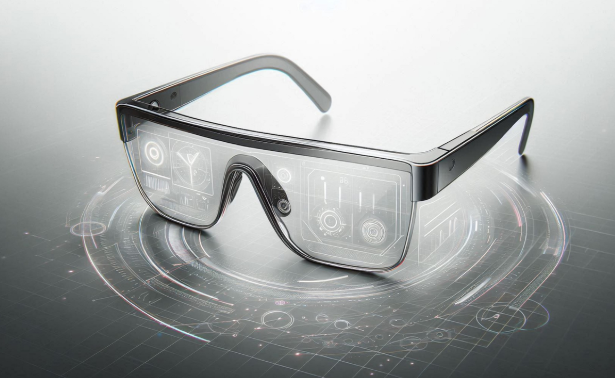
South Korea's legal system has entered uncharted territory with the prosecution of a man in his 40s who deployed artificial intelligence-powered glasses to cheat on a professional certification exam, marking a watershed moment in the country's battle against technology-enabled academic fraud. The Gwangju District Prosecutors' Office moved to indict the suspect last month on violations of the National Technical Qualification Act, underscoring how rapidly emerging technologies are outpacing existing legal frameworks designed to maintain examination integrity.
The defendant was apprehended in May during a fire protection facilities engineer certification examination in Gwangju when an alert exam supervisor detected suspicious light reflections bouncing off the lenses of his spectacles. What initially appeared as an ordinary optical anomaly turned out to be a sophisticated attempt to circumvent years of accumulated expertise and standardised testing protocols. Upon interrogation, the accused revealed that he had personally engineered an artificial intelligence application programmed to communicate with the glasses, allowing him to instantly receive answers displayed on the lenses—essentially creating a real-time digital cheat sheet invisible to invigilators.
The defendant's motivation, he claimed, was experimental rather than purely fraudulent. He stated that his primary objective was to verify whether his custom-built AI system could reliably transmit accurate answers through the eyewear interface without detection. This explanation, whether accepted or merely documented by prosecutors, highlights a troubling reality: the technical capability to construct such systems now exists well within the reach of determined individuals, and the barrier to deployment is largely one of intent rather than resources or specialised knowledge.
This singular prosecution barely scratches the surface of a much broader and more alarming trend. Two additional men in their 20s were separately caught attempting virtually identical schemes at qualification exam venues in Seoul and Mokpo during the same May period, suggesting that knowledge of the technique has already circulated beyond isolated incidents. The copycat nature of these arrests implies that word-of-mouth sharing of the cheating method among test-takers has begun, a pattern that typically precedes exponential growth in similar violations.
The problem extends beyond professional certification exams to international standardised tests. Multiple cases involving AI glasses surfaced in TOEIC English proficiency examinations, with two individuals caught in May and another apprehended in June. The TOEIC examination holds particular significance in South Korea's job market, where English language credentials carry substantial weight in hiring decisions and career progression. The appearance of high-tech cheating methods in these high-stakes tests suggests that motivated fraudsters are deploying sophisticated tools precisely where the incentives—better job prospects, higher salaries, competitive advantage—are greatest.
The convergence of multiple cheating incidents within a compressed timeframe triggered urgent action from examination administrators. Officials representing the agencies responsible for administering major national qualification exams convened on July 10 to develop countermeasures and formulate a coordinated response. These discussions reflected the gravity with which authorities now view the threat, recognising that ad-hoc responses to individual cases would prove insufficient against a potentially systemic problem.
The proposals emerging from these emergency consultations signal a fundamental recalibration of examination security protocols. Authorities are considering the explicit categorisation of AI glasses alongside conventional prohibited items such as mobile phones and smartwatches, transforming these devices from unregulated grey areas into clearly prohibited contraband. Beyond item restrictions, officials are contemplating substantially harsher penalties for candidates caught cheating, with the intention of raising the perceived risk to a level that deters potential offenders.
For Malaysia and other Southeast Asian nations, the South Korean case study presents both cautionary lessons and immediate practical implications. Regional education systems and professional licensing bodies administer tens of millions of examinations annually, from university entrance tests to medical board certifications, all potentially vulnerable to similar technological exploitation. The relative cost and accessibility of AI-powered glasses, combined with rapidly advancing computer vision and language processing capabilities, suggest that this cheating method could spread across borders and languages with surprising speed.
The broader challenge confronting examination authorities across Asia reflects a fundamental asymmetry in the technological arms race. Fraudsters need only identify one effective exploit to circumvent existing security measures, whereas legitimate test administrators must anticipate and defend against potentially unlimited future innovations. This dynamic favours the motivated offender, particularly when cheating offers tangible benefits in competitive educational and employment markets characteristic of East and Southeast Asian societies.
The South Korean prosecution marks a critical juncture where legal systems begin grappling with artificial intelligence-enabled cheating as a distinct category of examination fraud. As courts establish precedents and legislators codify regulations specifically addressing these devices, other regional governments will inevitably reference South Korea's approach when crafting their own policies. The specific charges, penalties, and procedural safeguards established through this landmark case will likely influence how examination fraud is prosecuted throughout the region for years to come.
Moving forward, examination authorities must balance security imperatives against practical implementation challenges. Detection technologies capable of identifying concealed AI devices without causing excessive inconvenience to legitimate test-takers remain underdeveloped. Simultaneously, regulatory frameworks must avoid becoming so restrictive that they impede legitimate technological innovation or create undue burdens on candidates. South Korea's experience demonstrates that the window for developing measured, proportionate responses is rapidly closing—once cheating methods become widespread, remedial action becomes exponentially more difficult and expensive.

