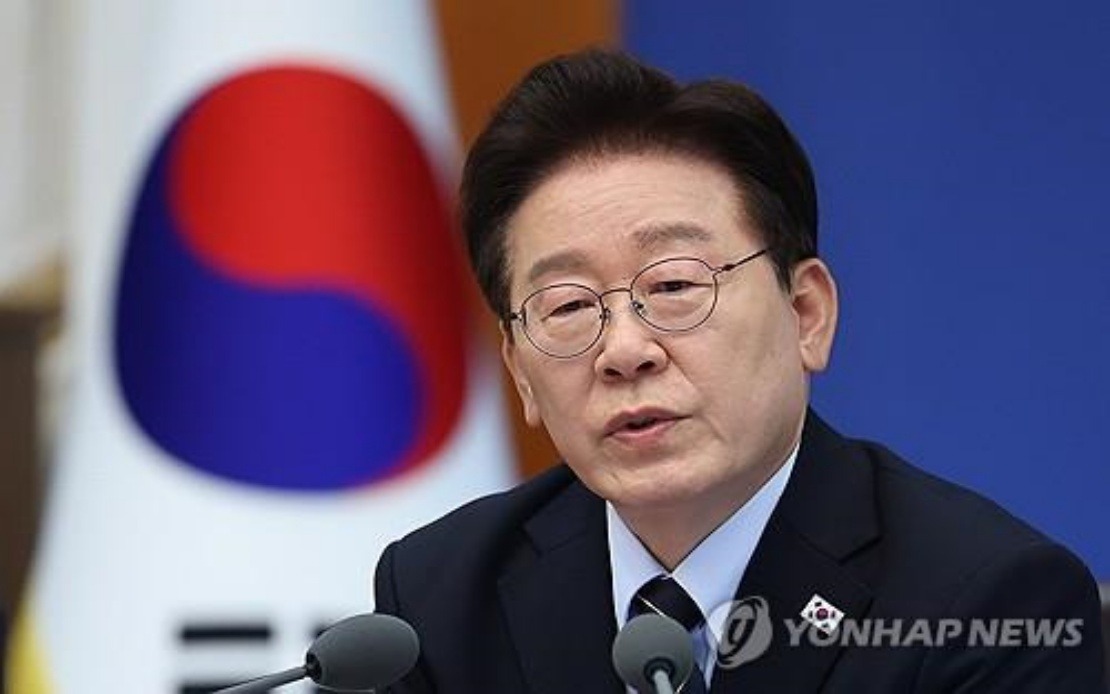
South Korean President Lee Jae Myung has set in motion significant defence sector reforms that fundamentally reshape how the country maintains military readiness in an era of demographic decline. During a meeting with senior government officials at Cheong Wa Dae on Thursday, Lee instructed his team to accelerate the transition towards what officials term a "smart" military—one built on sophisticated technology and advanced equipment rather than reliance on large conscript forces. This policy shift represents a pragmatic acknowledgment that South Korea's demographic trajectory makes sustaining traditional personnel-intensive military structures increasingly unsustainable.
The centrepiece of the proposed reforms involves introducing selective conscription, a departure from South Korea's current universal military service requirement that mandates all able-bodied men complete at least 18 months of active duty. This system, in place for decades and integral to South Korea's security framework opposite North Korea, has faced mounting pressure as the nation's birth rate continues to fall. Lee emphasised that maintaining what he characterised as an "inefficient military structure" dependent primarily on personnel and infantry would become impossible and counterproductive given demographic realities. The selective approach would allow the government to be more discerning about conscription requirements while simultaneously transitioning defence capabilities towards sophisticated technological systems that can achieve strategic objectives with leaner forces.
Central to Lee's vision is addressing a persistent grievance among South Korea's younger generation: the perception that military service represents lost opportunity. The president articulated concern that young people view conscription as a dead zone in their professional development and personal advancement. To counter this perception, Lee called for comprehensive policies ensuring that military service transitions seamlessly into productive civilian employment and educational pathways. This reflects recognition that demographic challenges demand not merely restructuring defence procurement but fundamentally reconceptualising how conscription fits within young Koreans' life trajectories. By coupling military service with genuine employment prospects, skill development, and wealth-building opportunities, the government aims to frame conscription less as national burden and more as pathway to stability.
The president explicitly framed government responsibility in terms that resonate with demographic concerns: ensuring citizens do not experience military service as temporal waste or economic loss. This rhetoric signals a philosophical shift in how South Korea's leadership views the social contract underlying national defence. Rather than appealing purely to nationalist duty or security imperatives—traditional justifications for conscription—Lee positioned defence reform within broader anxieties about intergenerational economic opportunity. This approach acknowledges that South Korea's low birth rate stems partly from young people's calculations about costs of family formation and career progression; mandatory military service removal from those calculations becomes a demographic policy tool as much as a defence measure.
The technological dimension of these reforms deserves particular attention for regional observers. South Korea's pivot towards equipment-centric defence capabilities aligns with broader East Asian militarisation trends, where advanced systems including unmanned platforms, cyber capabilities, and precision-guided weaponry increasingly constitute force multipliers. By frontloading investment in technology over conscript expansion, South Korea positions itself competitively within regional security dynamics where innovation and technical sophistication increasingly determine military balance. This modernisation pathway has implications for defence industrial policy, research-and-development investment, and South Korea's defence export potential throughout Asia-Pacific markets.
The defence reform announcement accompanied substantial discussion of real estate policy, revealing how interconnected demographic and economic challenges have become in South Korean policymaking. Lee devoted considerable attention to housing shortages in the Seoul metropolitan area, acknowledging that chronic undersupply has contributed to young Koreans' demographic calculations. The government announced plans to deploy over 230,000 additional homes through accelerated development of public land, targeted greenbelt modifications, and private sector incentivisation. Lee traced housing supply deficiency to 2022, identifying what he termed a "supply cliff" resulting from sharply reduced construction permits and delayed project initiation. The administration proposes streamlining permitting procedures and, where necessary, revising legal frameworks to expedite land access and development approval.
These housing initiatives directly connect to defence reform viability. Young Koreans contemplating military service and subsequent family formation face housing costs representing multiples of annual income in major metropolitan areas. By improving housing accessibility and affordability, the government addresses foundational grievances underlying low birth rates and reluctance towards traditional family-formation patterns. Defence reform, housing policy, and demographic strategy thus function as coordinated components within broader government response to South Korea's existential demographic challenge. Observers across Southeast Asia recognise similar pressures affecting their own defence planning and economic development, making South Korea's integrated policy approach instructive.
Implementation challenges loom substantial. Transitioning from universal conscription to selective systems requires careful calibration to maintain security effectiveness while managing public perception and fairness concerns. Questions immediately arise regarding selection criteria, exemption procedures, and alternative service options. South Korea's experience suggests that any selective conscription system will face intense scrutiny regarding who bears defence burdens and how selection processes avoid replicating or amplifying existing social inequalities. The government must navigate tensions between efficiency imperatives and equity concerns that inevitably accompany selective military service schemes.
For Malaysian and broader Southeast Asian policymakers, South Korea's defence reform initiatives offer relevant case studies as the region similarly confronts rising defence expenditure requirements, technological disruption, and demographic shifts. Several ASEAN nations maintain conscription-based or conscription-capable forces; South Korea's move towards selective, technology-intensive models suggests alternative pathways worth examining. The interconnection between demographic policy, housing affordability, youth employment prospects, and defence adequacy represents an increasingly critical policy nexus across developed Asia. South Korea's willingness to fundamentally restructure defence paradigms signals recognition that traditional security frameworks must adapt to twenty-first-century demographic and economic realities—a recognition that extends far beyond Korean Peninsula security considerations.

