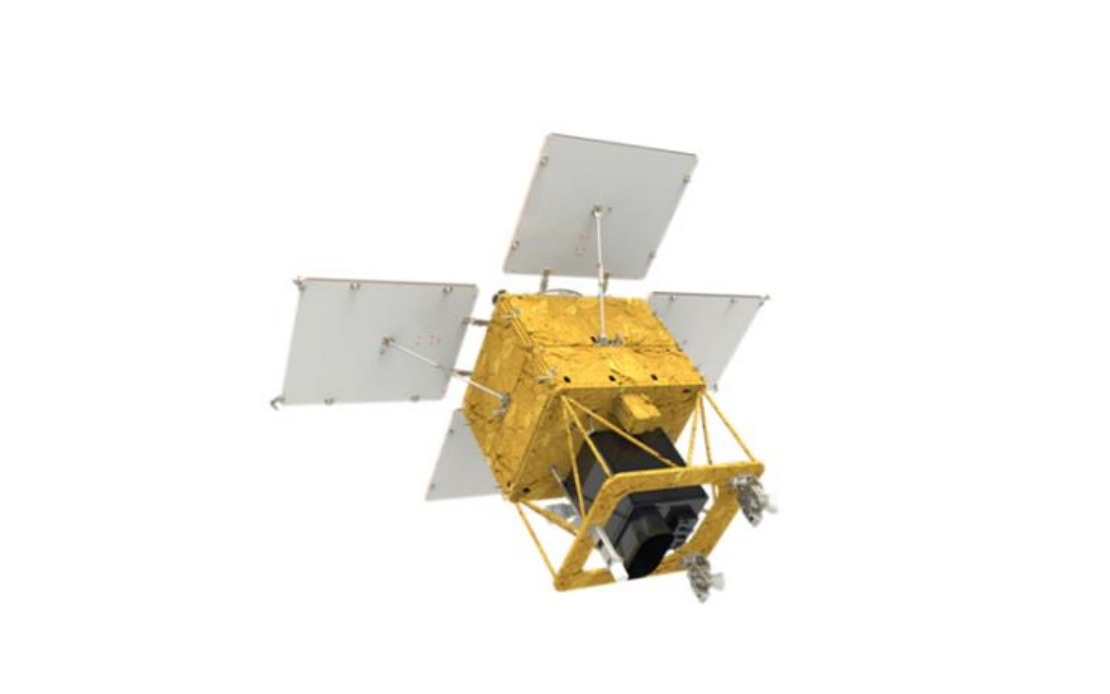
South Korea is advancing its indigenous space capabilities with the imminent launch of its fourth medium-sized Earth observation satellite, scheduled to lift off aboard a SpaceX Falcon 9 rocket from Vandenberg Space Force Base in California. The Korea AeroSpace Administration (KASA) confirmed the 500-kilogramme satellite will launch at 4.10 pm Korea time, marking another milestone in the country's growing self-reliance in satellite technology and space infrastructure.
The satellite represents Seoul's strategic investment in developing homegrown Earth observation systems rather than relying entirely on international partnerships. Completion of functional inspections and fuel injection over the preceding month signals the spacecraft's readiness for deployment. Upon separation from the launch vehicle approximately two hours and 22 minutes after liftoff, the satellite will establish initial contact through Norway's Svalbard ground station roughly 31 minutes later, confirming successful orbital insertion.
What distinguishes this mission is the incorporation of South Korean-developed observation payloads, particularly a sophisticated imaging camera engineered to capture the entire Korean Peninsula at three-day intervals. This technological capability provides Seoul with persistent, frequent surveillance of its territory without depending on foreign satellite operators or purchasing imaging rights. For a nation divided and facing periodic security concerns, such independent observation capacity holds substantial strategic value beyond civilian applications.
The satellite's projected operational altitude of approximately 888 kilometres positions it in a sun-synchronous orbit, ideal for consistent Earth observation missions. This orbital configuration ensures consistent lighting angles and timing for comparative imagery analysis, essential for monitoring gradual environmental and infrastructural changes across the peninsula and surrounding regions.
The government's vision extends considerably beyond military or security applications, encompassing comprehensive civilian benefits that will resonate throughout East Asia and have implications for the broader region. Agricultural productivity assessment, forest resource management, and detecting woodland degradation represent core economic applications for a technologically advanced nation with significant forestry interests. The satellite will facilitate real-time disaster response capabilities during floods, typhoons, and other natural calamities that periodically devastate East Asian populations, enabling rapid damage assessment and emergency coordination.
Climate change monitoring constitutes another critical function, allowing South Korea to track environmental shifts across its territory and contribute to regional and global climate science initiatives. Public safety enhancement through infrastructure monitoring, urban planning support, and environmental hazard identification will improve governance and emergency management across the peninsula. These applications demonstrate how space technology increasingly becomes essential infrastructure for modern nation-states managing complex environmental and societal challenges.
The deployment timeline reflects measured, methodical development protocols. Following orbital insertion, the satellite will undergo four months of comprehensive in-orbit testing, validating sensor performance, communication systems, and operational procedures before transitioning to full operational status in the first half of next year. This deliberate commissioning approach ensures reliability and maximizes the spacecraft's operational lifespan and data quality.
South Korea's expanding satellite constellation reflects broader regional dynamics in space technology development. Japan, China, and India have similarly invested in indigenous Earth observation capabilities, recognizing that space-based monitoring provides crucial advantages for national development, environmental management, and security. South Korea's fourth-satellite deployment demonstrates its determination to maintain technological parity with regional powers and establish independent space infrastructure that supports both civilian and strategic interests.
The project underscores how space technology increasingly becomes domesticated rather than remaining the exclusive domain of superpowers. By developing indigenous satellite systems, South Korea reduces vulnerability to foreign technology controls or sanctions while strengthening technological sovereignty. This approach also stimulates domestic aerospace industries, creating high-skilled employment and advancing engineering expertise that strengthens the nation's broader technological base.
For Southeast Asian nations, South Korea's expanding Earth observation capabilities have practical implications. Shared environmental challenges including deforestation, coastal erosion, agricultural stress, and disaster management benefit from diverse satellite data sources. Regional cooperation on space technology, particularly in Earth observation and data sharing, could enhance collective disaster response capabilities and environmental stewardship across the area. South Korea's demonstrated commitment to practical, civilian-focused satellite applications offers a model alternative to purely military-oriented space programs.
The satellite's mission exemplifies how contemporary space programs balance multiple objectives simultaneously. Rather than pursuing prestige-focused deep space exploration, South Korea prioritises practical Earth observation systems addressing immediate civilian needs. This pragmatic orientation appeals to resource-constrained developing nations seeking space technology benefits without committing to ambitious, expensive flagship programs that strain limited budgets.
The Vandenberg launch venue reflects deepening US-South Korea space cooperation, with American commercial launch providers offering cost-effective access to space for allied nations' civilian satellites. SpaceX's Falcon 9 has become the international workhorse for such missions, democratising space access for countries developing independent satellite programs without owning launch infrastructure.
As the satellite enters operational service in coming months, it will join an increasingly crowded constellation of Earth observation systems monitoring East Asia and beyond. The resulting data will support South Korean governance, contribute to regional environmental monitoring, and potentially be shared with international partners for broader humanitarian and scientific purposes. This fourth satellite reinforces South Korea's position as a capable space-faring nation committed to leveraging orbital infrastructure for practical national and regional benefit.

