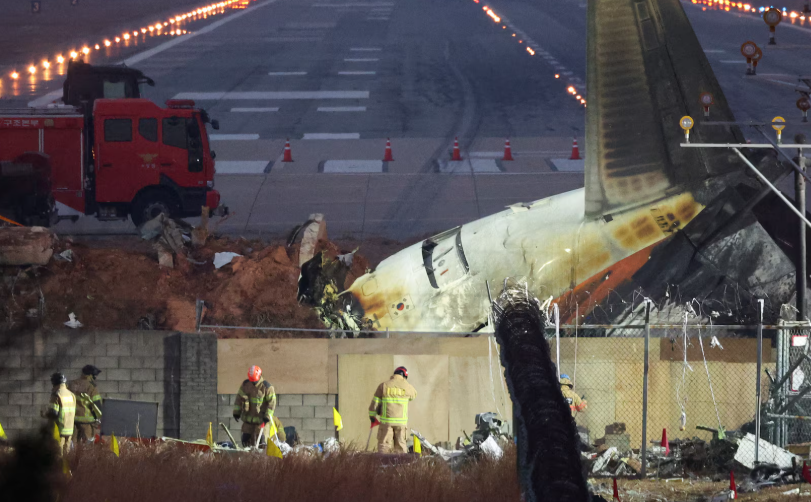
South Korean law enforcement has intensified its investigation into the Jeju Air disaster by conducting raids on the Korea Airports Corp and related government agencies on Tuesday, as authorities continue to build cases against 74 suspects connected to the tragedy that claimed 179 lives last December.
The coordinated search operations, which also targeted the Busan Regional Office of Aviation, represent a significant escalation in the probe's investigative phase. Investigators are systematically gathering additional documentation and evidence to substantiate charges of professional negligence that have already been levelled against the suspects, according to statements from the special investigation team overseeing the case. This marks the third occasion on which authorities have conducted a search of the transport ministry's offices, suggesting an expanding scope and deepening scrutiny of institutional accountability.
The Korea Airports Corp, which operates and manages the majority of South Korea's principal domestic airports with the notable exception of Incheon International Airport, has become a focal point of the investigation. As the entity responsible for facility management and operations at Muan International Airport where the crash occurred on December 29, 2024, KAC's compliance with safety protocols and maintenance standards is now under intense examination. The raids suggest investigators believe critical information regarding pre-crash conditions or post-incident response procedures may exist within the corporation's records.
The charges currently being pursued against the 74 suspects centre on professional negligence resulting in death or injury, a legal framework typically applied when institutional failures or individual oversights directly contribute to loss of life. However, police have indicated that the scope of charges may expand to include accusations of causing a serious public disaster, a more severe legal classification that could carry substantially harsher penalties and reflect a finding of systemic failures rather than isolated mistakes.
For Malaysian readers and Southeast Asian observers, the Jeju Air investigation carries particular significance given the region's dependence on air transportation and the critical importance of consistent safety standards across national aviation systems. The systematic nature of the South Korean inquiry, with multiple agencies and numerous suspects, underscores how modern aviation incidents typically involve complex chains of responsibility spanning airport operators, government regulators, manufacturers, and airline personnel. The methodical approach to gathering evidence reflects international best practices in accident investigation, particularly in establishing whether technical failures, human error, or institutional negligence contributed to the tragedy.
The investigation's focus on determining both the crash's immediate cause and whether responsible agencies adequately managed their obligations demonstrates a dual accountability framework. Rather than simply identifying what mechanical or pilot error led to the disaster, authorities are equally concerned with examining whether the systems, oversight mechanisms, and safety culture that should have prevented such an incident functioned as intended. This comprehensive approach echoes recommendations from the International Civil Aviation Organization and reflects lessons learned from previous major aviation disasters globally.
The involvement of the transport ministry in the raids highlights how aviation safety ultimately rests on government-level regulatory oversight and policy implementation. As the ministry responsible for establishing safety standards, licensing procedures, and compliance frameworks across South Korea's aviation sector, its performance during the lead-up to the crash and its response immediately afterwards are now subjects of official scrutiny. The repeated searches of ministry facilities suggest investigators may have concerns about the completeness or accuracy of information initially provided, or that new lines of enquiry have emerged requiring additional documentation.
The Busan Regional Office of Aviation, also targeted in the raids, represents the regional implementation level of national aviation policy. Airport operations at Muan fall under regional oversight structures, making this office's maintenance records, inspection reports, and communication logs potentially crucial to understanding what conditions or warnings may have preceded the incident. The attention paid to this office indicates investigators are examining the full operational chain from national policy to local implementation.
For aviation professionals and safety regulators throughout Southeast Asia, the Jeju Air investigation serves as a reminder of the complexity involved in maintaining safety across airports and airlines. Malaysia's own airports, operated by Malaysia Airports Holdings Berhad and others, function within comparable regulatory frameworks and face similar challenges in balancing operational efficiency with rigorous safety protocols. The South Korean authorities' methodical approach to evidence gathering and their willingness to pursue charges against multiple institutional actors and individuals suggests a commitment to establishing comprehensive accountability.
The December 2024 Jeju Air crash, which involved a Boeing 737-800 aircraft attempting to land at Muan, became one of the deadliest aviation incidents in recent years. While technical investigations have proceeded in parallel with the criminal inquiry, the focus on professional negligence charges indicates that authorities believe human decision-making and institutional oversight failures played significant roles alongside any mechanical factors. The ongoing raids and expanding investigation suggest that the final accounting of responsibility may involve substantial institutional reforms and potentially significant legal consequences for the agencies and individuals determined to have contributed to the disaster.
As the investigation continues to unfold, the South Korean government's demonstrated commitment to thorough accountability through multi-agency raids and expansion of charges signals to regional aviation stakeholders that serious incidents will prompt comprehensive institutional reviews. For airlines, airport operators, and regulatory bodies across Southeast Asia, the Jeju Air case underscores the critical importance of maintaining meticulous safety documentation, conducting regular operational audits, and fostering a safety culture where potential risks are identified and addressed before they become catastrophic incidents.

