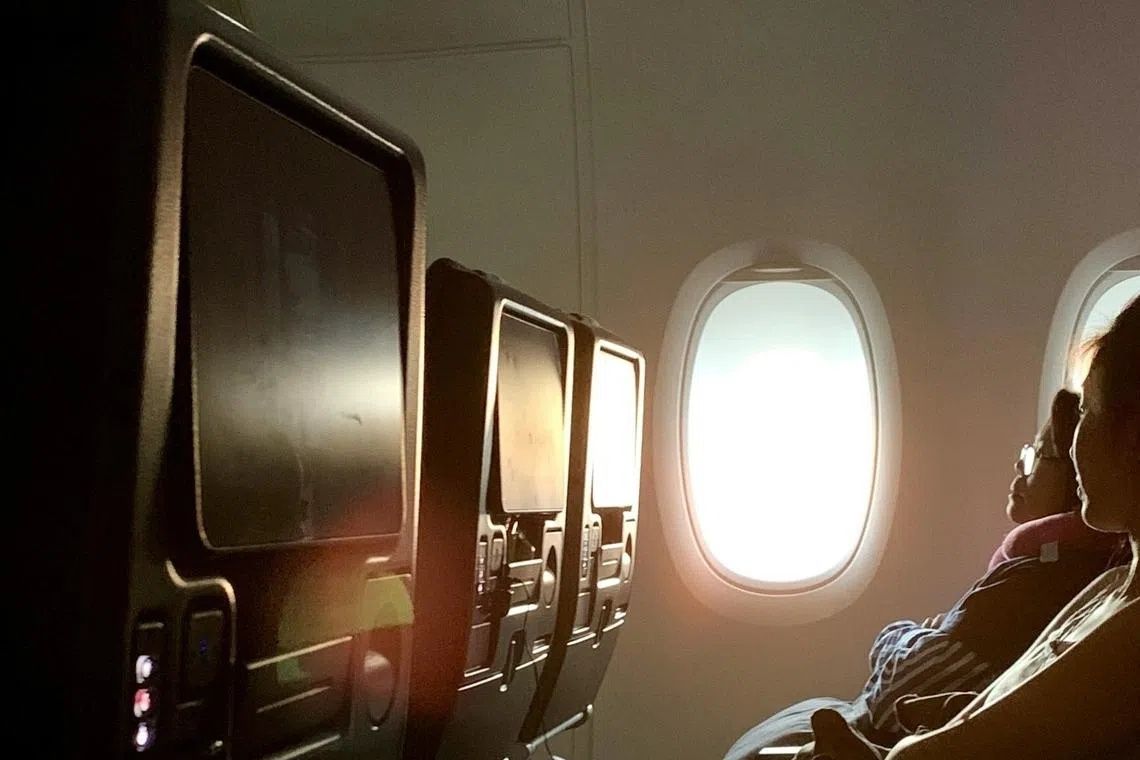
A middle school student in South Korea has sparked fresh debate about child safety in aviation entertainment by submitting an official petition to the government demanding stronger protections against unsuitable in-flight content. The complaint, filed through the Petition 24 platform managed by the Ministry of the Interior and Safety, highlights growing concerns about children's exposure to violent and sexually explicit material during commercial flights, raising questions about industry standards and parental oversight in shared public spaces.
The petitioner described an experience during which they encountered disturbing scenes they found impossible to ignore, despite their efforts to look away from the seat-back monitor. The situation became more troubling when the student's younger sibling, studying in the fourth grade, was also exposed to similar content on the same flight. This dual exposure across two different age groups—spanning middle and elementary school—underscores the challenge families face when attempting to manage what children consume in the confined environment of an aircraft cabin.
Central to the complaint is a call for mandatory technological and policy interventions. The petitioner specifically proposed implementing privacy screens or privacy filters on individual seat monitors, similar to technology already deployed in some corporate and educational settings. Such measures would allow passengers to view content discreetly while shielding those seated nearby—particularly young children who cannot opt out of shared airspace. The suggestion reflects a practical understanding that in-flight cabin layouts make traditional parental supervision difficult, especially for families with multiple children or during long-haul flights when fatigue may lower vigilance.
The petition gains legal weight through references to South Korea's established child protection frameworks. Both the Child Welfare Act and the Youth Protection Act explicitly mandate that children and adolescents be shielded from harmful content, establishing clear statutory obligations that arguably extend to the transportation sector. The petitioner's invocation of these laws suggests that existing regulations may not adequately address the specific context of in-flight entertainment, where regulatory oversight and enforcement remain murkier than in terrestrial broadcasting or cinema venues.
The two dominant carriers in South Korea—Korean Air and Asiana Airlines—currently maintain policies restricting content rated for adult-only viewing, theoretically preventing films designated for viewers aged 19 and above from appearing on their entertainment systems. Additionally, both airlines typically utilize edited versions of films in which the most graphic violent and sexual sequences have been removed or substantially altered. These self-regulatory measures were implemented to balance commercial interests in offering diverse entertainment with duty-of-care obligations toward vulnerable passengers.
However, such policies appear insufficient in practice. The complaint highlights potential gaps between stated restrictions and actual implementation. Whether the airlines failed to enforce their own guidelines, whether an edited version still contained objectionable content, or whether ratings standards proved inadequate remains unclear. What is evident is that current mechanisms did not prevent a child-reported incident, suggesting that industry self-regulation lacks teeth or that the classification systems themselves may underestimate content's impact on younger viewers.
A notable precedent occurred in 2020 when both Korean Air and Asiana Airlines removed the internationally acclaimed film Parasite from their in-flight playlists. Despite carrying a 15-and-above rating—theoretically permissible under their adult-only restrictions—the film's portrayal of violence and sexual content convinced the airlines that the content crossed an acceptable threshold for their passenger demographics. This decision indicates that Korean carriers recognize a distinction between regulatory compliance and genuine responsibility toward child passengers, yet such judgments appear reactive rather than systemic.
The filing raises broader questions about the transportation sector's approach to content curation in shared environments. Unlike cinemas, where ticket-purchasers make informed choices about film ratings, or broadcast television, where regulatory bodies enforce content standards, aircraft present a unique regulatory gap. Passengers do not purchase entertainment separately; rather, in-flight systems come pre-loaded with programming that affects everyone within viewing range. This collective consumption model creates externalities—children exposed to adult content they did not choose—that standard media regulation frameworks do not adequately address.
For Malaysian and broader Southeast Asian readers, this case carries relevance as regional carriers similarly grapple with in-flight entertainment policies. Airlines serving the region frequently deploy seat-back systems and encounter diverse passenger compositions across flights. The petition suggests that even countries with well-established legal protections for children may face implementation challenges when regulations intersect with the practical realities of commercial aviation. Whether current in-flight content policies at major Southeast Asian carriers adequately protect younger passengers warrants examination.
The petition's success in generating official attention may depend on whether authorities determine that existing laws already mandate enhanced protections, or whether new legislation proves necessary. Potential government responses could range from issuing binding directives to airlines regarding minimum content standards, requiring implementation of privacy-screen technology, or establishing independent oversight bodies to audit airline compliance. Such interventions would represent a shift from industry self-regulation toward more active state involvement in protecting minors within aviation environments.
This incident also reflects evolving societal expectations regarding corporate responsibility toward vulnerable populations. As airlines increasingly compete on entertainment quality and diversity, they face countervailing pressure to shield children from content their parents might find objectionable. The technological solution proposed—privacy screens—offers a compromise that preserves adult choice while limiting involuntary child exposure, though implementation costs and cabin design constraints may prove challenging.
Ultimately, the complaint represents a broader assertion that child protection obligations should extend into all environments where children congregate, including aircraft. Whether South Korea's government ultimately mandates new measures, or whether the case spurs industry-led improvements, remains to be seen. What seems clear is that the current equilibrium between content diversity and child safety may no longer satisfy parents and young passengers themselves, suggesting that this particular complaint may catalyze meaningful changes across the aviation sector.

