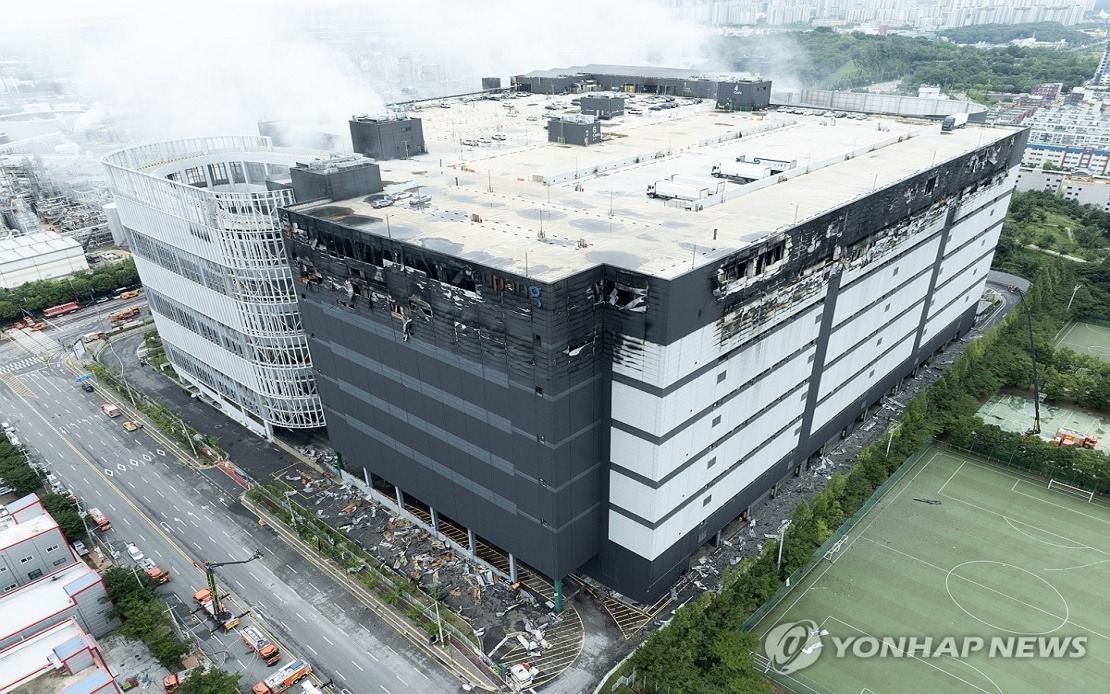
A significant fire at a major logistics facility operated by Coupang in Incheon, located just west of Seoul, was declared under initial control on Monday evening after burning for more than two and a half days, marking the conclusion of an intensive firefighting operation that mobilised national resources across South Korea's capital region.
The Incheon firefighting headquarters announced the achievement at 8 p.m. on Monday, signalling that while the threat remained contained rather than entirely extinguished, the immediate danger of rapid spread had been contained. The operation represented one of the most resource-intensive industrial fire responses in recent South Korean history, with authorities dispatching 812 firefighters and deploying 231 pieces of equipment following a national alert issued on Saturday when the blaze first erupted.
The warehouse's architectural design and the sheer volume of combustible materials stored within presented extraordinary challenges to firefighting personnel throughout the operation. The complex internal structure of the logistics centre, combined with densely packed inventory typical of major e-commerce distribution hubs, created conditions where flames could spread rapidly through multiple levels and compartments. Weather conditions initially hampered containment efforts, though firefighters capitalised on rainfall that arrived Monday to dampen materials and reduce the fire's intensity.
The incident forced unprecedented civilian disruption across the surrounding district. Local authorities issued evacuation orders late Sunday affecting all residents and facilities within a 116-metre radius of the warehouse's ramp zone, prioritising public safety as a primary concern. By Monday, 178 residents had sought temporary shelter in nearby schools, reflecting the severity of the threat authorities perceived to the immediate neighbourhood.
The precautionary measures extended to childcare and education facilities in the broader vicinity. Local government officials instructed daycare centres and elementary schools to remain closed on Monday as a safety measure, resulting in the shutdown of one elementary school and 14 daycare centres. Such closures underscore how industrial accidents in densely populated regions can disrupt essential services and create cascading effects beyond the immediate incident zone.
For Malaysian readers, this incident illustrates the vulnerabilities of large e-commerce and logistics operations when adequate fire safety systems are either absent or overwhelmed. South Korea's rapid industrial development and reliance on massive automated warehouses mirrors similar infrastructure being constructed across Southeast Asia, including Malaysia, where rapid expansion of the logistics sector has sometimes outpaced safety regulatory frameworks.
The deployment of 812 firefighters demonstrates how modern industrial incidents can strain emergency services across entire metropolitan regions. Malaysia's fire and rescue services manage comparable logistics hubs, yet often operate with more limited resources than those available to South Korean authorities, raising questions about surge capacity during major incidents.
Coupang's prominence as South Korea's largest e-commerce company means this incident carries economic ramifications. The warehouse serves as a critical distribution point for the company's same-day delivery operations, suggesting that inventory losses and operational disruptions may have significant cascading effects throughout South Korea's consumer economy. For regional competitors, the incident highlights operational risks that emerge when companies concentrate vast quantities of merchandise in single locations.
The incident also underscores emerging tensions between industrial efficiency and safety. Modern logistics operators prioritise space utilisation and inventory density to maximise profitability and service speed, creating environments where fire suppression systems can become overwhelmed. Building codes and fire safety regulations, even in developed economies like South Korea, sometimes struggle to keep pace with the scale and complexity of contemporary warehouses.
The eventual containment represents success for firefighting coordination across South Korean jurisdictions, yet the 61-hour duration indicates that even well-resourced responses to modern industrial fires require substantial time. Neighbouring Southeast Asian nations experiencing rapid warehouse expansion should note that fire response capabilities require ongoing investment in equipment, training, and inter-agency coordination to match the increasing scale of potential incidents.
Authorities will now focus on investigating root causes, assessing structural damage, and determining whether the facility can resume operations. Such investigations typically examine electrical systems, chemical storage conditions, and whether fire suppression infrastructure functioned as designed. The findings may influence future regulations governing warehouse construction and operations across the region, potentially affecting how logistics companies approach facility design and safety management throughout Asia.

