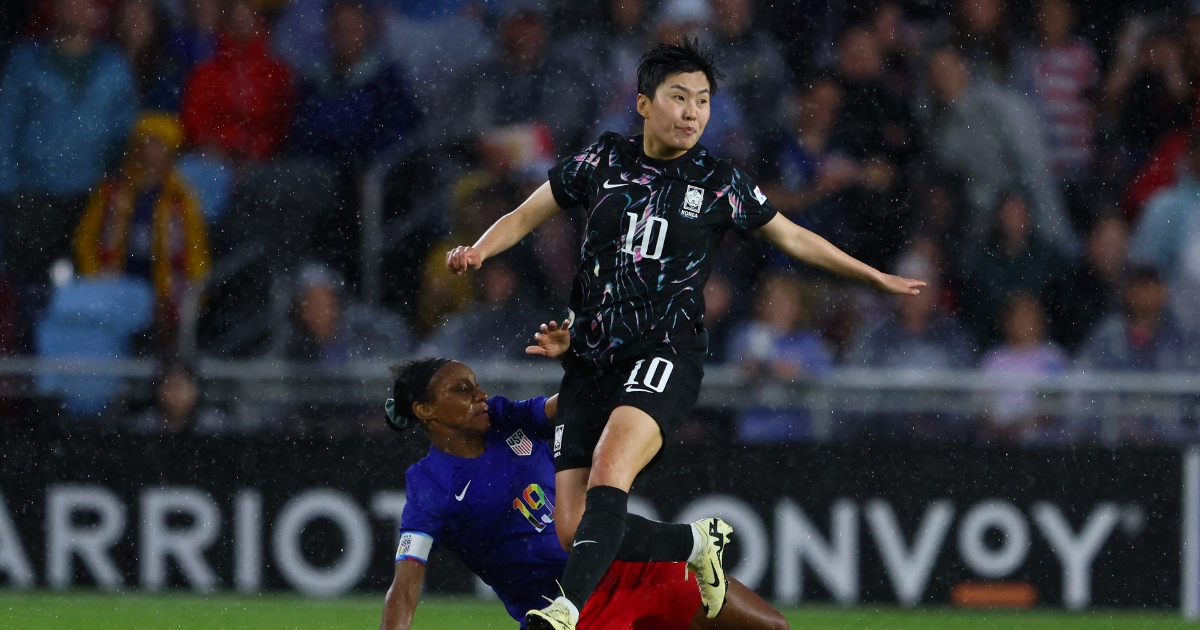
South Korea's governing body for women's football announced the start of an official investigation on Monday following allegations that a female referee made disparaging comments about the menstrual cycle of Ji So-yun, the accomplished midfielder who previously played for English club Chelsea, during a domestic competition fixture.
The complaint raises serious questions about respect and professionalism within South Korean women's football at a time when the sport continues to build momentum across the region. Ji So-yun, who spent several seasons at Chelsea and established herself as one of Asia's most accomplished midfielders, has become a focal point in discussions about player treatment and the standards expected from match officials overseeing women's competitions.
Investigations of this nature carry particular significance in South Korea, where women's sports have increasingly drawn public attention and scrutiny. The federation's decision to formally examine the allegations demonstrates a willingness to address conduct that undermines the dignity of female athletes, though the investigation's scope and timeline remain to be clarified by officials overseeing the inquiry.
For Malaysian and Southeast Asian readers, this development reflects broader regional conversations about the professionalization of women's football and the mechanisms required to protect players from inappropriate treatment. As women's football continues to expand its commercial footprint and fan base throughout Southeast Asia, establishing clear standards for official conduct becomes essential infrastructure for the sport's continued growth.
The domestic context in South Korea further illuminates why such investigations matter. Women's football has experienced significant growth in participation and viewership over the past decade, yet infrastructure gaps persist in areas such as referee training, conduct standards, and formal grievance mechanisms. Allegations involving match officials particularly stand out because referees occupy positions of considerable authority and their conduct directly shapes the environment in which players compete.
Period-related commentary directed at female athletes represents a specific and troubling category of discrimination that has surfaced in various sports globally. Such remarks typically serve to undermine female athletes' credibility, suggest weakness or emotional instability, or imply that menstruation somehow affects competence—all notions thoroughly debunked by sports science. The fact that this alleged conduct came from a female referee adds complexity to the situation, as it raises questions about internalized attitudes toward women's bodies and the mechanisms through which such attitudes can persist within women-only spaces.
The investigation comes at a moment when South Korean women's football continues to establish itself as a competitive force in regional and international tournaments. The national team has competed in multiple AFC Women's Asian Cup editions and has participated in FIFA Women's World Cup competitions, meaning that the professional reputation of domestic competition directly impacts player development and the federation's standing internationally. Any findings that substantiate misconduct could prompt broader reviews of referee training and code-of-conduct procedures.
For Southeast Asian federations operating within similar developmental contexts, the investigation offers instructive lessons about the importance of establishing formal complaint procedures and ensuring that investigation outcomes remain transparent and accessible to stakeholders. Several nations in the region continue to develop institutional frameworks for women's football governance, and how established federations handle cases of alleged misconduct sets standards for the entire regional community.
The involvement of Ji So-yun, whose international profile extends across both Asian and European competitions, amplifies the visibility of this case. Her background at a prominent European club means that any findings and remedial actions undertaken by the South Korean federation will likely receive attention from international observers and potentially influence how other Asian football bodies address similar issues.
Referee conduct standards represent a critical but sometimes overlooked dimension of women's sports development. Ensuring that officials receive comprehensive training on appropriate communication with players, awareness of unconscious bias, and understanding of the specific physical and psychological experiences of female athletes requires sustained institutional commitment. Such training becomes particularly important in contexts where women's sports have historically received lower resource allocation and less detailed governance oversight than men's competitions.
The investigation itself represents progress, as it acknowledges that players possess the right to compete in environments free from demeaning or disrespectful conduct. How thoroughly the federation pursues the investigation, what remedial measures follow any substantiated findings, and whether outcomes become public knowledge will collectively determine whether this moment catalyzes meaningful change in women's football governance throughout the region.

