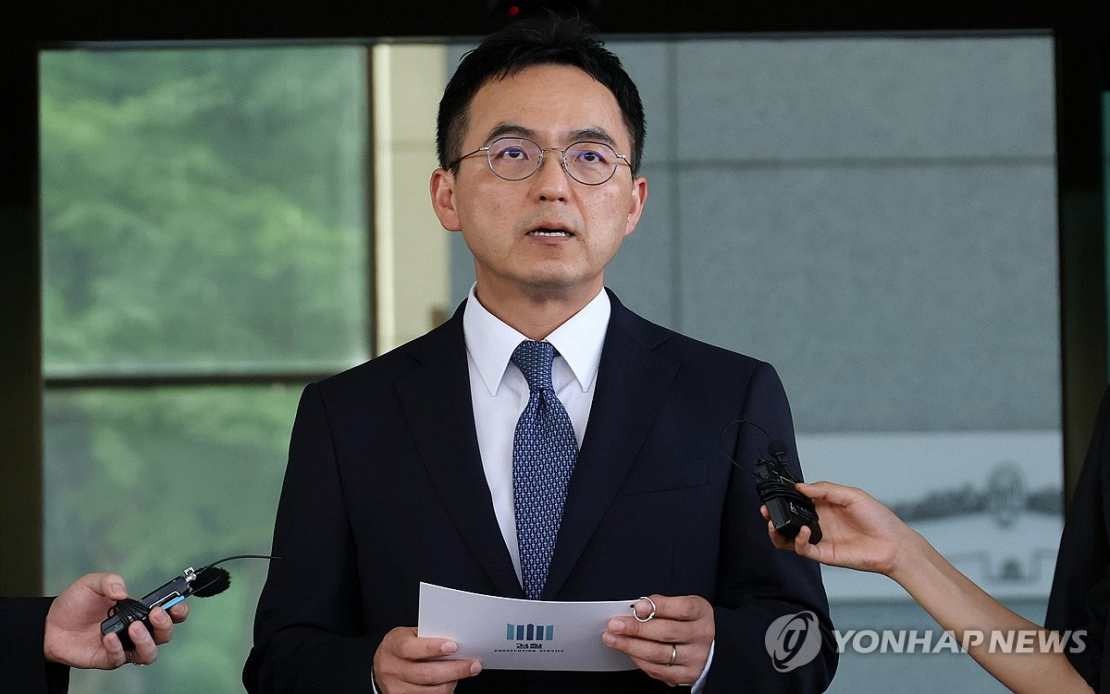
South Korea's Acting Prosecutor General Koo Ja-hyeon announced his resignation on Friday, days after the National Assembly passed sweeping legislation designed to curtail the prosecution service's investigative authority. The decision comes amid growing tension between the executive branch and law enforcement over the scope and independence of prosecutorial powers, a contentious issue that has dominated South Korean political discourse in recent months.
The Democratic Party, which controls the National Assembly, shepherded the controversial Criminal Procedure Act amendment through the plenary session with overwhelming support. The vote tally of 175-2, accompanied by a single abstention, reflected the ruling coalition's numerical dominance, though the margin masked significant public and institutional divisions over the reform. The opposition People Power Party had attempted to delay proceedings through a filibuster the previous day, signalling deep disagreement about the bill's substance and implications for judicial independence.
Koo's decision to step down represents an extraordinary moment in South Korean governance, with a sitting chief prosecutor effectively protesting legislative action through resignation. In his statement to reporters on Friday evening, the Acting Prosecutor General framed his departure as an acceptance of responsibility for the bill's passage, though his subsequent comments revealed his substantive disagreements with the reform. This unusual approach highlights the tension between parliamentary sovereignty and prosecutorial autonomy that has characterised South Korean politics in recent years.
The legislative change fundamentally reshapes how criminal investigations operate across South Korea. Under the new framework, prosecutors lose their capacity to conduct direct investigations and supplementary inquiries independently. Instead, they will be relegated to a supervisory role, able only to request that judicial police officers undertake supplementary investigations on their behalf. This represents a significant diminution of prosecutorial power in a country where the prosecution has traditionally wielded considerable influence over criminal justice outcomes.
Koo's public concerns about the amendment extended beyond matters of institutional pride or bureaucratic prerogative. He articulated specific worries about the practical consequences of removing prosecution investigative authority, arguing that the change would fundamentally compromise the justice system's capacity to uncover factual truth and support victims of crime. His worry that prosecutors would henceforth operate with incomplete information, relying solely on police investigative records to make prosecution decisions, reflects a genuine concern about the quality and comprehensiveness of criminal justice in the post-reform environment.
The Acting Prosecutor General acknowledged the prosecution service's legitimate need for institutional reflection and reform. He conceded that public confidence in the prosecution had eroded and that meaningful reform addressing these concerns remained necessary. However, Koo contended that structural changes should not come at the cost of abandoning the prosecution's core institutional mission. This distinction between accepting accountability for institutional failures and rejecting overly broad legislative remedies illustrates the complexity of prosecutorial reform in contested political environments.
For Malaysian and Southeast Asian observers, the South Korean situation offers important lessons about the delicate balance required between legislative oversight and prosecutorial independence. Many countries in the region grapple with similar questions about how to ensure law enforcement agencies remain accountable without compromising their operational effectiveness or vulnerability to political manipulation. The South Korean case demonstrates how reform efforts, even when motivated by legitimate concerns about institutional autonomy or independence, can trigger significant disputes about proper governance structures.
Koo's explicit plea to the government to conduct further review before finalising the legislation underscores his conviction that the current approach carries unintended consequences. Rather than simply accepting defeat, the Acting Prosecutor General urged executive intervention to evaluate whether the reform might create gaps in law enforcement capability or undermine victim protection mechanisms. This suggests that institutional concerns about the amendment extend beyond the prosecution service itself to broader questions about criminal justice system coherence.
The political context surrounding this legislation remains significant. The Democratic Party's pursuit of this prosecution reform occurs within a longer struggle over the independence and appropriate scope of law enforcement in South Korean democracy. These debates often intersect with partisan disputes about how thoroughly political figures and powerful individuals face criminal accountability. The legislation's timing and the opposition's forceful resistance suggest that underlying disputes about who controls prosecutorial discretion remain unresolved beneath the surface of debate about institutional structure.
The bill's passage despite prosecutor opposition and the opposition coalition's vigorous resistance indicates that the Democratic Party views this reform as essential, perhaps to prevent perceived prosecutorial overreach or to rebalance power within the justice system. Yet the resignation of the prosecution's chief officer creates a symbolic moment that may resonate throughout South Korean institutions. Future policymakers and prosecutors will navigate this reformed landscape while managing public expectations about institutional effectiveness and independence.
For the region more broadly, the South Korean case demonstrates that prosecutorial reform remains a live and contested political issue in democracies still developing their institutional maturity. The struggle between legislative bodies seeking to constrain executive justice institutions and prosecutors defending their authority suggests that finding sustainable equilibrium remains challenging. How South Korea's justice system functions under these new constraints will likely influence policy discussions throughout Asia about optimal configurations of prosecutorial power.

