The revelation that a prominent South Korean actress's family may have collaborated with Japanese colonial authorities during the early twentieth century has inadvertently exposed the depth of public interest in genealogical research, driving unprecedented traffic to the nation's leading ancestry-tracing platform. Within days of the scandal emerging, the website—colloquially known as 'in search of roots'—experienced technical failures as millions of South Koreans rushed to investigate their own family histories, raising questions about national memory and how ordinary citizens engage with their country's complex colonial past.
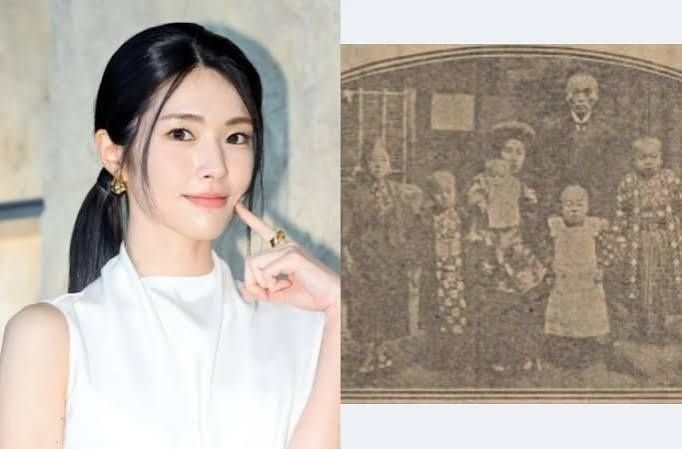
Ahn Ha-young, a recognisable figure in South Korean television and film, initially spoke positively about her great-grandfather, Ahn Sang-ho, describing him as a pioneering physician who established Seoul's first Western-style medical clinic and treated Emperor Gojong during the late nineteenth and early twentieth centuries. The narrative seemed exemplary: a family that had contributed to Korea's modernisation during a turbulent period. However, when internet users began cross-referencing historical records and colonial archives, allegations surfaced suggesting that Ahn Sang-ho may have maintained connections with individuals and institutions sympathetic to Japanese rule, a revelation that fundamentally altered public perception of the family's historical role.
The genealogy website, which catalogues information across 287 distinct family lineages in South Korea and provides documentation on their origins and demographic profiles, became the focal point for this sudden wave of public curiosity. The platform's infrastructure, designed for steady but manageable usage patterns, struggled under the load as users sought both to verify claims about Ahn Ha-young's ancestry and, more broadly, to examine their own family histories for any potential compromising connections to the colonial administration. The server experienced sustained outages for several hours on the evening of August 12, with intermittent crashes persisting into the following day as the phenomenon continued to gain momentum.
When Ahn Ha-young's management agency initially dismissed the allegations as baseless, they inadvertently intensified public scrutiny rather than containing it. The denial prompted digital sleuths and academic researchers to dig deeper into available historical documents, cross-referencing colonial-era records and genealogical databases in pursuit of substantiation. This pattern—initial denial followed by heightened public investigation—has become a familiar cycle in South Korean popular culture when questions of historical accountability emerge, and it often results in precisely the opposite outcome that public relations strategies aim to achieve.
The controversy gained particular resonance given its timing. South Korea marks Liberation Day on August 15 each year, a national holiday commemorating the country's emancipation from Japanese colonial rule in 1945. This annual reflection on colonial subjugation and resistance shapes the national consciousness during this period, making any suggestion of family collaboration with the occupying power especially sensitive. The convergence of Ahn Ha-young's controversy with the approach of Liberation Day created a moment in which historical reckoning felt urgent and personally relevant to millions of South Koreans.
Ahn Ha-young eventually issued a public apology on August 12, acknowledging that she had been unaware of the problematic aspects of her family's historical record and expressing regret that she had spoken with pride about her ancestry without fully understanding its complexities. The statement reflected a broader recognition within South Korean society that family histories cannot be narrated in isolation from the political contexts in which they unfolded, and that celebrating individual achievement during the colonial period requires careful attention to whether those achievements were entangled with collaboration or accommodation with the occupying power.
The surge in genealogy website traffic reveals something significant about how contemporary South Koreans engage with historical responsibility. Rather than dismissing the scandal as a purely entertainment industry concern, millions used the opportunity to examine their own family backgrounds, suggesting a genuine national anxiety about whether their own ancestors carried similar moral complications. This democratisation of historical inquiry—moving beyond academic specialists to include ordinary citizens—reflects a maturing public understanding that colonialism's legacy is not a distant historical matter but something embedded in family structures and personal identity.
The technical crisis faced by the genealogy platform also underscores South Korea's broader digital infrastructure challenges when demand spikes unpredictably. The website's collapse, even temporary, frustrated users attempting to conduct legitimate genealogical research and historical investigation. For a nation that prides itself on technological sophistication, the incident highlighted how even well-established platforms can be blindsided by viral interest, a phenomenon increasingly common in an era when digital mobs can rapidly mobilise around particular issues.
For Malaysia and other Southeast Asian nations with their own complex colonial histories, the South Korean experience offers a cautionary tale about unexamined family narratives. Many families across the region similarly harbour ancestors who collaborated with colonial authorities—whether British, Dutch, or Japanese—and those legacies remain largely unexamined in public discourse. South Korea's willingness to subject prominent public figures to scrutiny over ancestral historical ties, however uncomfortable, demonstrates how societies can gradually build more honest relationships with their past, even when that past implicates beloved cultural figures and revered family histories.
The episode also reflects the power of digital technology to democratise access to historical records that were once the exclusive domain of researchers and archivists. As genealogical databases become more comprehensive and searchable, and as internet communities mobilise to investigate historical claims, the possibility of maintaining sanitised family narratives diminishes. Public figures and ordinary citizens alike must increasingly reckon with the possibility that their family histories may contain uncomfortable truths, a reckoning that, while painful, potentially contributes to more honest national conversations about complicity, collaboration, and moral compromise during periods of foreign domination.

