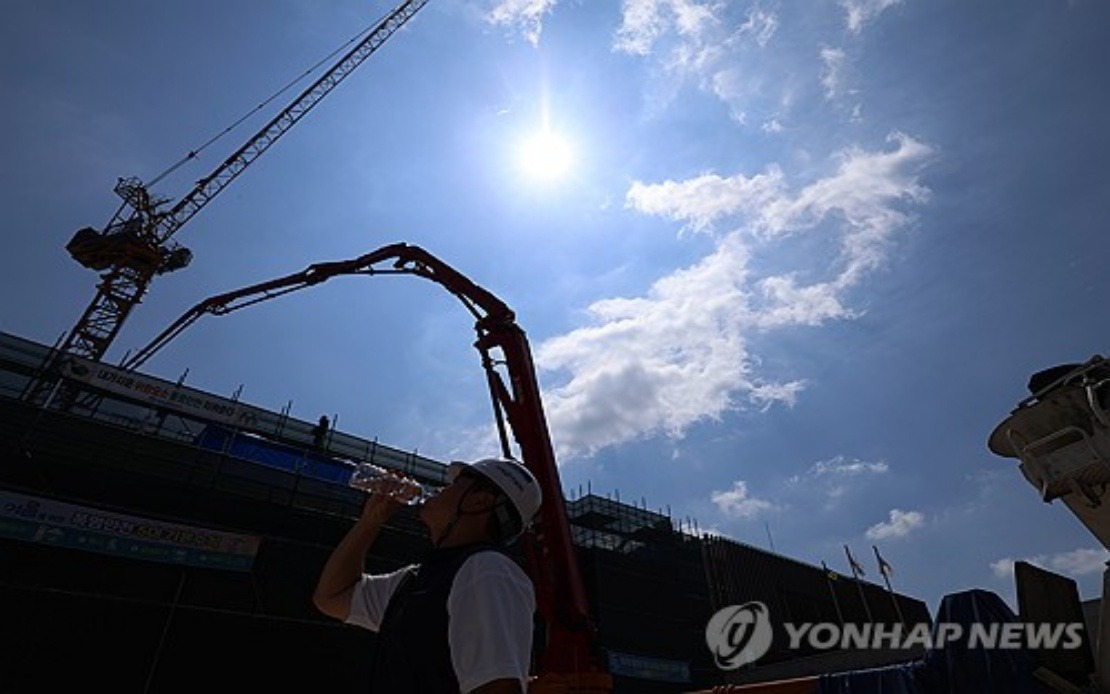
South Korea is confronting a climate emergency of unprecedented severity as its state weather agency expanded critical heat wave warnings across the greater Seoul metropolitan area on Wednesday, with the Korea Meteorological Administration placing 43 per cent of the region under its highest alert classification. The expansion reflects the intensifying nature of the heat crisis gripping the nation's most densely populated region, where millions of residents face dangerous conditions that health officials have described as life-threatening.
The maximum-level warnings came into force at 11 am across southern Incheon and nine municipalities and districts throughout Gyeonggi Province, including Gwangmyeong, Yeoncheon and Hwaseong. This expansion brought the total number of affected weather advisory zones to 20 out of 46 jurisdictions across the capital region. The geographic spread of these warnings underscores how the heat crisis has evolved from isolated pockets of extreme temperatures into a widespread phenomenon affecting the entire megalopolis that is home to nearly half of South Korea's 51 million population.
The advancement to top-tier alert status in Cheongyang within South Chungcheong Province marked a significant milestone—the first occasion that the highest heat warning level has been triggered anywhere across the central Chungcheong provinces. This geographic expansion southward signals that the heat wave is not confined to the Seoul metropolitan corridor but has begun affecting broader swathes of the nation's interior, with potentially serious implications for rural agricultural communities and smaller urban centres less equipped with cooling infrastructure than the capital.
This escalation followed a watershed moment on Tuesday when all of Seoul itself was placed under maximum heat alert status for the first time since the current heat wave warning system was formally introduced on June 1. The historic nature of placing the entire capital under top-tier alert simultaneously reflects the extraordinary character of current conditions and suggests that planning assumptions about Seoul's heat resilience may require fundamental reassessment as climate patterns shift.
The Korea Meteorological Administration implements serious heat wave warnings using specific meteorological thresholds that account for both absolute temperature readings and relative conditions within each locality. Authorities activate the highest alert tier when apparent temperatures—a measure combining actual temperature, humidity, and wind speed—are projected to reach 38°C or above, or when daily maximum temperatures exceed 39°C, provided that the region has already experienced two or more consecutive days with apparent temperatures of 35°C or higher. These technical criteria reflect years of epidemiological research demonstrating the relationship between specific temperature thresholds and increased mortality and morbidity in the Korean population.
The temperature extremes recorded have shattered long-standing records with alarming implications for climate science and public health planning. Yangsan, a city in the southeastern region, has experienced peak temperatures of 42.5°C—the highest measurement recorded since systematic weather observations commenced in South Korea in 1904. This represents not merely a marginal exceedance of previous records but a substantial breach of historical norms, suggesting that assumptions about the bounds of possible temperature variation may no longer hold validity in the era of accelerating climate change.
The human consequences of this environmental crisis have become increasingly visible in hospitalisation and mortality statistics. The Korea Disease Control and Prevention Agency reported that between May 15 and the start of the week, heat-related medical conditions necessitated 2,221 admissions to healthcare facilities across the nation. More grimly, the agency documented 19 confirmed fatalities directly attributable to heat exposure during the same period. These figures, troubling as they are, likely represent the lower bound of actual heat-related mortality, as many deaths from conditions exacerbated by extreme temperatures may be classified differently in official statistics.
For Malaysian and broader Southeast Asian observers, South Korea's heat crisis offers both cautionary perspective and uncomfortable recognition. While Malaysia's tropical climate means that absolute temperature peaks may not match Korean records, the combination of high baseline temperatures, intense humidity, and rapidly increasing heat index values creates comparable public health hazards. The Korean experience demonstrates how even developed nations with sophisticated infrastructure and healthcare systems face serious challenges when heat becomes extreme, suggesting that tropical developing economies require urgent investment in heat adaptation strategies including enhanced cooling centres, targeted vulnerable population protection programmes, and occupational safety standards for outdoor workers.
The economic dimensions of the heat crisis extend beyond immediate health impacts. Sustained maximum-alert warnings across the Seoul metropolitan area disrupt industrial production, transportation networks, and commercial activity as businesses implement emergency protocols and workers face health and safety restrictions on labour. Schools and workplaces adjust operating hours to avoid peak heat periods, educational continuity suffers, and productivity losses accumulate across the economy. The expansion to Chungcheong Province threatens agricultural production during critical crop development seasons, with implications for national food security and rural incomes.
South Korean authorities have implemented emergency response measures including the operation of free public cooling centres, distribution of cooling supplies to vulnerable populations, and heightened public health surveillance. However, the unprecedented geographic scope and intensity of current warnings has strained these systems, leading officials to appeal for individual behavioural adaptation including reduced outdoor activity during peak hours, increased fluid intake, and heightened vigilance toward elderly residents and outdoor workers. The capacity of these reactive measures to contain the human toll of extreme heat appears increasingly uncertain as the crisis persists.
The escalation of warnings reflects not temporary weather volatility but rather accelerating climate change affecting the Korean peninsula. Meteorological research indicates that heat waves have increased in frequency, duration, and intensity across East Asia over recent decades, consistent with global warming patterns. South Korea's response mechanisms, while more developed than in many regional nations, demonstrate how rapidly climate adaptation infrastructure becomes inadequate as baselines shift. For Malaysia and Southeast Asia, the Korean experience underscores the urgency of beginning now to prepare for heat extremes that current infrastructure assumes are improbable, recognising that climate change operates on timescales faster than typical infrastructure replacement cycles.

