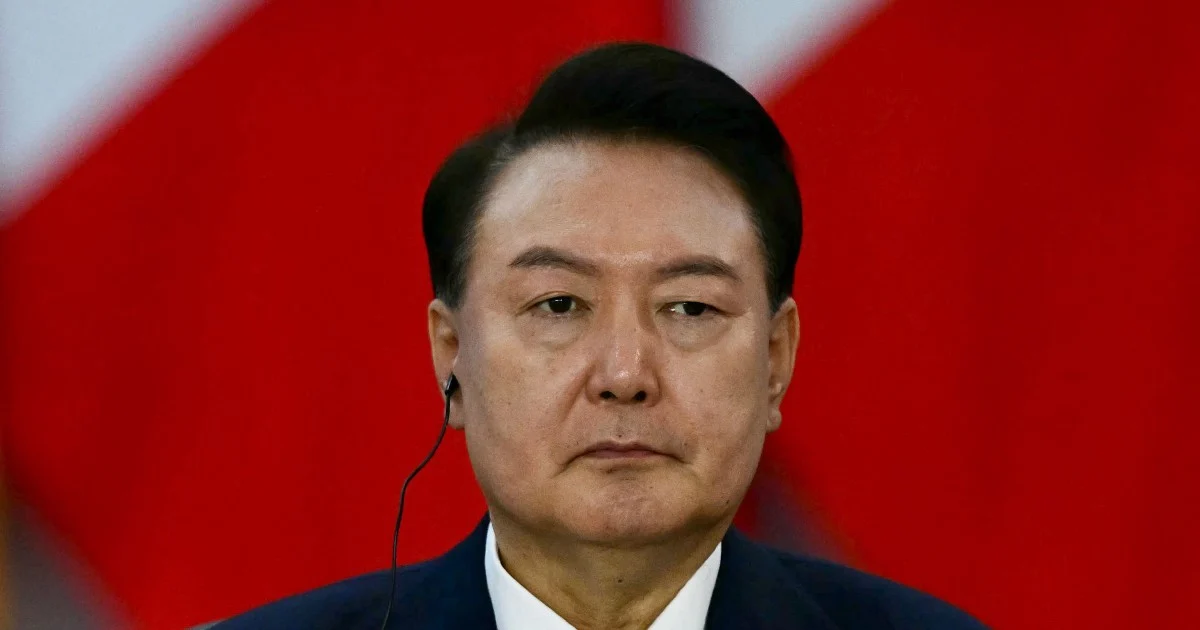
South Korea's Constitutional Court is poised to deliver a landmark verdict Thursday in the case against former president Yoon Suk Yeol, addressing allegations stemming from his ill-fated martial law declaration and the disorder that followed. The decision represents a defining moment in South Korean judicial history and carries profound implications for the nation's political stability and constitutional framework.
Yoon's declaration of martial law sent shockwaves through the country and triggered a constitutional crisis when lawmakers moved to impeach him. The incident exposed deep fractures within South Korea's political system and raised questions about the limits of executive power and the strength of democratic institutions. The court's judgment will effectively determine whether the former leader's actions constitute criminal conduct or represent a defensible exercise of presidential authority during a claimed national emergency.
The case has captivated South Korean public opinion and international observers, serving as a test of the nation's commitment to rule of law and institutional accountability. Unlike systems where political disputes often remain confined to legislative proceedings, South Korea's decision to pursue criminal charges against a former head of state demonstrates the judiciary's willingness to scrutinise presidential actions. This approach reflects growing global trends where former leaders face legal consequences once they leave office, from Taiwan to the Philippines.
The charges against Yoon encompass multiple alleged offences connected to the martial law proclamation and the government's response to the resulting chaos. The specificity and severity of these allegations suggest prosecutors have constructed a substantial case, though the Constitutional Court's review will determine whether evidence meets the threshold for criminal liability. The court's interpretation of applicable constitutional and criminal statutes will establish precedent for evaluating future executive overreach.
For Southeast Asian observers, the South Korean proceedings offer instructive lessons about institutional resilience. Malaysia and other regional democracies grapple with similar tensions between executive authority and constitutional constraints. The case underscores how constitutional courts can serve as bulwarks against democratic backsliding when political actors attempt to consolidate power through extraordinary measures. The regional context makes this verdict particularly significant, as it signals whether advanced democracies can hold their leaders accountable through legal mechanisms.
Yoon's political trajectory from celebrated prosecutor and conservative champion to impeached and charged former president reflects the volatility of South Korean politics. His supporters argue that his martial law declaration responded to legitimate security concerns and parliamentary obstruction, while critics contend it represented an unconstitutional power grab. The court must navigate these competing narratives while grounding its decision in constitutional law rather than political preferences.
The timing of Thursday's verdict occurs amid South Korea's broader political turbulence. The country faces leadership questions about its future direction, international relations, and domestic policy priorities. A conviction would cement Yoon's political downfall and reinforce judicial independence, whereas an acquittal might suggest the courts view martial law declarations as constitutionally permissible under certain circumstances. Either outcome will reverberate through South Korean politics for years.
The court's deliberations have necessarily involved complex constitutional interpretation. Justices must weigh whether presidential powers include authority to declare martial law without legislative approval, whether the circumstances Yoon cited justified such action, and whether subsequent conduct violated law. These questions touch fundamental aspects of South Korea's 1987 democratic constitution, which established formal checks against unchecked presidential power following decades of authoritarian rule.
For Malaysian readers familiar with constitutional debates surrounding emergency declarations and executive prerogative, the South Korean case illuminates how constitutional courts approach these sensitive questions. The decision will demonstrate whether constitutional frameworks protect fundamental rights and democratic processes even when leaders invoke emergency powers. This principle matters acutely in Southeast Asia, where emergency declarations have sometimes preceded democratic deterioration.
The verdict's credibility depends substantially on public perception of the court's independence and impartiality. South Korea's Constitutional Court has faced accusations of political bias from various quarters, and Thursday's decision will either reinforce or undermine faith in its neutrality. A decision perceived as politically motivated could damage institutional legitimacy and complicate future cases involving political actors. Conversely, a reasoned judgment grounded in constitutional law strengthens democratic institutions.
Beyond Yoon's personal fate, the case carries implications for South Korea's international standing and regional security posture. Democratic allies will scrutinise whether the legal process appears fair and transparent, while observers assess whether South Korea's institutions can manage severe political crises through constitutional means rather than instability. Given South Korea's critical role in regional geopolitics and its strategic importance to neighbouring democracies, institutional resilience matters beyond domestic politics.
The Constitutional Court's decision will also influence how future South Korean leaders approach executive power. A conviction signals serious consequences for constitutional violations, potentially deterring overreach, while an acquittal might encourage bolder assertions of presidential authority. Either pathway shapes the institutional landscape that subsequent administrations will navigate, making Thursday's verdict consequential for South Korea's democratic future.

