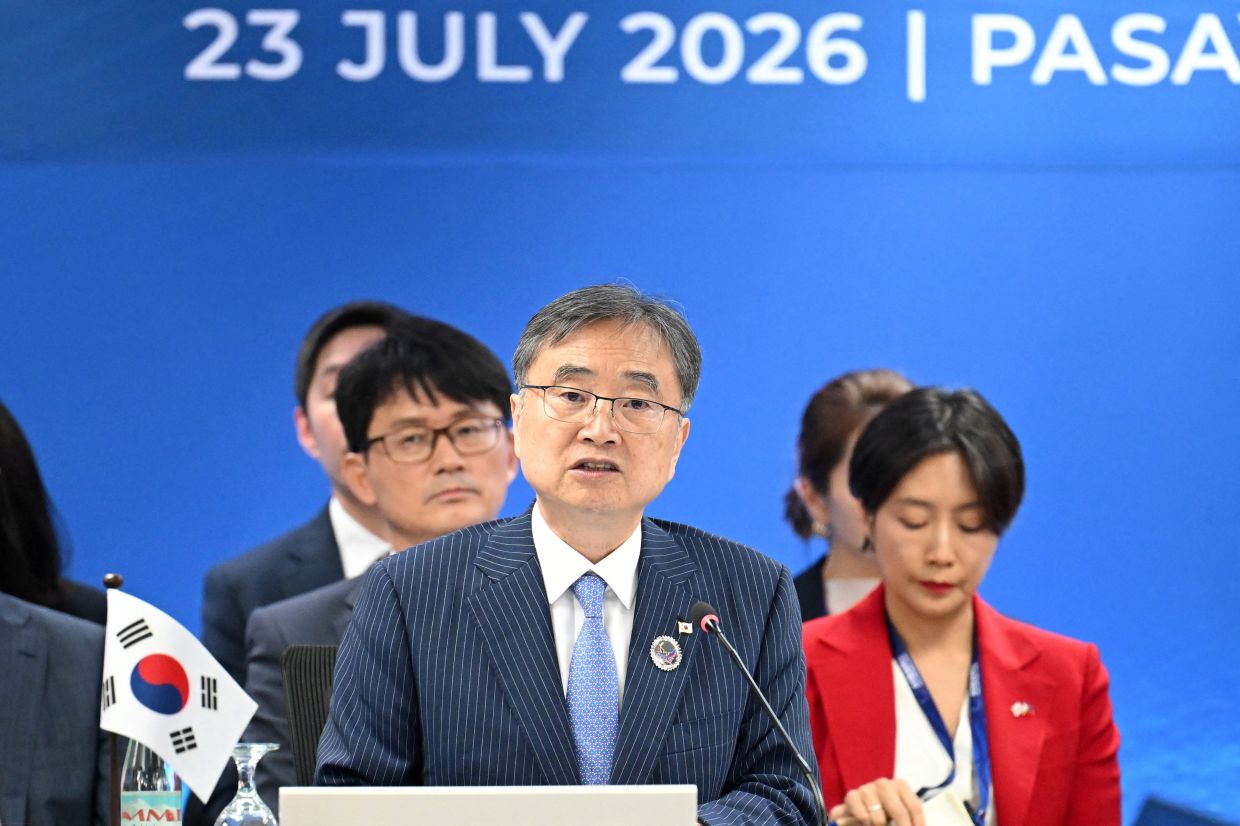
Public disagreement between South Korea's Foreign and Unification ministers this week has laid bare fundamental tensions within President Lee Jae Myung's administration as it attempts to resurrect dormant diplomatic channels with North Korea. The clash, centred on competing visions for how Seoul should approach Pyongyang, comes at a critical juncture when the government is attempting to shift towards a more conciliatory posture after years of escalating hostilities and minimal contact between the two countries.
Foreign Minister Cho Hyun openly criticised proposals brought forward by Unification Minister Chung Dong-young during a Wednesday policy meeting with President Lee, characterising the engagement initiatives as overly optimistic and lacking proper institutional support. Cho's dismissive framing, which he reinforced during remarks to journalists, suggested that Chung's ideas had not been subject to the kind of rigorous intergovernmental consultation necessary for coherent policy implementation. Chung struck back through his own media engagement the following day, defending the necessity of ambitious thinking to achieve meaningful diplomatic breakthroughs, thereby weaponising the language of idealism against his colleague's apparent pragmatism.
At the heart of the dispute lies Chung's vision for launching four-party talks bringing together both Korean governments alongside the United States and China as a centrepiece for Seoul's engagement strategy in the latter half of the year. Such multilateral diplomacy represents a departure from bilateral approaches and signals an attempt to create a more structured international framework for renewed negotiations. Cho's objection, however, suggests the Foreign Ministry remains unconvinced that adequate groundwork exists within Seoul's own government, let alone internationally, to make such talks viable. This procedural concern masks deeper questions about whether Seoul's various agencies are truly aligned on fundamental strategic objectives.
The Lee administration's pivot away from a rigid "denuclearisation-first" stance towards what officials term a "peace-first" approach reflects a strategic recalculation driven partly by the frozen state of inter-Korean relations and partly by a desire to create diplomatic openings that North Korea might be willing to explore. Simultaneously, Seoul has been encouraging United States President Donald Trump to pursue direct engagement with North Korean leader Kim Jong Un, recognising that Washington's posture towards Pyongyang remains crucial to any Seoul-led initiative. These diplomatic overtures represent a marked departure from the previous conservative administration's more confrontational posture, though they have not yet yielded tangible responses from the North.
When pressed by journalists on Friday about their divergent public positions, both ministries adopted a damage-control approach, issuing formulaic statements about coordination and refusing to elaborate further. The presidential Blue House similarly declined to offer substantive comment, suggesting discomfort at the spectacle of ministerial discord being broadcast internationally. This studied silence, however, cannot obscure what observers have already identified: a troubling pattern of internal disagreement precisely when unified messaging is most essential to diplomatic success.
Analysts have highlighted how such public differences significantly complicate Seoul's negotiating position. Lim Eul-chul, a professor specialising in Korean affairs at Kyungnam University, warned that the exposed discord reveals not merely tactical disagreements but symptomatic weakening of policy momentum around North Korea strategy. More critically, he argued, this internal division provides Pyongyang with evidence that any agreements Seoul reaches could prove unstable or subject to reversal through domestic political shifts, thereby reducing North Korea's incentive to negotiate seriously. For a regime that already exhibits deep historical suspicion of South Korean commitments, such apparent governmental fragmentation represents a significant obstacle to confidence-building.
The context for this ministerial clash involves a sharp deterioration in inter-Korean relations since the Covid-19 pandemic disrupted communication channels that had remained partially operational even during tense periods. In 2024, Kim Jong Un made a symbolic statement by formally renouncing the pursuit of reunification, a significant rhetorical shift that signalled fundamental recalibration of North Korea's long-term strategic thinking. More tangibly, Pyongyang has demolished joint inter-Korean infrastructure projects on its territory, dismantling the physical manifestations of earlier engagement efforts and rendering them expensive symbolic losses.
The human consequences of this frozen relationship have been striking. The number of North Koreans successfully defecting southward has collapsed, with merely 63 individuals crossing the border during the first half of 2026 compared to 1,047 in 2019. This dramatic decline reflects both tightened North Korean border security and reduced incentive structures for escape attempts, suggesting that conditions within the North may be stabilising or that desperation has shifted. For South Korea's humanitarian and intelligence communities, this represents both a loss of valuable sources of information and a troubling indicator of Pyongyang's consolidating control.
Seoul has unilaterally discontinued various measures it calculates Pyongyang might perceive as hostile provocations, including the anti-North propaganda broadcasts that previously aired from the demilitarised zone. However, North Korea has largely disregarded these conciliatory gestures, offering no reciprocal moves towards engagement. This asymmetry raises questions about whether Seoul's accommodating posture is being interpreted as weakness rather than diplomatic opening, and whether the Foreign Ministry's skepticism towards ambitious engagement proposals reflects realistic assessment rather than excessive caution.
Human rights organisations have grown increasingly concerned about the direction of Seoul's North Korea policy under President Lee, noting a marked downgrading of emphasis on human rights issues that characterised earlier conservative administrations. While South Korea co-sponsored a United Nations resolution on North Korean human rights last year, subsequent policy shifts have appeared to prioritise avoiding antagonism to Pyongyang over advocacy for vulnerable populations. These changes have included suspension of certain rights-related broadcasts and reports, decisions that advocates argue represent troubling compromises on principle for uncertain diplomatic gain.
The practical impact has been direct and measurable. Kim Tae-Hoon, formerly leading the advocacy organisation PSCORE dedicated to North Korean human rights, reported in June that donations to the group have dried up as potential supporters perceive shifting governmental priorities away from human rights promotion. The difficulty facing such organisations extends beyond financial constraints to reflect broader questions about whether engagement-focused diplomacy is sustainable when it requires downplaying fundamental concerns about civilian welfare and governance standards across the border.
Looking forward, the challenge confronting Lee's administration involves reconciling competing imperatives: the genuine desire for renewed dialogue with Pyongyang, the need for domestic policy coherence and ministerial alignment, international obligations regarding human rights advocacy, and realistic assessment of whether North Korea possesses genuine interest in engagement. The public disagreement between Cho and Chung suggests this reconciliation remains elusive, with Seoul still searching for a strategic framework that satisfies all these dimensions simultaneously.

