South Korea's once-thriving dog meat industry is entering its final chapter. When musician Annie Ko first brought home her rescued Labrador DeeJay in 2015, the puppy had spent his first three months confined to a cramped cage on a dog meat farm in Wonju, roughly two hours from Seoul, sharing his confined space with five siblings. That Ko, who had never owned a pet before, decided to adopt him despite his trembling vulnerability marked a personal turning point—but his story also symbolises a broader shift in South Korean society. Had DeeJay not been rescued by the non-profit organisation Humane World for Animals, which has facilitated the rescue of approximately 2,800 dogs to overseas homes in the United States, Britain and Canada, he would have almost certainly faced slaughter. Today, DeeJay remains the only survivor from his original litter still living in South Korea, a country that will soon render his fate impossible.
The transformation comes from landmark legislation passed in January 2024, following decades of contentious public debate over animal welfare and cultural tradition. The law bans the breeding, slaughter and commercial sale of dogs for meat consumption, though it included a deliberate transition period allowing farmers and business owners time to adjust. The government established a three-year grace period expiring in February 2027, recognising that immediate prohibition would devastate livelihoods built over generations. This pragmatic approach reflects recognition of the economic reality facing producers while signalling the country's commitment to ending the practice entirely. The deadline now looms less than a year away, concentrating minds across the industry.
The scale of closure has been remarkable. According to South Korea's Ministry of Agriculture, Food and Rural Affairs, more than eighty percent of the approximately 1,500 known dog meat farms operating when the ban was passed had ceased operations by May 2026. Fewer than three hundred farms remain in business, representing a dramatic voluntary reduction as owners assessed their circumstances and made exit decisions. To facilitate this transition, the government implemented financial incentive schemes offering compensation of up to 600,000 won per dog, equivalent to approximately US$426 at current rates. Beyond compensation, the authorities provided low-interest loans and support programmes including job-transition assistance and re-employment counselling, effectively acknowledging responsibility for helping workers pivot to alternative livelihoods.
Restaurant owners have experienced a far sharper economic squeeze. While precise national figures remain absent, interviews with remaining vendors at Seoul's Gyeongdong Market and surrounding districts reveal a consistent pattern: business has contracted to approximately one-third of historical volumes. The once-reliable summer season for dog meat consumption has proven particularly disappointing. A vendor at Gyeongdong Market, who declined public identification due to the sensitivity of the issue, reported that prices have tripled in just two years, climbing from roughly 20,000 won per kilogramme in 2024 to 60,000 won today. This dramatic price escalation reflects both diminishing supply and reduced demand, creating a vice-like squeeze on profitability. For vendors dependent on volume sales and narrow margins, higher prices do not necessarily improve financial outcomes when customers are evaporating.
The cultural significance of dog meat consumption adds complexity to what might otherwise be a straightforward economic transition. Boshintang, or dog meat stew, has held traditional importance in Korean cuisine, particularly during the boknal period—colloquially known as the "dog days" of summer when temperatures reach their peak. This year, boknal falls on July 15, July 25 and August 14, representing what will likely be the final opportunity for consumers to eat the dish before prohibition takes effect. Historically, many Korean households and medical practitioners have promoted boshintang as restorative nourishment, believed to replenish the physical vitality and stamina depleted by extreme summer heat. This cultural role, extending back at least to the Joseon Dynasty and documented in the Donguibogam, a seventeenth-century medical text compiled by royal physician Heo Jun, indicates consumption was never purely culinary but embedded in traditional wellness philosophy.
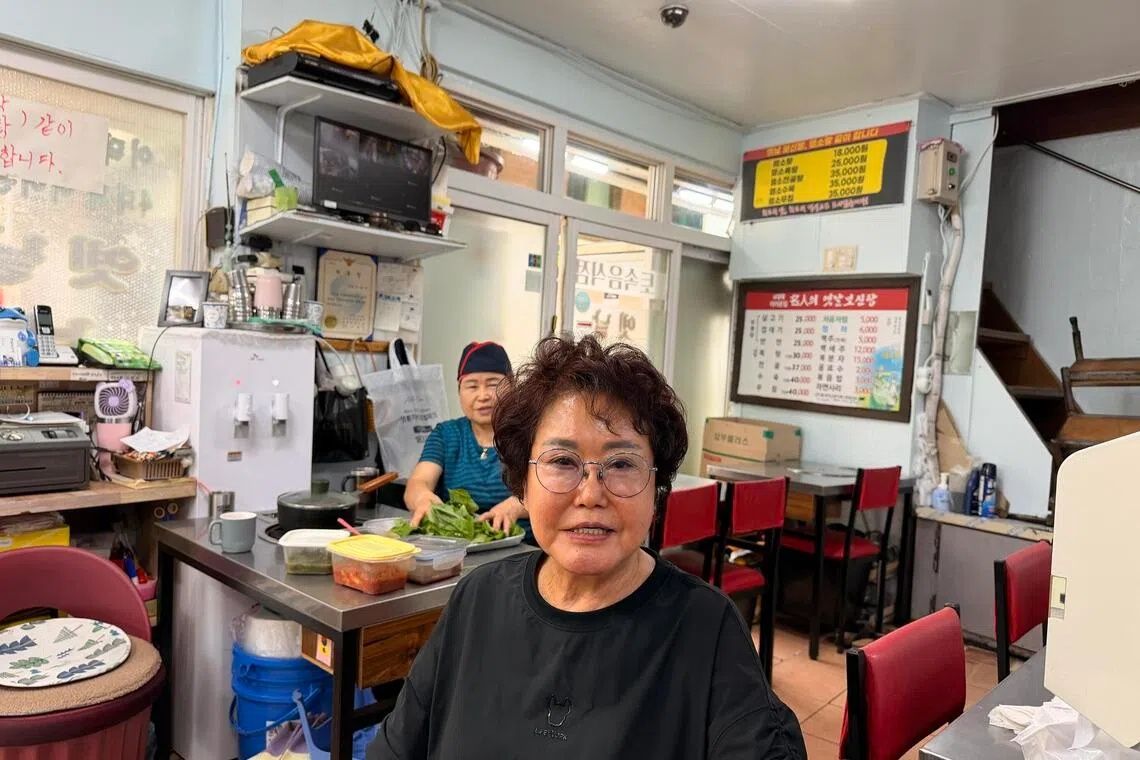
Lee Deok-sung, who has operated a dog meat stew restaurant near Seoul's bustling Dongdaemun Market for forty-five years, encapsulates the human dimension of this industrial collapse. This summer, he describes his business as having experienced a "bust," with dramatically reduced customer traffic compared to previous years. Facing unsold inventory, he has adopted a precarious daily strategy: attempting to sell all meat stock by dinner service merely to break even financially. This treadmill economics has forced price increases from 16,000 won to 25,000 won per bowl, but higher prices have further reduced customer numbers. Now sixty-something or older, Lee faces an agonising uncertainty about his future. He knows the ban takes effect in February 2027, but cannot clearly envision how his business survives beyond that date. The financial mathematics are becoming impossible.
Across a narrow alley from Lee's restaurant stands another institutional establishment, Lee Kyung-ja's boshintang restaurant, which has also operated for more than four decades and maintains a loyal regular customer base. Both businesses attempted adaptation by introducing black goat stew earlier in 2026, selecting goat as a substitute because the meat shares similar texture and gamey flavour characteristics with dog. However, both owners report minimal success with this strategic pivot. Customers who continue visiting explicitly prefer dog meat, citing superior taste compared to goat alternatives. Additionally, some customers reported that traditional Korean medicine practitioners continue recommending dog meat to people recovering from serious illness, perpetuating demand rooted in longstanding therapeutic beliefs. At seventy-five years old, Lee Kyung-ja confronts a particular challenge: rebuilding customer bases at an age when such work becomes physically and mentally exhausting. She candidly acknowledges that if business deteriorates further once the ban activates, she may simply retire rather than attempt the labour-intensive process of establishing new customer relationships.
The historical context underscores why this transition represents genuine cultural change rather than merely regulatory enforcement. Dog meat consumption in Korea has deep roots extending at least to the Joseon Dynasty, where it appeared in medical texts as having warming properties. The practice became significantly more widespread during Japan's colonial occupation from 1910 to 1945 and intensified during and after the Korean War, when poverty and food scarcity created desperate circumstances. In that historical context, consuming dog meat represented affordable protein during periods of genuine deprivation. That cultural memory persists, particularly among older generations who view the consumption as part of Korean heritage rather than animal cruelty. This generational divide—younger Koreans increasingly viewing dogs as companion animals while older cohorts maintain traditional perspectives—fundamentally underpins the societal shift enabling the ban's passage and implementation.
The broader implications extend beyond Korea's borders. This represents one of Asia's most comprehensive government-led transitions away from a meat industry embedded in historical tradition and cultural practice. Unlike voluntary consumer movement towards plant-based alternatives occurring gradually in Western nations, South Korea has implemented mandatory structural change through legislation, forcing industry participants to adapt within defined timeframes. The government's accompanying financial support mechanisms—compensation schemes, retraining programmes, and economic assistance—provide a model that other Southeast Asian nations might eventually consider if similar bans gain political traction. Malaysia and other regional economies with their own complex relationships between traditional practices, modernisation pressures, and animal welfare concerns may ultimately observe how effectively South Korea manages this transition.
The February 2027 deadline represents a final threshold. Some remaining farms will doubtless continue operating illegally, as enforcement challenges inevitably arise. Some restaurants may attempt to circumvent regulations through various mechanisms. Yet the broader trajectory appears irreversible. The government's commitment, the overwhelming majority of farm closures already achieved, and shifting social attitudes—particularly among younger urban consumers—suggest that Korea's dog meat industry will indeed become historical footnote rather than continuing economic reality. For figures like Lee Deok-sung and Lee Kyung-ja, the coming months represent a final season of farewell, both for their businesses and for a dietary tradition their families maintained across multiple generations. The transformation underway is not merely regulatory but represents Korea's deliberate choice to redefine its relationship with animals as societies modernise and values evolve.

