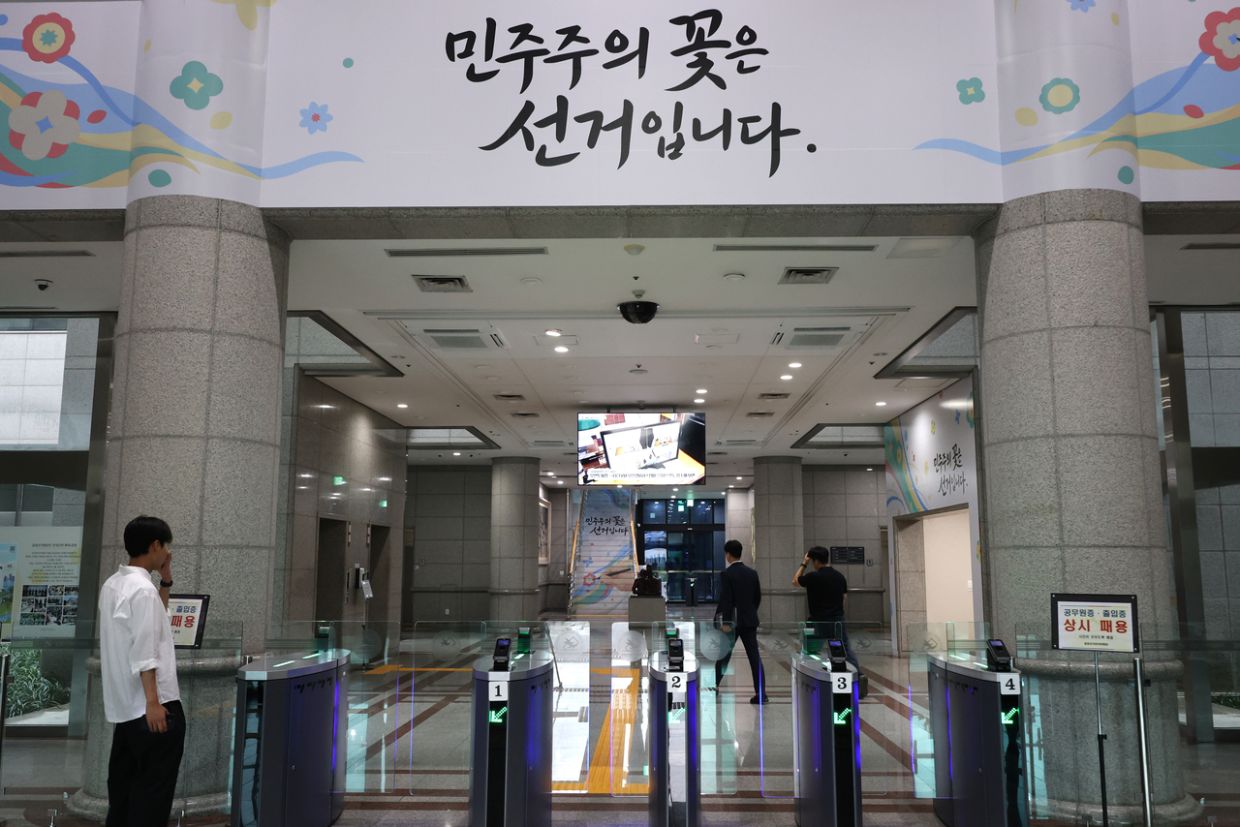
South Korea's electoral integrity has come under serious scrutiny following a raid on the National Election Commission (NEC) headquarters by investigators seeking evidence of systematic data manipulation. The operation, carried out Thursday by a joint task force comprising prosecutors and police detectives, targeted the NEC office in Gwacheon, a municipality immediately south of the capital Seoul, as authorities move to uncover the full extent of what appears to be a coordinated effort to obscure voting irregularities from public view.
The investigation centres on troubling discrepancies that emerged from the June 3 local elections, when multiple polling stations across the country experienced severe shortages of ballots. The computational manipulation allegedly undertaken by certain NEC staff members involved falsifying records within the agency's internal computer systems to mask fundamental errors in voter registration tallies and ballot distribution figures. Rather than transparently acknowledging the administrative failures that resulted in ballot unavailability, officials purportedly altered statistical documentation to create a misleading picture of electoral operations.
These ballot shortages on election day created tangible hardship for numerous voters who arrived at their designated polling stations only to discover that ballots had run out. Faced with this unexpected situation, many citizens were forced to leave without voting, their democratic participation curtailed by what now appears to have been compounded by deliberate cover-up efforts. The inability of voters to cast their ballots raises fundamental questions about the conduct of the election and the competence of the institutions tasked with safeguarding South Korea's democratic processes.
The scope of the investigation has steadily expanded beyond the initial ballot shortage concerns, suggesting that investigators have uncovered evidence pointing to broader institutional problems within the NEC. The involvement of a specialised joint prosecution-police task force indicates the seriousness with which authorities are treating the matter, assembling resources typically reserved for complex criminal investigations. This institutional commitment reflects deep concerns that the problem may extend beyond isolated incidents to reveal systemic vulnerabilities in how South Korea's principal election body manages critical electoral functions.
The execution of a formal search and seizure warrant demonstrates that investigators have accumulated sufficient preliminary evidence to justify intrusive investigative measures against the NEC itself—a government agency theoretically responsible for upholding electoral integrity. The fact that legal sources confirmed the presence of manipulated statistics suggests that digital forensic analysis and documentary evidence already point toward culpability, rather than investigators embarking on exploratory raids with uncertain prospects.
For Malaysian observers, this development carries considerable relevance given the shared regional emphasis on electoral administration and democratic institutions. While Malaysia's own Election Commission operates under different administrative structures and legal frameworks, the South Korean case illustrates potential vulnerabilities that can emerge within supposedly independent election management bodies. The incident demonstrates how even technologically advanced democracies with sophisticated institutional frameworks can face challenges when internal integrity mechanisms fail.
The timing of this investigation also occurs within a broader context of institutional tensions in South Korean governance. Public trust in governmental institutions fluctuates significantly in South Korea, and revelations of data manipulation at the NEC would represent a particularly damaging blow to confidence in democratic processes. Elections function as a cornerstone of democratic legitimacy, and when the institutions managing those elections become targets of criminal investigation, the reverberations extend far beyond the original electoral cycle.
The specific allegation of computer system manipulation adds a contemporary dimension to election fraud concerns. Rather than relying on traditional methods of ballot tampering or voter suppression, the alleged manipulation involved modern data management infrastructure. This aspect of the case highlights how digital systems, while offering transparency and efficiency advantages, can also provide sophisticated concealment mechanisms when institutional safeguards prove inadequate. Investigators examining the NEC's computer records will likely focus on access logs, deletion histories, and version control mechanisms that might illuminate the timing and scope of the alleged alterations.
The operational details of how ballot shortages occurred in the first place remain partially obscured by the data manipulation allegations. Whether the shortages resulted from forecasting errors, distribution failures, or deliberate under-supply requires clarification as the investigation develops. The impulse to cover up these failures through statistical manipulation suggests officials recognised the political and reputational damage that transparent acknowledgement would entail, raising questions about institutional culture and accountability mechanisms within the NEC.
Looking forward, the investigation will likely produce recommendations for structural reforms within South Korea's election administration. Enhanced separation of duties, strengthened digital security protocols, and independent auditing mechanisms could all feature in any remedial proposals. For regional democracy observers, the case underscores the importance of building robust institutional safeguards against both election administration failures and the institutional responses designed to conceal them.
The outcome of this investigation will significantly influence South Korean public perception of electoral trustworthiness ahead of future elections. Should prosecutions proceed against NEC employees, the legal proceedings will receive intense media attention and public scrutiny. The investigation also carries implications for how South Korean society evaluates the relationship between technical capability and institutional integrity—demonstrating that administrative sophistication alone cannot substitute for transparent governance and individual accountability within democratic institutions.

