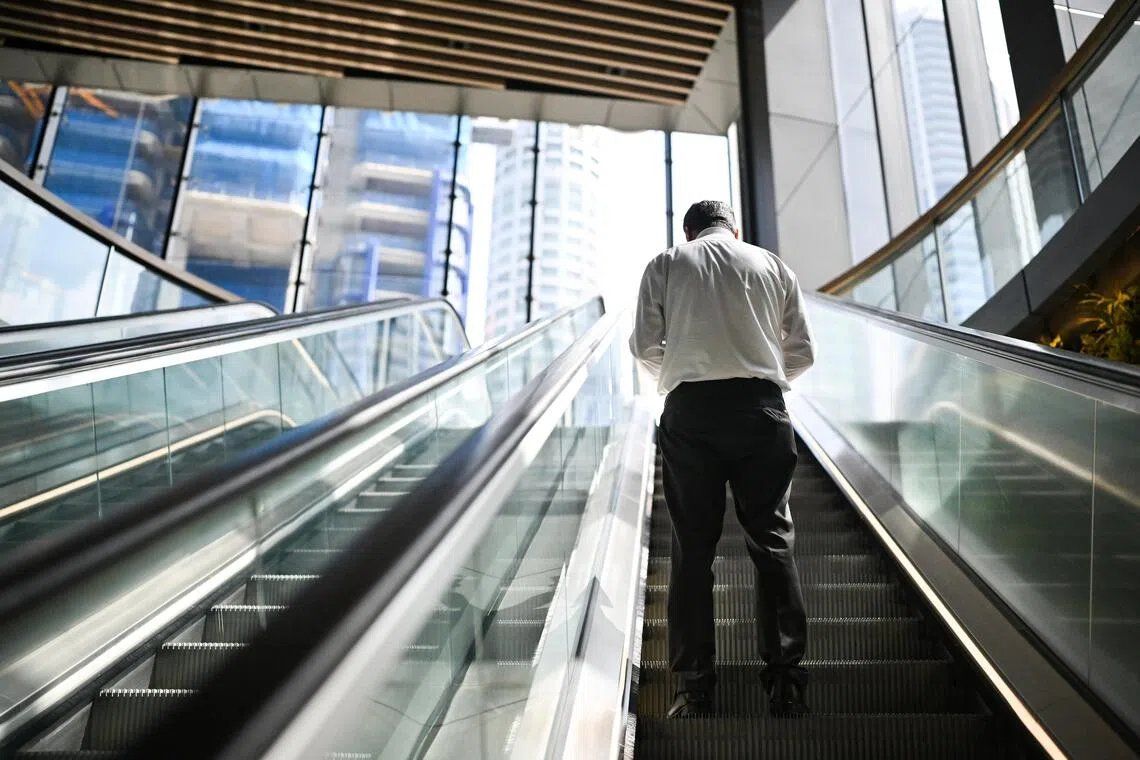
South Korea's commuters face an unexpectedly divisive question about daily life on public transportation: whether passengers should stand on one side of an escalator to leave room for walkers, or occupy both sides while remaining stationary. A government survey of 1,000 adults across seven major cities has exposed a nation almost evenly split on the issue, with exactly 50.1 per cent backing the one-side approach and 49.9 per cent supporting two-line standing. This razor-thin divide reflects a tension that has simmered in South Korean society for more than two decades, challenging conventional wisdom about what constitutes efficient and safe escalator use.
The intensity of this debate became apparent when about 200 citizens and experts gathered at a government-hosted forum in Seoul on August 29 to hash out the merits of each approach. Rather than settling the matter, the discussion underscored the complexity of the question. Jang Gye-ryeon, a public administration researcher at the Korea Institute of Industrial Relations, articulated the challenge facing policymakers: the issue cannot be reduced to a simple binary choice. Instead, officials must grapple with more nuanced considerations about efficiency for whom, under what circumstances, and at what times of day. This analytical framework suggests that what works for individual commuters scrambling to catch a train may differ fundamentally from what benefits the overall flow of passengers moving through a station.
The efficiency argument for one-side standing appears straightforward at first glance—individuals can save time by walking upward rather than standing still. However, research suggests the broader picture is more complicated. A controlled experiment conducted at a crowded British railway station found that passenger capacity increased by approximately 25 to 30 per cent when people stood on both sides of the escalator compared to the one-side-standing arrangement. A smaller-scale test at Guri Station near Seoul produced comparable findings, with 190 people using the escalator over an identical period when both sides were occupied, versus only 164 under the one-side arrangement. Yet researchers have cautioned that the Guri Station experiment was too limited in scope to permit definitive conclusions about escalator capacity across different contexts and crowd densities.
Beyond efficiency metrics, the safety dimension of escalator usage introduces additional complications that have driven policy shifts over the years. Sensor-based testing revealed that walking downward on an escalator subjects the structure to impacts equivalent to roughly 2.01 times a person's body weight, while ascending produces impacts of approximately 1.54 times body weight. Heo Yun-seop, a professor at Korea Lift College, has emphasised that repeated impacts from walking combined with uneven loading from one-sided standing could impose cumulative stress on specific escalator components, potentially shortening the equipment's operational lifespan and increasing maintenance expenditure. Although definitive evidence linking one-sided standing directly to escalator breakdowns remains lacking, the potential maintenance burden represents a significant consideration for transit authorities managing aging infrastructure.
South Korea's regulatory approach to escalator behaviour has shifted markedly over the past quarter-century, reflecting evolving priorities and evidence. The government began promoting one-side standing in 1998, positioning it as a courtesy for hurried passengers. The practice gained momentum nationwide around the 2002 FIFA World Cup, when encouraging one-side standing became part of broader efforts to streamline passenger movement for the international event. However, as safety concerns and equipment maintenance issues accumulated, the government reversed course between 2009 and 2014, actively promoting two-line standing as the safer alternative. Since 2015, officials have largely abstained from prescribing either approach, instead issuing three basic recommendations: hold the handrail, do not walk or run, and remain within designated safety lines. This hands-off stance may have inadvertently contributed to the current deadlock among commuters.
Accident statistics underscore why the government cannot ignore this issue indefinitely. Between 1993 and 2025, escalator incidents attributed to user behaviour accounted for 72.3 per cent of all recorded accidents. Perhaps more alaringly, individuals aged 60 and older represented 53.3 per cent of those involved in such accidents, highlighting particular vulnerability among elderly passengers who may lack the balance or reflexes required for safe walking on moving escalators. These figures suggest that escalator etiquette directly influences public safety outcomes, particularly for demographic groups already at elevated risk.
The August 29 forum itself demonstrated how public dialogue can shift perspectives, albeit in complex ways. Before the discussion, 45.9 per cent of participants favoured two-line standing and only 13.4 per cent supported one-side standing for walkers. After hours of expert presentations and citizen deliberation, support for one-side standing rose to 29.9 per cent, while two-line standing support declined to 31.4 per cent. Notably, the largest contingent afterward—38.1 per cent—expressed preference for contextual flexibility, advocating different rules depending on location-specific factors and real-time crowd levels. This shift toward nuanced thinking suggests that many commuters recognise the escalator question as insufficiently complex for one-size-fits-all solutions.
The implications of South Korea's escalator debate extend beyond the narrow technical question of passenger movement. The issue encapsulates broader tensions in urban societies between individual convenience and collective welfare, between optimising for specific user groups and maximising system-wide efficiency, and between preserving personal freedoms and implementing safety-focused regulations. How South Korea ultimately addresses escalator etiquette may signal how the government approaches similar conflicts in public transportation, workplace norms, and shared spaces. Interior Minister Yun Ho-jung has committed to incorporating insights from the forum into future escalator safety initiatives, suggesting that policy evolution will continue.
For Malaysian and Southeast Asian observers, the South Korean deliberation offers instructive lessons about managing commons in densely populated urban environments. As cities across the region expand their rapid transit networks and modernise public transportation infrastructure, questions about escalator etiquette will inevitably arise. The Korean experience demonstrates that such apparently trivial matters involve genuine trade-offs between competing values and stakeholder interests. Rather than importing a single prescribed behaviour, transit authorities in the region might benefit from conducting localised research on passenger capacity, safety outcomes, and user preferences. Southeast Asian cities characterised by diverse age demographics, varying levels of urban mobility experience, and different peak-hour patterns may find that context-dependent approaches, as increasingly favoured by Korean commuters, offer superior outcomes to rigid one-system-fits-all mandates that ignore local conditions and user needs.

