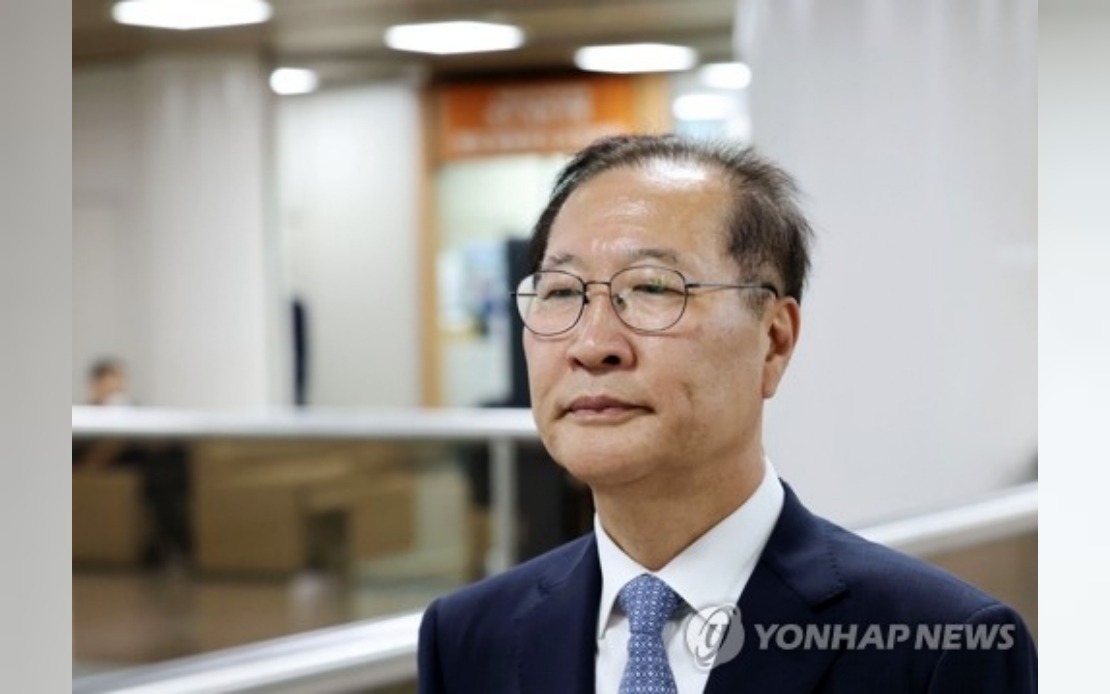
A South Korean district court has delivered a watershed ruling in the country's continuing political crisis, sentencing former Justice Minister Park Sung-jae to 25 years imprisonment on charges of spearheading an insurrectionary conspiracy. The Seoul Central District Court's decision, handed down on June 23rd, surpassed the 20-year term recommended by special counsel Cho Eun-suk's investigative team and represents a hardening judicial stance against senior officials implicated in former President Yoon Suk Yeol's abortive declaration of martial law on December 3, 2024. The court immediately remanded Park into custody, citing material risks that he might tamper with or destroy critical evidence.
Park's culpability centred on his pivotal administrative actions immediately following Yoon's martial law announcement. Prosecutors demonstrated that as Justice Minister, he orchestrated a senior ministry meeting ostensibly to address operational protocols but in reality to enable the machinery of the broader insurrectionary scheme. The court accepted arguments that Park's convening of officials served multiple purposes within the coup framework: reviewing the deployment of prosecutors to military-controlled bodies, evaluating whether correctional institutions possessed adequate capacity to incarcerate opposition politicians and other targets earmarked for arrest under martial law, and ensuring that ministry personnel responsible for issuing travel restrictions were positioned to implement such orders.
The judiciary's rationale for the sentence reflects a philosophical pivot in how South Korean courts are evaluating the culpability of cabinet-level officials. The court stated that Park had fundamentally betrayed his constitutional obligation to defend democratic institutions, being seduced instead by the apparent momentum of the insurrection. This formulation carries implications beyond Park's individual case, establishing a framework whereby senior government figures cannot claim mere bureaucratic neutrality or technical compliance when participating in anti-constitutional acts. For Malaysian observers watching a regional democratic neighbour navigate judicial reckoning with executive overreach, the court's emphasis on constitutional duty offers an instructive contrast to how different jurisdictions balance checks on executive authority.
Park's conviction on charges of both insurrection and abuse of power represents a comprehensive judicial rejection of any mitigating narratives he might have constructed. The special counsel's team had methodically documented how his ministerial actions facilitated the operational architecture of the failed coup, transforming Park from a passive observer into an active conspirator. By accepting this interpretation wholly, the court signalled that institutional position alone—let alone the legitimacy derived from appointment by an elected president—cannot shield officials from accountability when they knowingly participate in constitutional violations.
His case arrives within a broader trajectory of convictions affecting Yoon's inner circle. Former Prime Minister Han Duck-soo and former Defence Minister Kim Yong-hyun have already received guilty verdicts for their roles in the martial law bid. Yoon himself was convicted to life imprisonment in February for orchestrating the insurrection, though he has mounted an appeal. This cascade of convictions illuminates the systematic nature of the conspiracy: it was neither an isolated presidential whim nor the autonomous action of a single cabinet member, but rather a coordinated venture spanning multiple senior figures across defence, prosecution, and administrative portfolios.
The court's dismissal of supplementary corruption charges against Park introduces a procedural technicality but also reveals the narrow prosecutorial mandate governing the special counsel's investigations. Park had faced allegations of issuing improper directives to subordinates in May 2024, purportedly responding to requests from Yoon's wife, Kim Keon Hee, who sought assistance in obscuring details of prosecutorial inquiries into her own corruption allegations. The court ruled these charges fell outside the special counsel's investigative remit, effectively compartmentalising the broader institutional malfeasance into discrete legal categories. For regional governance observers, this suggests how martial law prosecutions can inadvertently create evidentiary gaps when investigating bodies operate under defined temporal or thematic constraints.
Park's legal team has announced an immediate appeal, characterising the sentence as untethered to factual evidence and settled legal principle. This contestation will likely ascend through South Korea's appellate hierarchy, potentially reaching the Supreme Court. Defence counsel are banking on appellate panels identifying what they perceive as judicial overreach or misapplication of statutory language governing insurrection charges. The appeal process itself serves as a critical institutional check: even in the context of high-profile political prosecutions, multiple judicial reviews remain available to ensure that convictions rest on durable legal footing rather than ephemeral political sentiment.
Conversely, the special counsel's team has signalled it will not lodge an appeal, effectively acquiescing to the court's enhanced sentence. This institutional restraint reflects a calculated assessment that the ruling adequately articulates the constitutional obligations binding justice ministers during episodes of executive illegality. By declining to contest an outcome that exceeded its own sentencing recommendation, the special counsel's office subtly reframed the narrative: this verdict belongs not to prosecutorial ambition but to independent judicial deliberation about the architecture of accountability itself.
The broader implications for Southeast Asia merit consideration. South Korea's willingness to prosecute and convict senior cabinet officials—including a president himself—for constitutional violations demonstrates that established democracies can deploy legal mechanisms to constrain executive power retroactively. Yet the process remains labour-intensive, requiring specialised prosecutorial units, multi-year trials, and appellate review. For Malaysia and other regional states grappling with questions about institutional accountability and the limits of executive authority, South Korea's experience illustrates both the possibility and the friction inherent in pursuing comprehensive prosecutions of state actors embedded within formal power structures. The extended timelines and procedural complexity may deter hastier justice but ensure more durable legal foundations for eventual convictions.