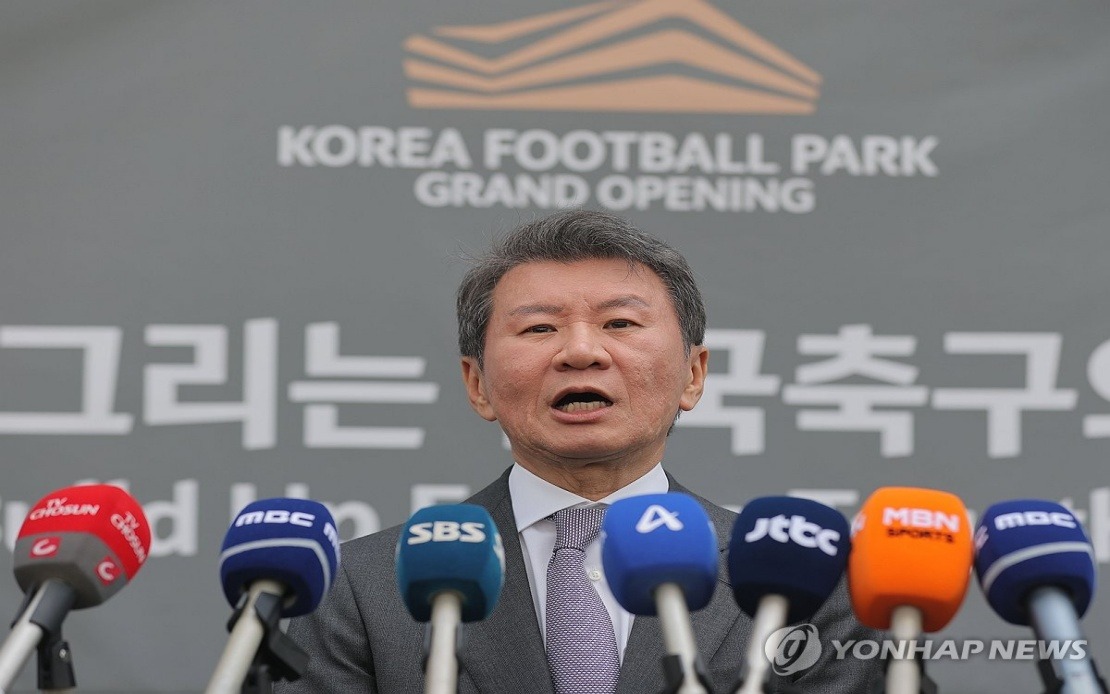
Korea Football Association president Chung Mong-Gyu has resigned from his position, submitting his formal resignation letter on Monday after chairing what would be his final senior management meeting at Korea Football Park in Cheonan, situated approximately 90 kilometres south of Seoul. The departure marks a dramatic conclusion to his tenure at the helm of South Korean football's governing body, coming in the immediate aftermath of a deeply troubling international tournament performance.
Chung had previously signalled his intention to depart in May, announcing that he would relinquish his role upon the completion of the FIFA World Cup. However, rather than wait for the tournament to conclude on July 20 according to South Korean time, he accelerated his exit by roughly a fortnight following the national squad's premature elimination during the group stage. The early departure underscores the magnitude of the crisis engulfing Korean football and reflects the intensity of public and political pressure bearing down on the federation's leadership.
South Korea's elimination represented a significant setback for a footballing nation accustomed to advancing deep into international competitions. Under the guidance of coach Hong Myung-bo, the team accumulated merely three points from victories and defeats in Group A, securing only third place and thereby missing out on qualification for the knockout rounds as one of the eight strongest third-placed finishers. Hong responded to the squad's elimination by immediately tendering his own resignation, leaving the national programme in considerable disarray.
Chung's tenure had become increasingly contentious over his management decisions, particularly regarding his appointment of Hong as national team coach in July 2024. Critics contended that the recruitment process lacked transparency and failed to meet acceptable standards of governance. These concerns intensified when South Korea's Ministry of Culture, Sports and Tourism launched a comprehensive investigation into the KFA's administrative practices throughout that year. The ministry's subsequent findings concluded that Chung and his counterparts among senior federation officials warranted disciplinary action in response to multiple procedural breaches and governance irregularities discovered during the audit.
The deteriorating relationship between the KFA and the government has escalated into active litigation, with the ministry preparing to commence yet another formal examination of the football body's operations in light of the World Cup debacle. This legal confrontation signals deeper structural problems within Korean football administration that extend beyond the immediate sporting failure. For regional observers, particularly in Southeast Asia where governance transparency remains a persistent challenge across sporting organisations, the Korean situation illustrates how institutional weaknesses at the apex of football management can rapidly compound when on-field performance falters.
According to KFA regulations, the federation's interim leadership will transfer to one of its four serving vice presidents pending a formal election process. Standard procedure requires that when an incumbent president exits with more than twelve months remaining on his contract, his successor must be elected within a sixty-day timeframe. Chung's departure represents a notable departure from expedited circumstances, as he possessed nearly three years of his fourth term remaining, thereby triggering the full election procedure.
The electoral college responsible for selecting KFA presidents comprises representatives from regional football associations, executives from K League clubs, active players, coaching staff, and referees. During the previous election cycle, 183 of the 192 eligible voters participated, demonstrating substantial engagement from constituent stakeholders. However, government officials have begun questioning whether existing election procedures adequately reflect the expectations and democratic preferences of South Korean supporters who feel profoundly disappointed by recent national team performances.
Chae Hwi-young, the minister of culture, sports and tourism, has publicly signalled concerns regarding the federation's electoral mechanisms, suggesting that the current process may require fundamental reform to align with popular sentiment. The minister specifically indicated that if KFA leadership genuinely comprehended the emotional devastation experienced by fans following the World Cup exit, the organisation would necessarily abandon its established election framework in favour of more inclusive arrangements. This governmental intervention represents significant pressure on Korean football's governance structures and signals potential constitutional changes to come.
The Korean Sport and Olympic Committee, which functions as the national apex body for athletic governance, will convene on July 16 to examine modifications to its electoral rules governing member associations. Among the proposals under consideration is an extension of the customary sixty-day election window that currently applies following presidential resignations, alongside the introduction of a direct election system that would presumably grant fans voting authority in selecting the KFA president. Such reforms would represent a substantial departure from traditional oligarchic structures dominating Asian sports governance and would potentially establish precedents affecting football administration throughout the region.
In his resignation statement, Chung expressed gratitude toward supporters while acknowledging moments when his leadership had generated widespread disappointment. He underscored his commitment to advancing South Korean football's development and international standing, accepting personal responsibility for failures while crediting players and supporters for achievements. Chung affirmed his conviction that Korean football would ultimately surmount contemporary challenges and reclaim its position among Asia's leading football nations, as the country has demonstrated throughout its athletic history. His departure leaves South Korean football facing substantial institutional reconstruction precisely when international competitiveness has visibly declined, creating opportunities for meaningful structural reform across the federation.

