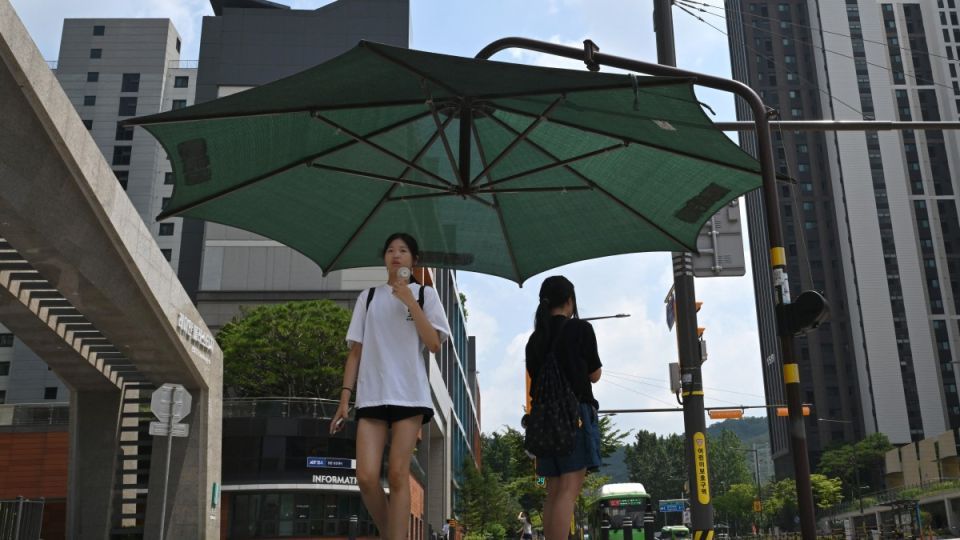
South Korea's sweltering summer has prompted major corporations to fundamentally reorganise their operations, introducing extended rest periods, sophisticated temperature monitoring systems and expanded cooling infrastructure across construction sites, shipyards and manufacturing plants. Yet beneath this corporate response lies a troubling reality: workplace heat protections remain largely accessible only to workers at large, well-resourced companies, while employees at smaller enterprises and those in outdoor agricultural roles continue to labour in dangerous conditions with minimal safeguards.
The scale of the crisis is evident in the record temperatures sweeping the nation. Yangsan in South Gyeongsang Province reached 42.5 degrees Celsius, marking a national high, whilst Seoul has endured an unrelenting heatwave warning at the highest alert level. These conditions have transformed workplace safety from a compliance issue into an urgent public health emergency. Between 2022 and June 2024, the Korea Workers' Compensation and Welfare Service recognised 195 heat-related occupational accidents, resulting in at least 20 deaths. Significantly, thirteen cases emerged before the end of June—before the traditionally deadlier July and August months—with four proving fatal, suggesting the problem will intensify as summer deepens.
Legal accountability has begun reshaping corporate behaviour. Last year, a district court made landmark history by convicting a construction company under the Serious Accidents Punishment Act specifically for a worker's heatstroke death, creating a powerful deterrent for negligent employers. This judicial shift, combined with tightening regulatory expectations, has prompted industry leaders to invest substantially in worker protection. Construction and heavy manufacturing sectors, which historically account for disproportionate shares of industrial fatalities, have become laboratories for heat-mitigation strategies.
Large construction firms have implemented remarkably sophisticated approaches. Lotte E&C operates Internet of Things monitoring systems across approximately eighty construction sites, measuring perceived temperatures every five minutes and classifying heat risk into five distinct categories to trigger proportionate responses. Hyundai Engineering & Construction incentivises workers to utilise designated rest areas through financial rewards, whilst Daewoo E&C eliminates penalties for workers who need to cease operations due to physical distress. These measures recognise that workplace heat injuries often stem not from momentary exposure but from systemic pressure to maintain productivity during dangerous conditions.
Migrant workers, often undertaking the most hazardous roles, have received targeted attention from forward-thinking employers. Hyundai E&C distributed emergency reporting guides in twenty-two languages and issued cooling vests with integrated fans alongside oral rehydration solutions to particularly vulnerable populations. Kumho E&C partnered with beverage company Lotte Chilsung to supply bottled water, sports drinks, cooling towels and portable shelters throughout construction sites until September. These initiatives acknowledge that language barriers and unfamiliarity with Korean workplace norms can compound heat exposure risks for non-Korean workers.
Heavy industries operating continuous production lines have restructured work rhythms around thermal conditions. Posco, whose blast furnaces run perpetually, mandates fifteen-minute rest intervals after every forty-five minutes of work when perceived temperatures exceed 35 degrees Celsius, stepping down to ten-minute breaks after fifty minutes when temperatures range between 31 and 35 degrees. Hyundai Steel enforces minimum ten-minute hourly rests at 31 degrees Celsius, escalating to fifteen minutes above 35 degrees. Shipbuilders have extended summer rest periods dramatically. Hanwha Ocean doubled its standard ten-minute breaks to twenty minutes through August and lengthens lunch breaks by thirty minutes at 28 degrees Celsius, extending to one full hour above 31.5 degrees. HD Hyundai Heavy Industries operates over 270 cooling facilities across its shipyards, provides cooling vests and electrolyte supplements, and extends lunch breaks from one hour to ninety minutes during peak summer. Samsung Heavy Industries created a dedicated task force for coordinated heat responses, while SK hynix expanded rest protocols and Coupang upgraded ventilation and air-conditioning systems at logistics facilities.
However, these protections cluster almost exclusively among major corporations capable of substantial capital investment. Analysis reveals a stark pattern: over half of the 195 recognised heat-related accidents since 2022 occurred at workplaces employing fewer than fifty people, with forty-two incidents at businesses with fewer than five workers. Smaller enterprises typically lack dedicated safety personnel, sophisticated cooling systems, and adequate rest facilities—the foundational protections that larger companies now provide routinely. Workers at these businesses remain dangerously exposed during extreme conditions precisely because employers lack both financial resources and regulatory enforcement pressure.
Migrant workers employed in agriculture and outdoor labour face particularly acute vulnerability. Last month, a Thai seasonal worker collapsed fatally whilst working a field in Haenam, South Jeolla Province, whilst a Vietnamese national died whilst performing outdoor farm work in Goesan, North Chungcheong Province. These deaths underscore how seasonal agricultural workers operate in a regulatory grey zone—often lacking formal employment relationships, minimal supervision, and no access to cooling infrastructure or emergency medical response. Unlike construction or manufacturing workers whose employers face potential criminal liability, agricultural labourers remain largely invisible to enforcement mechanisms.
Representative Kim Wi-sang of the ruling People Power Party has called for government action beyond the current emphasis on protecting large-employer workforces. Kim specifically advocated for strengthened inspections and practical protection mechanisms targeting seasonal migrant workers and employees at small outdoor worksites—precisely the populations bearing disproportionate heat exposure risk. This parliamentary pressure reflects growing recognition that voluntary corporate measures, however impressive among conglomerates, cannot address systemic vulnerabilities affecting the most precarious workers.
The emerging divide in heat protection reflects broader inequalities within South Korea's labour market. Large corporations invest in worker safety partly because they face legal jeopardy, partly because they can absorb costs, and partly because reputational concerns matter to their brand value. Conversely, small employers operating on narrow margins cannot easily reorganise production schedules or install expensive cooling systems without threatening viability. Agricultural businesses operate in an even more precarious position, often employing workers through labour brokers without direct employment responsibility. This structural inequality means that workplace heat—an environmental hazard affecting all sectors—becomes a proxy for existing class and immigration-status hierarchies.
For Malaysian readers and Southeast Asian observers, South Korea's heat crisis offers instructive lessons about how climate change intersects with workplace vulnerability. As temperatures rise across the region—already touching dangerous levels during recent summers—developing adequate protections for all workers rather than only privileged employees in large corporations becomes critical. South Korea's experience suggests that without deliberate policy intervention, market forces alone will concentrate heat protections among those least needing them, whilst those most exposed to thermal danger receive minimal safeguards.

