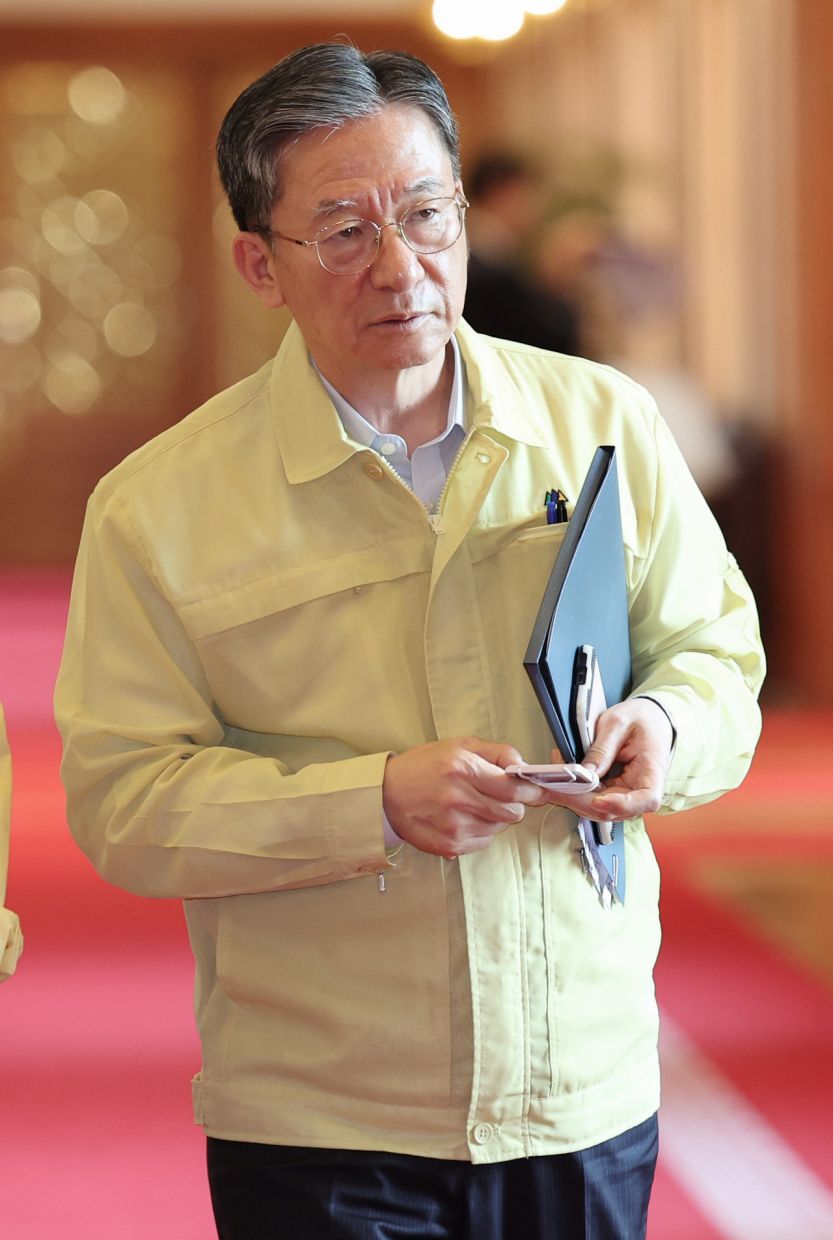
South Korea's Justice Minister Jung Sung-ho announced his resignation on Tuesday afternoon, marking a significant moment in the country's ongoing criminal justice reform debate. The departure reflects deepening tensions between the minister's office and the ruling Democratic Party over how prosecutors should exercise their investigative authority—a fundamental question that will reshape the nation's law enforcement landscape within weeks.
At the heart of Jung's departure lies a substantive disagreement about the future scope of prosecutorial powers. The Justice Minister had expressed reservations about entirely removing prosecutors' ability to conduct what are known as supplementary investigations, arguing that such measures serve an important function in the criminal justice system. These supplementary probes are typically initiated when prosecutors determine that an initial police investigation lacks sufficient depth or fails to adequately uncover relevant evidence before charges are decided. Jung apparently believed this prosecutorial capability should be preserved in some form.
The ruling Democratic Party has pursued an opposing vision, one that seeks to create a sharper institutional divide between investigative and prosecutorial responsibilities. Party leaders argue that concentrating both functions within the prosecution office creates conditions for excessive power accumulation within that institution. This separation-of-powers approach has become a focal point of South Korea's broader justice system overhaul, reflecting international trends toward limiting prosecutorial discretion and preventing potential abuses.
The practical implications of this dispute will become concrete on October 2, when the revised Criminal Procedure Act enters into force. Under the new framework, prosecutors will lose the authority to launch their own investigations into matters they believe warrant deeper examination. Instead, the prosecution's role will shift fundamentally toward post-investigation activities: evaluating the quality and completeness of work conducted by police investigators, making discretionary decisions about whether evidence supports criminal charges, and presenting cases in court proceedings. This represents a substantial narrowing of prosecutorial reach compared to the current system.
For Malaysian and Southeast Asian observers, this South Korean transformation carries relevance beyond regional boundaries. Many countries in the region grapple with similar questions about prosecutorial authority and the balance between investigative independence and investigative oversight. The institutional tension that prompted Jung's resignation—between law enforcement efficiency and the prevention of prosecutorial overreach—mirrors concerns voiced in various Asian democracies attempting to strengthen rule of law protections while maintaining effective criminal justice operations.
In his formal statement announcing the resignation, Jung cited health reasons as the primary motivation for stepping down. However, local media reports including those from Yonhap News Agency indicated that his resignation statement contained additional language suggesting that institutional considerations influenced his decision. Specifically, Jung indicated that allowing new leadership to oversee the implementation of the transformed criminal justice system would be the preferable course. This language suggests his departure reflects not merely personal circumstances but also a recognition that his differences with the ruling party on this pivotal issue created governance complications.
The transition of authority has already been determined administratively. Vice Justice Minister Lee Jin-soo will assume the role of acting justice minister, stepping into the position while a permanent replacement is identified and undergoes any necessary confirmation procedures. This succession arrangement ensures continuity in the ministry's operations during what promises to be a critical transitional period for South Korea's criminal justice infrastructure.
Jung's exit highlights how prosecutorial reform has become a politically charged matter within South Korea's government. The Democratic Party's determination to proceed with restricting supplementary investigation powers despite the Justice Minister's opposition demonstrates the party's commitment to this particular vision of justice sector restructuring. Whether this approach ultimately proves effective in preventing prosecutorial misconduct while maintaining investigative quality remains an open question that will unfold as the new system operates in practice over coming months and years.
The fundamental disagreement underlying this ministerial resignation touches on enduring tensions in democratic governance: how to empower law enforcement agencies sufficiently to pursue criminal activity while simultaneously constraining their discretion to prevent overreach. South Korea's resolution of this dilemma through statutory restriction of prosecutorial investigative authority represents one approach to this universal governance challenge. As other nations, including some in Southeast Asia, continue wrestling with similar institutional design questions, the consequences of South Korea's experiment will merit close attention from policymakers and legal scholars concerned with calibrating prosecutorial power appropriately.

