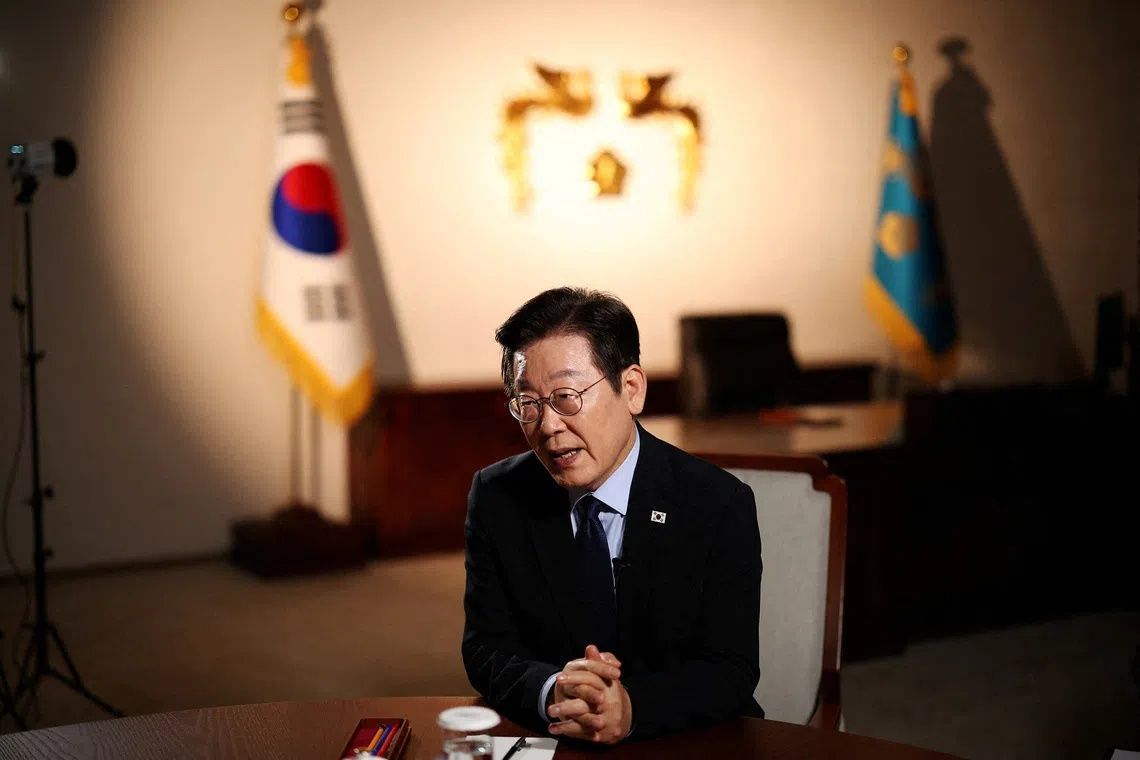
South Korean President Lee Jae Myung has expressed support for a significant constitutional restructuring that would reshape the country's highest office, according to reports from the Yonhap news agency citing a Blue House official on Friday. The proposed reform would fundamentally alter the presidential framework by permitting leaders to serve four-year terms rather than the current single five-year tenure, and critically, would enable sitting presidents to pursue re-election for a second term.
The shift represents a notable departure from South Korea's existing constitutional arrangement, which has historically limited presidents to a single non-renewable mandate lasting half a decade. This restriction was intentionally designed decades ago as a safeguard against executive overreach and the accumulation of power in a single individual's hands. The new proposal would essentially rebalance this equation, offering presidents extended time to implement their agenda while theoretically allowing voters periodic opportunities to renew or withdraw their mandate through electoral processes.
Beyond the structural changes to presidential tenure, the initiative carries significant implications for the broader distribution of governmental power. The proposed constitutional framework would substantially strengthen the National Assembly's authority, addressing what critics have repeatedly denounced as the "imperial presidency"—a phrase reflecting widespread concerns about the disproportionate concentration of power wielded by South Korean presidents relative to the legislature. By empowering parliament, the reforms would theoretically constrain executive prerogatives and create a more balanced separation of powers.
According to the Blue House official's remarks, the four-year renewable term model has garnered the broadest acceptance among the South Korean public, suggesting it represents a middle ground between competing visions for constitutional governance. President Lee himself shares apprehensions about the existing concentration of presidential authority, the official indicated, implying that his support for this particular configuration stems from genuine concerns about democratic accountability rather than mere political calculation.
The pathway toward any constitutional amendment in South Korea involves substantial procedural and political hurdles. The National Assembly must authorize and discuss the proposed reforms, with amendments ultimately requiring endorsement from at least 200 lawmakers—representing a supermajority threshold that reflects the framers' intent to ensure broad consensus on fundamental constitutional changes. This requirement means that partisan majorities alone cannot unilaterally rewrite the rules governing executive power, necessitating meaningful cross-party cooperation.
The Blue House official emphasised that constitutional reform discussions must unfold through the National Assembly rather than through executive decree or circumventing normal legislative channels. This commitment to parliamentary deliberation represents an acknowledgment that changes to the constitutional foundation of governance require democratic legitimacy derived from representative institutions. The official further noted that any successful constitutional amendment should rest upon political consensus—a recognition that durability and acceptance of fundamental law depends upon broad agreement transcending narrow partisan interests.
South Korea's constitutional history reveals why these questions carry such weight. The country has experienced multiple constitutions since its founding, each reflecting different balances between presidential and parliamentary power, and each shaped by the political circumstances of its era. The current single-term, five-year presidency emerged from previous experiences with extended or renewable executive tenures, reflecting historical lessons about the dangers of concentrated power. Any movement away from this structure thus carries historical significance and invites scrutiny regarding whether new safeguards adequately replace those being modified.
For regional observers and Southeast Asian political analysts, South Korea's constitutional debates offer relevant insights into questions of executive power, term limits, and democratic safeguards. Malaysia and other regional democracies grapple with similar tensions between enabling effective governance and constraining executive authority. The South Korean case demonstrates how even established democracies periodically reassess their constitutional foundations in response to evolving political circumstances and public preferences.
The timing of this proposal merits consideration within South Korea's broader political landscape. Constitutional reforms inevitably intersect with partisan calculations about how revised rules might advantage or disadvantage particular political formations. Whether the proposed framework genuinely addresses democratic concerns or serves tactical political purposes remains a question that South Korean legislators and citizens will need to carefully evaluate during parliamentary deliberations. The requirement for supermajority support ensures that any changes will require sustained commitment across ideological and partisan divides rather than reflecting ephemeral political majorities.

