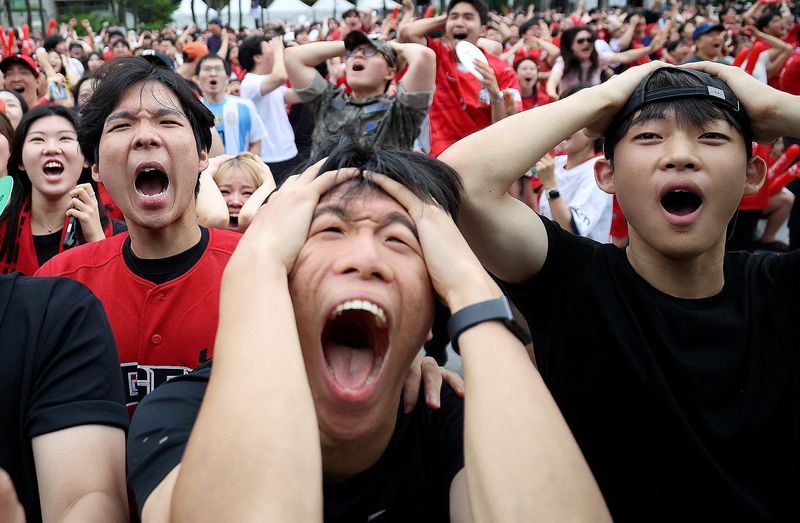
South Korean President Lee Jae Myung has ordered a comprehensive inquiry into the national football team's shock early exit from the World Cup, launching a pointed critique at coach Hong Myung-bo and the decision-making process that led to his appointment. The president's unusually forceful intervention reflects the depth of public disappointment surrounding a tournament campaign that fell far short of expectations for a squad considered capable of advancing comfortably from their group.
In a statement posted to social media on Sunday, Lee expressed profound dismay at what many Koreans viewed as an embarrassing result. "I am not just taken aback by this unexpected outcome, I am utterly baffled," the president declared, underlining the shock that rippled through South Korea following successive defeats to Mexico and South Africa. These losses left the team languishing in third place within Group A, a position that consigned them to elimination before the knockout rounds could begin.
The president's frustration extended beyond mere disappointment at athletic performance, focusing instead on what he characterised as systemic failures in how leadership positions are filled within South Korean sports administration. Lee argued that the appointment of Hong Myung-bo as national team manager in 2024 exemplified a troubling pattern whereby personal connections and factional loyalty outweigh professional competence. "Once again, it has been proven that personnel decisions are everything," he wrote, suggesting this was not an isolated incident but rather symptomatic of deeper institutional problems.
Hong's reappointment had already attracted scrutiny from Korean media outlets, which raised questions about the transparency of the hiring process and allegations that favouritism influenced the decision. The coach has consistently denied these allegations, but the narrative gained traction as the team's performances deteriorated. Now, with South Korea's World Cup hopes extinguished, those earlier concerns about how the appointment was made have resurfaced with considerably amplified political force.
The public backlash extends well beyond official channels. A petition calling for Hong's dismissal, submitted through South Korea's national assembly website, rapidly accumulated sufficient signatures to trigger a formal review process. Meanwhile, social media has circulated images of South Korean shopkeepers displaying notices banning the coach from their establishments, a striking visual representation of the animosity now directed toward him by ordinary citizens who feel let down by the team's collapse.
Lee's intervention reveals how deeply sports failures can intersect with broader political narratives about governance and accountability in South Korea. The president framed the World Cup disappointment not as a simple case of athletic underperformance but as evidence of institutional dysfunction. He highlighted what he saw as a troubling pattern whereby appointment decisions prioritise internal factional interests and personal advancement over the competence required to serve the public effectively. This framing transforms a sports story into a commentary on the quality of leadership across South Korean institutions more generally.
The president's characterisation of the problem extended to systemic accountability challenges. He noted that such poor appointments become possible partly because those with authority to make hiring decisions often operate with insufficient oversight. "The reason such botched appointments — which fail to distinguish between public and private interests and prioritise personal gain over the public good — are possible is that it is impossible or difficult to monitor, check, and hold those with appointment authority accountable," Lee explained. This observation suggests that fixing South Korean football requires not just replacing one coach but reforming how sports leadership structures function more broadly.
Official channels are now mobilising to investigate what went wrong. The Ministry of Culture, Sports and Tourism has been tasked with conducting a thorough examination of the circumstances surrounding the team's elimination, identifying root causes, and developing preventive measures and improvement strategies for the future. This governmental response signals that Lee views the matter as significant enough to warrant formal state inquiry rather than treating it as an internal sports organisation matter.
For Malaysian and Southeast Asian observers, South Korea's World Cup crisis offers instructive lessons about how political leaders navigate sports failures in their own countries. The willingness of President Lee to publicly criticise coaching decisions and demand investigations demonstrates how football's enormous cultural and emotional significance in East Asia can create political pressure for leadership changes. Southeast Asian nations with emerging football ambitions might draw insights from examining both what went wrong in South Korea's campaign and how public and political responses unfold when expectations are disappointed.
The incident also illustrates broader regional patterns whereby sports administration and political governance become intertwined. In many Asian democracies, questions about transparent appointment processes and merit-based selection extend across multiple sectors. South Korea's World Cup debacle has become a focal point for airing frustrations about whether institutional decision-making prioritises competence or factional loyalty—concerns that resonate across Southeast Asia as nations invest heavily in developing world-class sports programs while grappling with questions about administrative effectiveness and accountability.

