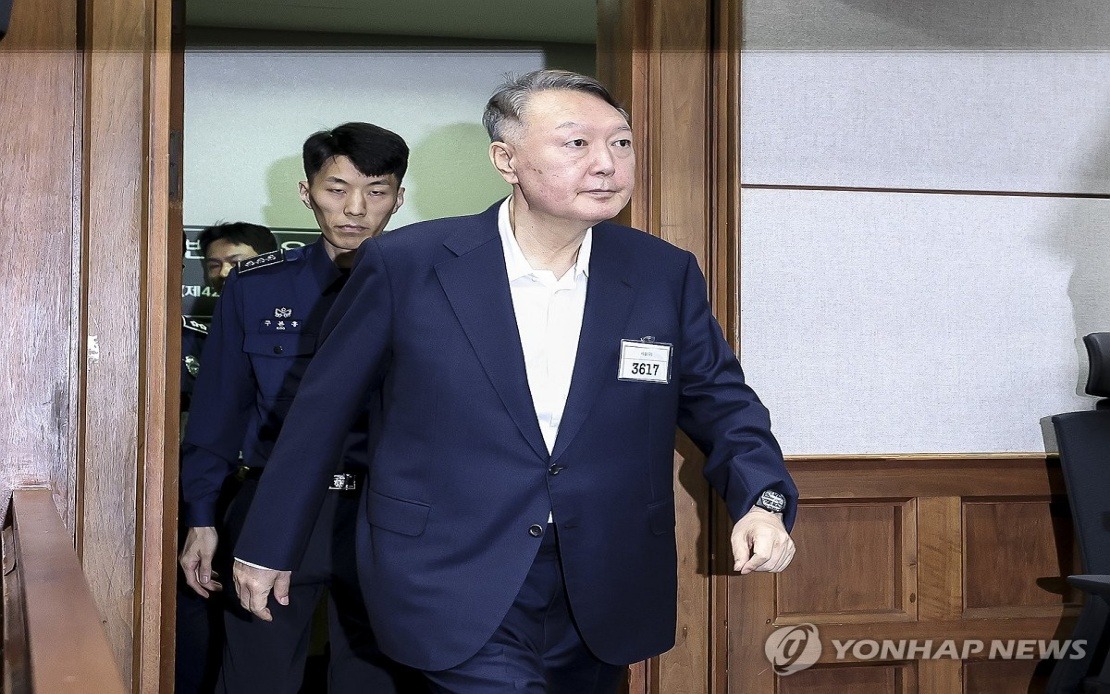
South Korea's Supreme Court has decided to permit live television coverage of its verdict in the obstruction of justice case against former President Yoon Suk Yeol, a decision that underscores the transparency demands surrounding one of the country's most polarizing political crises. The ruling, set to be announced at 2 pm on Thursday, represents the court's initial verdict in proceedings targeting Yoon specifically for his actions following his failed martial law declaration in early December 2024, which triggered a national constitutional emergency.
The special counsel's office, headed by Cho Eun-suk, petitioned for the live broadcast last Friday, seeking to ensure public access to the judicial proceedings. However, Yoon's defence team mounted vigorous opposition to the telecasting arrangement, asserting that transmitting the verdict would inflict irreversible damage to his entitlement to due process and adversely affect both his personal reputation and fundamental rights. Despite these concerns, the court determined that the public interest in witnessing the proceedings outweighed such objections, and the broadcast will proceed using camera equipment operated directly by the court itself.
Yoon faces a constellation of charges related to his attempt to impose martial law and the subsequent obstruction of justice. Most immediately, he is accused of directing his personal security detail to physically prevent investigators from executing an arrest warrant in January 2025, an allegation that strikes at the heart of rule-of-law principles. Beyond this specific obstruction charge, he confronts accusations involving the violation of constitutional rights of nine Cabinet members whom he allegedly failed to consult before implementing the martial law decree, a failure that raised questions about proper governmental procedures.
The former president also faces allegations that he falsified official documents by altering the martial law proclamation after it had been rescinded, thereby attempting to conceal the procedural irregularities embedded in the original decree. Following this alleged tampering, he is said to have destroyed the document entirely, suggesting an effort to eliminate evidence of governmental misconduct. These charges collectively paint a picture of systematic attempts to circumvent accountability mechanisms and obstruct investigations into his actions.
In April, an appellate tribunal delivered an intermediate judgment in this particular case, sentencing Yoon to seven years imprisonment after finding him culpable on the obstruction charges. This represented a significant escalation from the lower court's initial five-year sentence but remained substantially below the ten-year prison term that the special counsel's team had recommended to the judiciary. The gap between the prosecution's recommendations and the courts' actual sentences highlights the complexity of judicial reasoning in cases intertwining constitutional governance with criminal behaviour.
It is critical to note that Yoon's obstruction trial occurs within the broader context of his separate insurrection proceedings, which address the more serious allegation that he orchestrated a governmental takeover through the martial law declaration itself. That parallel trial, currently proceeding through the appellate system, resulted in a life sentence at the initial verdict stage, representing the most severe punishment available under South Korean law for such offences. The divergence between the life sentence in the insurrection case and the seven-year term in the obstruction matter demonstrates how different judicial panels are assessing the various dimensions of his alleged constitutional violations.
For Southeast Asian observers, South Korea's handling of this high-profile case offers instructive lessons regarding institutional resilience and democratic accountability. The willingness of courts to proceed with public broadcasting, despite concerns about fair trial principles, reflects confidence in the judiciary's independence and the legal system's capacity to withstand political pressure. This contrasts sharply with trajectories in some regional democracies where judicial proceedings involving powerful figures have drawn criticisms regarding transparency and impartiality.
The decision to allow live broadcast also signals the Korean judiciary's recognition that extraordinary circumstances demand extraordinary transparency measures. When the executive authority itself becomes the subject of criminal investigation, conventional discretion about media coverage becomes insufficient to maintain public confidence. Broadcasting the verdict allows citizens across the nation to witness judicial reasoning firsthand, reducing opportunities for partisan actors to mischaracterise either the evidence or the reasoning underlying judicial conclusions.
Moreover, the live broadcast carries implications for how South Korean society ultimately processes and accepts the resolution of this unprecedented political crisis. Yoon's martial law decree represented a shocking breach of democratic norms that had held for decades, and the resulting convictions demonstrate the electorate's commitment to constraining executive overreach. By opening courtroom doors to national viewership, the system reinforces messages that no official, regardless of prior status, remains beyond legal scrutiny.
Yoon's legal representatives now face the Supreme Court's final determination in this particular proceeding, though additional appeals and cases will likely occupy the courts for years to come. The obstruction charges, while serious, represent only one facet of the comprehensive legal reckoning he faces. The upcoming verdict will provide clarification regarding whether the Supreme Court will uphold, modify, or overturn the appellate court's seven-year sentence, and whether the court will accept the reasoning that obstruction constituted a distinct and severe offence warranting its own substantial punishment.
The international dimension of this case warrants attention as well. South Korea's response to constitutional crisis through judicial rather than military or extrajudicial mechanisms reflects institutional maturity, yet it also demonstrates vulnerabilities inherent in systems where a single leader's miscalculation can threaten entire governmental structures. The transparent adjudication now underway sends signals about democratic governance not only throughout South Korea but across a region where democratic institutions remain contested terrain in several nations.

