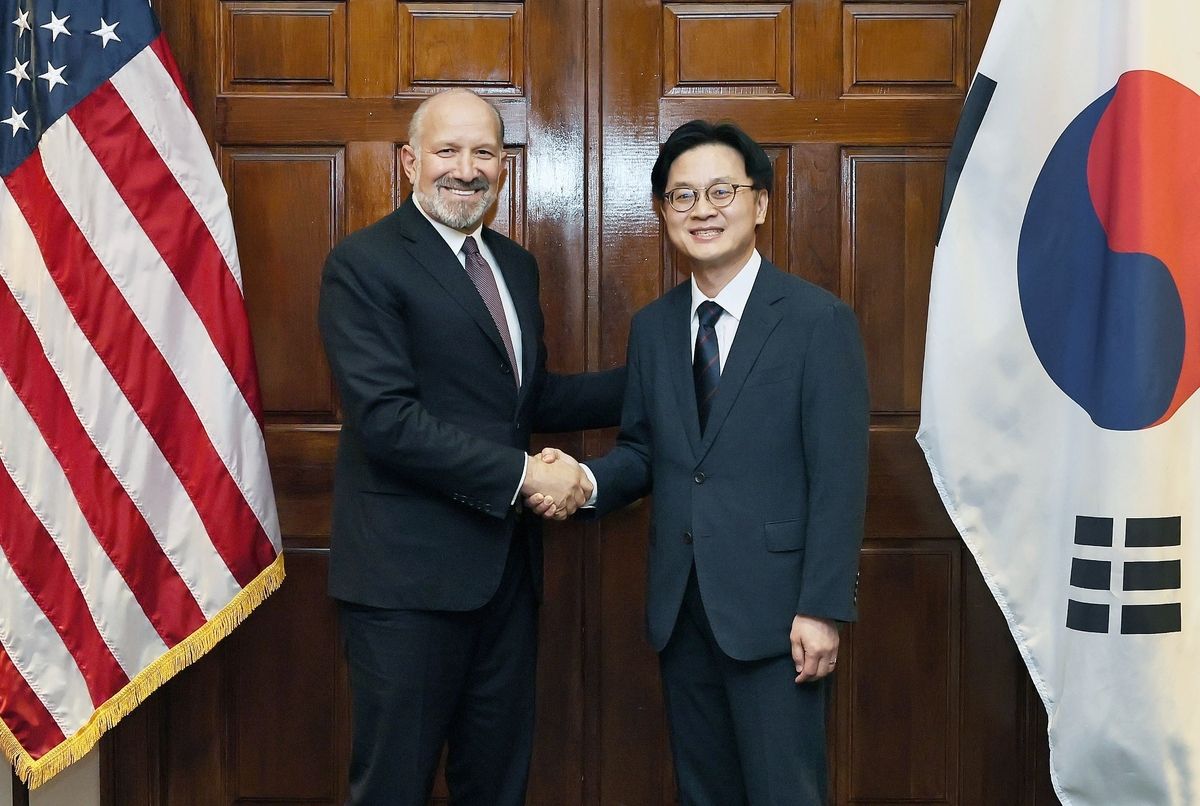
South Korea's Industry Minister Kim Jung-kwan departed for Washington on Wednesday to engage in critical trade negotiations with top-level United States officials, marking a strategically timed diplomatic push as Seoul faces mounting uncertainty over impending American trade decisions. The visit, scheduled from July 22 to 25, comes amid growing apprehension in Seoul about possible tariff announcements that could substantially impact South Korean exports under provisions of the Trade Act's Section 301 mechanism. This timing underscores the diplomatic urgency that South Korea's government is placing on maintaining stable trade relations with its largest security ally and a crucial economic partner.
The backdrop to Kim's mission involves an American investigation into trade practices linked to forced labour allegations, which Korean media outlets have suggested could trigger fresh tariff measures targeting South Korean goods. Such developments would carry significant implications not just for Seoul but for the broader regional trade environment, as South Korea serves as a critical manufacturing hub supplying components and finished products to markets across Asia and beyond. The potential for escalating trade barriers reflects the broader tension between Seoul and Washington over commercial practices and labour standards, issues that have become increasingly central to American trade policy under recent administrations.
Kim's itinerary demonstrates South Korea's multi-pronged approach to securing its economic interests in the United States. His meetings with Commerce Secretary Howard Lutnick will focus on channelling South Korean strategic investments into the American economy, a calculated effort to deepen economic interdependence and build political goodwill that might cushion against tariff actions. These discussions will likely emphasize the substantial capital flows and job creation that South Korean corporations already generate across American states, from manufacturing facilities to technology hubs. By framing South Korean investment as economically beneficial to the United States, Seoul aims to create a counterweight to protectionist sentiments driving tariff policy.
Beyond trade frictions, Kim's schedule includes engagement with Energy Secretary Chris Wright and other administration personnel on resource and energy cooperation, signalling that Seoul is seeking to broaden the relationship beyond narrow commercial disputes. This reflects a recognition that durable trade relationships require multifaceted collaboration across numerous sectors. South Korea's growing interest in American energy resources, particularly liquefied natural gas and potential critical minerals, presents mutual economic opportunity that could reinforce broader bilateral ties. Discussions on these fronts provide diplomatic room for negotiation and demonstrate South Korea's willingness to become a more strategic partner in American economic and energy security calculations.
A central component of Kim's visit centres on Thursday's opening ceremony for a South Korea-U.S. Shipbuilding Partnership Center in Washington, an initiative that builds on a May agreement between Seoul's trade ministry and the American Commerce Department. This partnership represents a structured framework for cooperation between shipbuilders in both nations, creating institutional mechanisms that could facilitate knowledge transfer, joint ventures, and coordinated supply chain development. The shipbuilding sector holds particular significance for South Korea's economy, with the nation standing among the world's leading builders of commercial and specialized vessels. By establishing this formal partnership centre, Seoul is attempting to strengthen its position in American shipbuilding discussions and create a platform where industry representatives from both countries can collaborate on projects and standards.
The June implementation of South Korea's new law supporting strategic investment in the United States appears central to Kim's agenda, as the government seeks to operationalize its provisions and identify specific investment opportunities that align with American economic priorities. This legislation reflects Seoul's deliberate policy shift toward deepening capital deployment in the United States, potentially encompassing semiconductor manufacturing, renewable energy infrastructure, and advanced technology facilities. By channelling investment into strategically important American sectors, South Korea hopes to create constituencies within the United States that benefit from deeper commercial ties and may therefore resist protectionist measures. This represents a sophisticated economic diplomacy approach, where foreign investment becomes a tool for building domestic political support for trade stability.
Kim's outreach to members of Congress demonstrates recognition that trade policy in Washington is shaped not merely by executive branch officials but by legislative players with diverse constituencies and priorities. By engaging congressional representatives directly, South Korea aims to explain its economic contributions to their districts and states, personalizing the relationship beyond abstract bilateral statistics. Members of Congress representing districts with significant South Korean investment or trade ties become potential advocates for stable trade relations, creating legislative pressure to moderate tariff actions. This grassroots diplomatic approach complements high-level executive discussions and reflects Seoul's comprehensive strategy for influencing American trade outcomes.
The broader context of Kim's visit encompasses South Korea's vulnerability to American trade policy shifts, a position shaped by the nation's export-dependent economic model and heavy reliance on American market access. Unlike larger, more diversified economies, South Korea cannot easily absorb tariff shocks without experiencing measurable economic consequences. The potential Section 301 tariffs represent not merely a commercial inconvenience but a potential threat to growth trajectories across multiple industrial sectors. This asymmetry in vulnerability gives Seoul strong incentives to invest diplomatic capital in negotiating outcomes that preserve market access and predictable trade conditions.
Speaking before departure, Minister Kim emphasized his commitment to implementing existing tariff agreements with Washington and maintaining bilateral trade stability, language that reflects Seoul's desire to position itself as a reliable and cooperative trading partner rather than an adversary. This messaging aims to contrast South Korea's approach with the confrontational posture that some other trading partners have adopted toward the United States. By emphasizing compliance and cooperation, Seoul seeks to present itself as deserving of preferential treatment relative to nations accused of more problematic trade practices. The emphasis on implementing agreements signals Seoul's willingness to address American concerns regarding labour standards and forced labour allegations, though the specifics of such implementation remain subject to ongoing negotiation.
For Malaysia and other Southeast Asian economies, South Korea's trade negotiations with the United States carry indirect but meaningful implications. South Korea functions as a regional economic hub and supply chain node, with tariff pressures on Korean exports potentially triggering realignments that affect suppliers and customers throughout Asia. Malaysian companies with ties to South Korean industrial chains might experience disruption if Korean firms face higher costs or reduced American market access. Additionally, the precedent of American tariff actions against South Korea could embolden similar measures against other regional economies, creating broader uncertainty about the future of trade relationships across Southeast Asia and signalling that even long-standing allies face potential tariff exposure.

