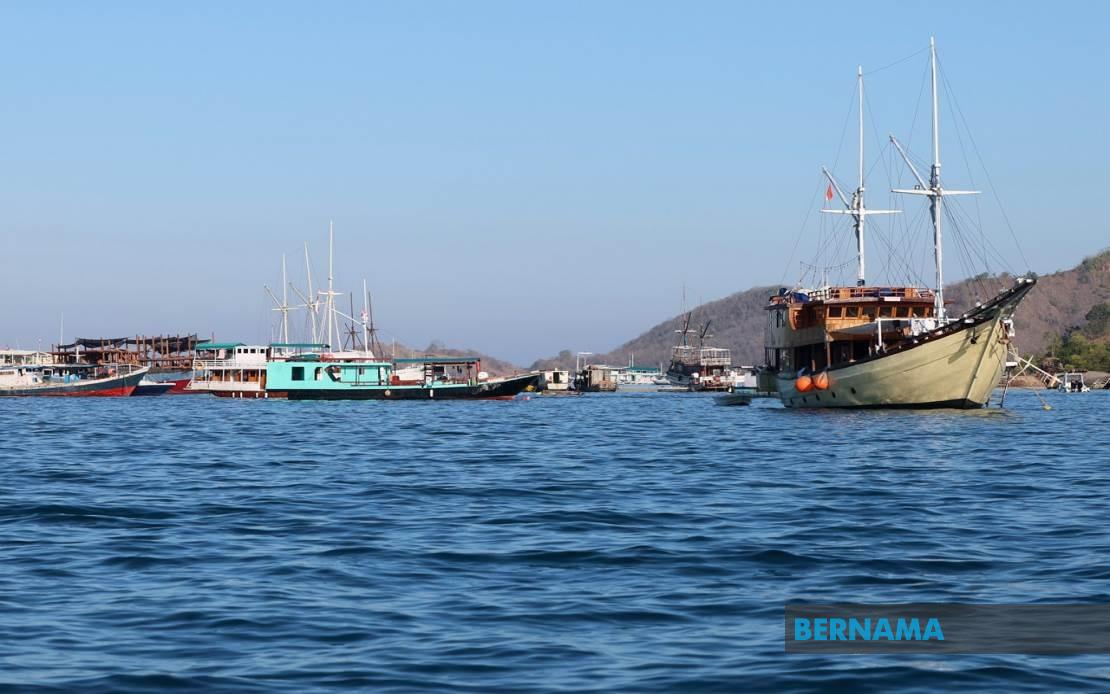
The Indonesian government has committed to restructuring its sprawling portfolio of state-owned enterprises into a leaner framework of between 250 and 300 entities, representing a significant consolidation of public sector operations. The consolidation effort aims to improve efficiency and operational effectiveness across Indonesia's critical infrastructure and commercial sectors. Notably, officials have provided assurances that this administrative reorganisation will not precipitate workforce reductions, a statement aimed at placating concerns among labour unions and worker advocates. The pledge reflects the government's balancing act between modernising the SOE sector and maintaining political stability through employment protections, a consideration particularly pressing given Indonesia's substantial workforce in state industries.
The consolidation strategy comes as Indonesia continues managing broader economic pressures and competing policy demands across its vast archipelago. The restructuring will likely involve mergers, operational integrations, and potential asset redeployment rather than outright dissolution of activities. For Malaysian stakeholders and regional observers, Indonesia's approach to SOE reform offers a case study in how larger Southeast Asian economies navigate the tension between private-sector efficiency models and public-sector employment obligations. The restructured entities will presumably focus on core strategic sectors including energy, telecommunications, mining, and transportation infrastructure.
Indonesia's commitment to job preservation during the restructure contrasts with the reported arrest of dozens of anti-government protesters in Surabaya, East Java, following demonstrations against President Prabowo Subianto's policies. According to human rights monitors, the National Police detained multiple participants in the rally, signalling potential constraints on public dissent regarding government economic and social policies. The arrests underscore tensions between the administration's reform agenda and sectors of the population concerned about their livelihoods and economic security. These arrests raise questions about the extent to which Indonesia's SOE restructure will proceed under conditions of public scrutiny or within a narrowed space for organised labour advocacy.
Meanwhile, Myanmar has completed restoration of approximately 175 ancient pagodas, stupas, temples, and religious structures that sustained damage during the March 2025 earthquake. The repairs represent substantial progress in rebuilding the country's spiritual and cultural heritage, though they constitute roughly 10 percent of the total 1,799 religious sites affected by the seismic event. The ongoing restoration effort reflects Myanmar's commitment to preserving Buddhist architectural traditions and religious sites central to national identity. For regional observers, Myanmar's reconstruction priorities highlight how post-disaster recovery extends beyond infrastructure to encompass cultural and religious preservation, particularly critical in a nation where spiritual institutions anchor community resilience.
Beyond physical reconstruction, Myanmar has launched an initiative encouraging micro, small, and medium enterprises to pursue digital transformation in their operations and business models. This push aligns with the country's Digital Economy 2030-2031 strategic framework, intended to modernise Myanmar's private sector and enhance competitiveness in regional markets. The digital agenda reflects recognition that Myanmar's economic recovery and development depend increasingly on technological adoption by smaller enterprises, which constitute the bulk of the nation's commercial activity. Malaysian and regional businesses operating in Myanmar or considering expansion there should note that this digitalisation push may create both opportunities for technology providers and competitive pressures for traditional operators.
In the Philippines, the Southern Luzon Command has reported significant achievements in its peace and security campaign following the designation of Calabarzon as a Stable Internal Peace and Security region. The designation reflects a measurable decline in communist insurgency activities across the strategically important economic zone encompassing provinces south of Manila. The regional stability milestone represents progress on a security front that has occupied Philippine policymakers for decades, and could enhance investor confidence in southern Luzon's economic development prospects. The peace gains may also allow authorities to redirect resources from counterinsurgency operations toward development and infrastructure initiatives in the region.
Philippine defence officials have simultaneously engaged in diplomatic tensions with China over the 2016 Arbitral Award regarding South China Sea territorial claims. Department of National Defence Secretary Gilberto Teodoro Jr. characterised China's rejection of the Philippines' restatement of the arbitral award as evidence of "insincerity and duplicity," reflecting Manila's frustration with Beijing's consistent dismissal of the international court ruling. This diplomatic friction underscores persistent maritime disputes affecting the broader Southeast Asian region, including Malaysia's own claims and interests in contested waters. The escalating rhetoric suggests little movement toward resolution of these territorial disagreements despite the Philippines' attempts to invoke international legal frameworks.
Vietnam has mobilised a 41-member search-and-rescue team dispatched to Venezuela to provide humanitarian assistance and post-disaster recovery support following major earthquakes in that South American nation. The deployment demonstrates Vietnam's growing international humanitarian engagement and willingness to contribute technical expertise and personnel to global disaster response. The operation reflects broader Vietnamese efforts to expand soft power and diplomatic presence beyond Southeast Asia, positioning the country as a responsible international actor capable of providing specialist assistance during crises.
On the domestic front, Vietnam will introduce a national property code system commencing July 1, assigning unique identification numbers to all properties and establishing a centralised information system for housing and real estate market data. The initiative aims to enhance market transparency, improve regulatory oversight, and reduce speculative trading that has periodically destabilised housing markets. The property code represents a significant step toward digitising Vietnam's real estate sector and creating institutional frameworks for managing one of the region's most volatile asset classes. For Malaysian property investors and developers with interests in Vietnam, the new system will necessitate compliance with stricter identification and reporting requirements while theoretically improving market predictability. The code system also serves as infrastructure supporting government policy objectives including taxation, ownership verification, and prevention of illicit capital flows through real estate channels.
Taken together, these developments across Southeast Asia reflect concurrent themes of economic restructuring, post-disaster recovery, security stabilisation, and digital modernisation. Indonesia's SOE consolidation, Myanmar's reconstruction and digitalisation push, Philippines' peace gains, and Vietnam's property system implementation all represent attempts by regional governments to strengthen institutional capacity, enhance economic efficiency, and address governance challenges. For Malaysian policymakers and businesses, these neighbouring developments offer both cautionary lessons and opportunities as Southeast Asia navigates ongoing transitions in the post-pandemic era.

