The financial services landscape across Southeast Asia is undergoing a fundamental shift as sustainable finance transitions from a niche offering to mainstream banking practice. This evolution, driven by surging consumer demand for electric vehicles, renewable energy infrastructure and environmentally conscious real estate, reflects a broader regional recognition that low-carbon investments and transition financing represent both commercial opportunity and strategic necessity. Major regional institutions are responding by dramatically expanding their green finance portfolios and retooling their banking operations to meet this emerging market segment.
Electric vehicle adoption across the region exemplifies this demand surge. Malaysia's EV market experienced a doubling of sales during 2025, whilst Indonesia saw even more dramatic growth with sales more than doubling year-on-year according to the International Energy Agency. This rapid consumer uptake has created urgent demand for financing mechanisms that can support these purchases, prompting banks to develop specialized lending products and investment frameworks. Beyond vehicles, consumers are increasingly seeking mortgages for energy-efficient homes, rooftop solar financing, and other transition-aligned assets—creating revenue opportunities that banks had previously overlooked or underestimated.
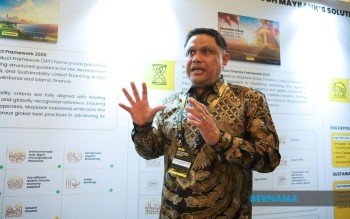
Maybank Group's strategic repositioning exemplifies how regional financial institutions are capitalizing on this opportunity. The banking conglomerate has committed to mobilising RM300 billion in sustainable finance across ASEAN member states between 2026 and 2030, representing a substantial escalation from its previous pledge. Most notably, Maybank significantly exceeded its earlier target under the 2021-2025 commitment framework, ultimately mobilising RM176 billion against an original RM80 billion goal—more than doubling its initial projection. This dramatic overperformance suggests that banks fundamentally underestimated market appetite for sustainable financing products, a lesson that has informed the institution's expanded ambitions for the current period.
Group chief sustainability officer Datuk Shahril Azuar Jimin emphasizes that implementation of the new commitment is progressing ahead of schedule despite being less than six months into the five-year programme. His observation that "there's no liquidity issue" contradicts historical assumptions within the financial sector that green finance suffered from capital scarcity. Instead, Shahril notes that banks now actively compete to participate in sustainable financing, indicating that the constraint is no longer supply of capital but rather availability of suitable investment opportunities and client demand. This shift represents a fundamental repositioning of how financial institutions view green finance—no longer as a compliance obligation or marketing differentiator, but as a core profit center aligned with authentic consumer preferences.
Government policy support across the region reinforces these commercial dynamics. In Malaysia, the Energy Transition and Water Transformation Ministry increased the residential quota under the Net Energy Metering Rakyat programme by 100 megawatts in May 2025 following complete subscription of the existing allocation. This expansion of rooftop solar photovoltaic capacity demonstrates how regulatory frameworks are responding to genuine consumer interest in distributed renewable energy, creating structural demand for financing mechanisms that enable household-level sustainability investments. Such policy support strengthens the business case for banks to develop specialized products and expertise.
Maybank's expanded Sustainable Product Framework now encompasses transition finance alongside traditional green projects, reflecting the growing sophistication of sustainable finance as a banking discipline. The portfolio extends beyond energy and environmental remediation to include electric vehicle financing, green mortgages, social finance products, and green bonds. This breadth illustrates how sustainable finance has evolved from a narrowly defined environmental focus to encompass the economic transformation required for decarbonisation. By integrating financing for lower-income communities' access to affordable green housing and electric two-wheelers, institutions are positioning sustainability as relevant to everyday consumer needs rather than exclusively serving wealthy segments pursuing premium green assets.
This expansion of sustainable finance scope has fundamentally altered the role of relationship managers within banking operations. Rather than serving primarily as transaction facilitators, these professionals must now function as sustainability advisors capable of explaining climate impacts, supporting clients through transition planning, and positioning sustainable investments within broader economic strategy. Maybank has invested substantially in capacity-building programmes and sustainability certifications to equip relationship managers with requisite expertise. This investment reflects recognition that sustainable finance success depends not merely on product availability or capital adequacy but on client-facing teams capable of translating climate science and sustainability frameworks into actionable financing decisions.
Indonesia's market dynamics particularly illustrate the regional momentum. Maybank Indonesia mobilised approximately Rp17 trillion in sustainable financing during the previous commitment period, whilst transportation—driven by persistent electric vehicle growth—has emerged as the strongest performing segment within the expanded portfolio. Beyond vehicle financing, Maybank Indonesia's sustainable offerings extend to affordable housing developments and low-cost electric two-wheeler programmes targeting lower-income communities. This inclusive approach demonstrates how sustainable finance is becoming integrated across economic strata rather than remaining concentrated among affluent consumers pursuing premium green assets.
Beyond traditional lending, financial institutions are developing complementary banking products to capture the full spectrum of sustainable investment demand. Maybank Indonesia pioneered an ESG deposit product within the group, positioning it as the first market introducing this innovative savings vehicle that enables retail customers to invest directly in environmental, social, and governance-aligned portfolios. Malaysia is expected to launch similar offerings, suggesting that sustainable finance expansion extends beyond lending operations into deposits, investments, and wealth management. Concurrent preparation of green bond initiatives further indicates how regional banks are developing comprehensive sustainable finance ecosystems capable of serving clients across the full spectrum of financial services.
The transformation occurring across Southeast Asian banking carries implications extending well beyond individual institutions or markets. Regional climate transition depends fundamentally on directing capital flows toward low-carbon infrastructure and away from high-carbon assets—a reallocation requiring financial system alignment with sustainability objectives. The current momentum suggests that market forces, consumer preferences, and regulatory encouragement are aligning to create structural incentives for such reallocation. However, sustaining this trajectory requires continued investment in institutional capacity, product innovation, and client education—commitments that institutions like Maybank are clearly making at substantial scale. The question for policymakers and industry participants is whether this mainstream acceptance can accelerate sufficiently to support the energy transition timelines required for climate objectives across the region.

