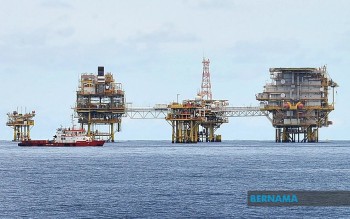
The offshore energy landscape across Southeast Asia is displaying remarkable resilience, with greenfield capital expenditure projected to surge past the US$100 billion mark—a 12 per cent year-on-year increase that underscores investor appetite for new developments in the region. This expansion comes despite ongoing uncertainty surrounding Middle Eastern tensions, particularly following the fragile ceasefire between the United States and Iran. According to Hong Leong Investment Bank Bhd, the investment momentum reflects a strategic reorientation among energy companies toward establishing fresh productive capacity in Southeast Asian waters, even as broader geopolitical headwinds persist elsewhere.
The investment thesis extends beyond greenfield projects to encompass brownfield expansion, where companies are channelling capital into existing infrastructure. South Asia is expected to lead this segment with a 23 per cent increase in brownfield capex, while Southeast Asia itself will see a more modest 3 per cent uptick. This dual-pronged approach—building new assets while simultaneously upgrading legacy facilities—signals that energy producers are hedging their bets by prioritising both long-term supply expansion and near-term operational resilience. The emphasis on maintaining and enhancing existing infrastructure points to concerns about supply continuity amid geopolitical volatility, even as major producers bet on the region's long-term potential.
Critical to this investment narrative is the recent signing of the United States-Iran 14-point memorandum of understanding, which Hong Leong views as a potential inflection point toward regional de-escalation. While cautioning that the ceasefire remains fragile, the bank suggests that the agreement has already begun influencing market dynamics, most visibly through changing shipping patterns. Traffic through the strategically vital Strait of Hormuz—which handles roughly one-third of seaborne oil trade globally—has begun recovering since the MOU was signed. However, satellite data reveals a complicating factor: an increasing number of vessels are transiting these waters with automatic identification system transponders switched off, suggesting that published shipping data may understate actual throughput and indicating continued caution among operators about the true security situation.
For Malaysian and Southeast Asian stakeholders, the investment recovery carries particular significance. The region's energy sector stands to benefit substantially from what Hong Leong identifies as a potential Petronas capex upcycle beginning around 2027. This anticipated investment surge would unlock substantial opportunities for domestic oil and gas services and equipment providers, particularly those positioned to support upstream development, production hook-up and commissioning, maintenance operations, marine logistics, fabrication work, and pipeline infrastructure. Such a cycle would represent a substantial multiplier effect throughout Malaysia's energy ecosystem, supporting engineering firms, maritime service providers, and related industrial sectors dependent on stable energy sector demand.
The outlook for crude oil pricing, however, has been revised downward, reflecting both genuine demand concerns and the realities of current global inventory management. Hong Leong has reduced its 2026 Brent forecast to US$80 per barrel from an earlier US$90 projection, while maintaining a US$75 per barrel estimate for the following year. This recalibration matters significantly for Malaysian consumers and businesses, as energy costs directly influence inflation, business investment decisions, and household purchasing power across the region. The revised price assumptions incorporate expectations that global oil inventories will remain under pressure as markets seek to rebuild reserves drawn down during the recent conflict period.
Underlying price support comes from the dynamics of global inventory management. According to the United States Energy Information Administration's June outlook, OECD commercial oil inventories face a sharp drawdown, with days of supply projected to contract to 50 days by late 2026—substantially below pre-conflict levels that typically exceeded 60 days. Energy security considerations have elevated the importance of maintaining robust reserves, and Hong Leong expects prices to remain anchored around the US$80 level until global oil flows normalise and inventory buffers are adequately replenished. Should inventory rebuilding take longer than anticipated, potentially stretching beyond the 60-day threshold, Brent could receive additional upside support above US$75 per barrel into early 2027.
Production disruptions in the Middle East are extending the timeline for normalisation. Total shut-in volumes in the Strait of Hormuz region climbed from 35 per cent of normal flows in March 2026 to 45 per cent in May 2026, representing a significant constraint on global supply. While the recent ceasefire agreement has improved sentiment, these production outages cannot be reversed immediately, and full restoration of affected facilities typically requires months of careful technical work. The extended recovery trajectory therefore provides structural support for oil pricing, ensuring that Southeast Asian economies will face elevated but stabilising energy costs rather than dramatic price shocks in either direction.
Independently, economists tracking crude markets offer complementary perspectives on what stabilisation might mean for regional economies. Mohd Sedek Jantan, investment strategy director at IPPFA Sdn Bhd, notes that both Brent and West Texas Intermediate crude have retreated substantially from their recent peaks, now stabilising around US$70–75 per barrel. This range, if sustained over coming months, would provide meaningful relief for energy-intensive industries across Southeast Asia by reducing input costs and improving operational cost predictability. Manufacturing sectors, transportation, and logistics operations would all benefit from reduced volatility and lower average energy expenses.
Beyond immediate business implications, sustained oil prices in the US$70–75 range carry macroeconomic significance for the entire region. Lower energy costs would help ease global inflationary pressures by reducing cost-push inflation, a factor that has constrained central bank flexibility throughout the post-pandemic recovery. Reduced inflation would support business investment intentions, strengthen consumer purchasing power across Southeast Asian households, and provide monetary policymakers with greater latitude to maintain accommodative policies that reinforce economic expansion. For Malaysia specifically, moderate oil prices support the government's fiscal position while avoiding the political sensitivity that extremely low oil revenues might trigger.
Current market pricing at the time of the original assessment showed Brent crude up 0.90 per cent to US$69.17 per barrel, while West Texas Intermediate rose 0.94 per cent to US$72.67 per barrel, suggesting prices were trending within the stabilisation range that economists consider optimal for regional growth. The resilience of Southeast Asian offshore investment spending, combined with moderating crude prices and the prospect of renewed supply security investments, creates conditions where the region can pursue energy transition initiatives while maintaining stable, affordable energy supplies. This balance—simultaneously managing near-term affordability, medium-term supply security, and longer-term sustainability objectives—represents the central challenge for policymakers and investors across Southeast Asia navigating an increasingly complex global energy landscape.

