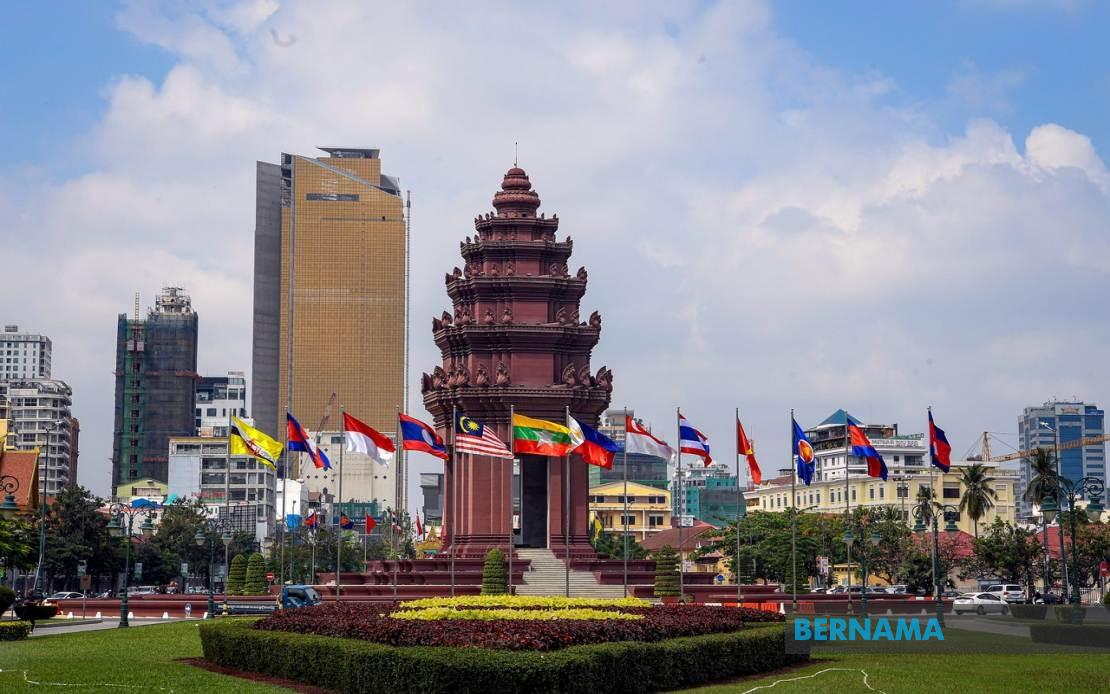
Across Southeast Asia, governments are advancing major development initiatives aimed at strengthening regional connectivity and economic growth. India and Cambodia have deepened their bilateral partnership by signing memoranda of understanding focused on implementing rural development projects within the framework of Mekong-Ganga Cooperation. These initiatives will specifically target agricultural communities in Kratie Province, reflecting the broader regional emphasis on rural economic advancement and poverty reduction in areas that have traditionally lagged behind urban centres in infrastructure and service delivery.
Cambodia's Civil Service Ministry is embarking on a comprehensive modernization programme that signals a shift towards professional public administration. The ministry's strategic approach combines human capital development with digitalisation initiatives, intending to fundamentally transform how government delivers services to citizens. This reform reflects growing recognition across Southeast Asia that sustainable development requires not just infrastructure investment, but also institutional capability and digital transformation to reduce corruption and improve efficiency in government service delivery.
In Indonesia, transportation infrastructure expansion continues as a priority for national development. Transportation Minister Dudy Purwagandhi has endorsed proposals to expand Lt. Col. Wisnu Airfield in Buleleng District, positioning northern Bali as an emerging aviation hub. This strategic expansion addresses congestion at Ngurah Rai International Airport, Indonesia's busiest aviation gateway, and could unlock economic development in peripheral regions by improving accessibility for tourists and facilitating business connectivity. The move represents a pragmatic approach to managing aviation demand across the archipelago's dispersed geography.
Indonesia's anti-corruption efforts have taken a significant turn with the Indonesian National Police formally naming former Junior Attorney General for Special Crimes Febrie Adriansyah as a suspect in an alleged corruption and money laundering investigation. The designation marks a high-profile prosecution that signals the government's commitment to holding senior officials accountable, though the case also underscores concerns about systemic corruption within law enforcement and judicial institutions that regional observers have long documented.
Myanmar's infrastructure development continues with the inauguration of Anisakan Airport in Mandalay Region, which officials contend will substantially strengthen domestic connectivity and regional economic prospects. The facility is designed to facilitate agricultural product distribution and attract investment into the Mandalay area, regions traditionally disadvantaged by limited transportation infrastructure. Simultaneously, Myanmar has brought into operation the 15-megawatt Shwemyoh solar power plant in Naypyidaw, with government plans to expand the facility through subsequent phases reaching a combined capacity of 70 megawatts. These renewable energy investments address Myanmar's persistent electricity supply challenges, though energy infrastructure development remains constrained by financing limitations and technical capacity.
The Philippines faces immediate weather challenges as the southwest monsoon continues affecting Luzon and the Visayas following Tropical Storm Inday's exit from the Philippine Area of Responsibility. The Philippine Atmospheric, Geophysical and Astronomical Services Administration has advised of ongoing rainfall throughout the affected regions. Meanwhile, the political landscape remains turbulent as the House of Representatives impeachment panel against Vice President Sara Z. Duterte has completed initial testimony, with prosecution members asserting that foundational arguments have been established during the first week of Senate hearings, though the controversial proceedings continue to divide the nation.
Singapore has emerged as a focal point in discussions around digital privacy and innovation. WhatsApp, owned by Meta, has systematically reserved high-profile usernames including those associated with public figures and government entities ahead of launching its new username feature, a privacy-protective technology enabling users to establish connections without disclosing personal phone numbers. The measure demonstrates how global technology platforms are adapting their services in response to privacy concerns particularly relevant in highly digitalized societies like Singapore. Concurrently, Singapore's Housing and Development Board reported that over the past five years, 845 appeals for income ceiling waivers have been approved for executive condominium applicants who exceeded eligibility thresholds, illustrating the demand for affordable housing solutions in Asia's most expensive property market.
Thailand's law enforcement agencies have intensified operations targeting transnational drug trafficking networks. Thai police have issued an arrest warrant for a woman suspected of orchestrating a sophisticated heroin smuggling operation that concealed narcotics in elephant-print bags and recruited aviation personnel to transport contraband to Australia. The investigation demonstrates how trafficking organizations exploit transportation networks and corrupt individuals to move illicit substances across borders, a persistent challenge affecting multiple Southeast Asian jurisdictions. Concurrently, Thai authorities have expanded investigations into illegal nominee arrangements, with the Department of Special Investigation conducting raids at five locations across Koh Samui and Koh Phangan. Investigators discovered suspected nominee networks connected to foreign-owned property and tourism businesses, with one site serving as registered address for more than 100 companies, revealing sophisticated mechanisms through which foreign interests circumvent Thailand's ownership restrictions on land and commercial entities.
Vietnam has initiated a government investigation into a tourist speedboat incident, continuing a pattern across the region where maritime safety concerns intersect with tourism sector growth and regulatory enforcement capacity. The incident underscores broader questions about how Southeast Asian governments balance tourism development with passenger safety standards, particularly as marine-based tourism expands dramatically across island destinations throughout the region. These concurrent developments across Cambodia, Indonesia, Myanmar, Philippines, Thailand, and Vietnam reveal a region simultaneously advancing development agendas while grappling with implementation challenges, corruption vulnerabilities, and the complex interplay between rapid economic growth and regulatory capacity.

