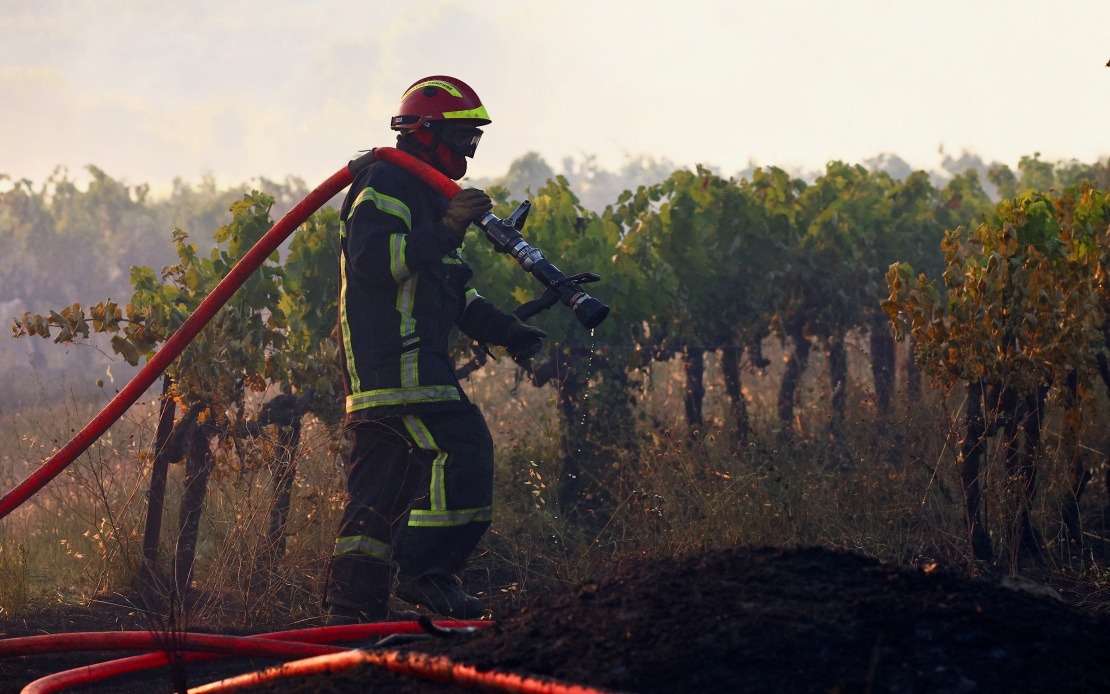
France's southeastern Var department is grappling with a significant wildfire that has already consumed 1,700 hectares of land, forcing authorities to evacuate hundreds of residents while leaving thousands without electricity. The prefecture confirmed the scale of the disaster on Wednesday, revealing that the expanding flames have disrupted the normal lives of communities across multiple communes in the region, underscoring the vulnerability of populated areas to the advancing climate crisis.
The evacuation effort has touched five separate communes: Ponteves, Cotignac, Sillans-la-Cascade, Correns, and Montfort-sur-Argens, with approximately 400 residents displaced from their homes as the fire continues to spread. The disruption extends beyond immediate physical evacuation, with electricity infrastructure suffering considerable damage. Power supply to 2,300 households has been severed, with the majority of outages concentrated in the Cotignac area, leaving residents in the sweltering heat without access to air conditioning or basic electrical services. The combination of displacement and utility disruption creates a humanitarian challenge as temperatures soar across the region.
The response mobilised by French authorities demonstrates the severity of the situation and the resources required to combat such disasters. Nearly 900 firefighters have been deployed to the active fire zone, drawing personnel not only from the Var department itself but from neighbouring departments as well. Supporting this substantial firefighting force are 350 vehicles equipped with specialised equipment for wildfire suppression, alongside 60 gendarmes tasked with managing evacuations and maintaining security in affected areas. This coordinated deployment reflects the critical nature of wildfire management when flames threaten populated zones and essential infrastructure.
The Var wildfire represents the latest manifestation of an alarming broader crisis gripping France this summer. President Emmanuel Macron has characterised the frequency and intensity of wildfires across the nation as unprecedented in the post-World War II era, signalling a troubling escalation in fire activity. The statement carries significant political weight, as it acknowledges that contemporary climate conditions are producing wildfire patterns that exceed even the worst historical records within living memory. For France, traditionally considered a developed nation with advanced disaster management capabilities, such acknowledgment suggests that even well-resourced systems are being strained by the scale of the environmental challenge.
Underlying these fires is an extreme heat phenomenon that has broken records across western Europe. In late June, France's meteorological service reached an unprecedented alert status, issuing its highest-level warning across 72 of the nation's 96 departments simultaneously—itself a record-setting occurrence. Temperatures in many regions approached or exceeded 40°C, with readings of 104°F and above recorded in certain areas. These conditions create ideal circumstances for rapid fire initiation and spread, as vegetation becomes increasingly desiccated and atmospheric conditions favour combustion. The heat wave represents not merely a temporary weather event but rather an indicator of shifting climate patterns that may render such extreme temperatures more commonplace in future summers.
The implications of France's wildfire crisis extend beyond national borders and warrant close attention from Southeast Asian observers. The European Union, as a developed economic bloc with substantial resources, faces significant challenges in managing climate-induced disasters. Malaysia and other ASEAN nations, which regularly confront transboundary haze and forest fires with more limited institutional resources, can observe the struggles of wealthier nations as cautionary evidence regarding the inadequacy of purely reactive disaster management. If advanced nations with advanced technology and wealth struggle to contain wildfire impacts, the lesson for Southeast Asia is that preventative investment in forest management, early warning systems, and regional cooperation must be prioritised.
The timing of France's wildfire outbreak during peak summer tourism season also carries economic consequences worth noting. The Var department, positioned on the French Riviera and historically a major tourist destination, faces potential disruption to seasonal economic activity. Infrastructure damage, displacement of visitors, and ongoing fire hazards could impact the regional economy significantly. For Malaysia's tourism and hospitality sectors, which depend similarly on seasonal visitors and can be disrupted by environmental crises such as haze events, the French experience offers a reminder of the economic vulnerability created when natural disasters strike during peak commercial periods.
The deployment of nearly 900 firefighters alongside supporting infrastructure suggests that suppressing major wildfires demands unprecedented human and material resources. This resource intensity raises questions about sustainability and scalability. As climate change potentially increases wildfire frequency globally, the question emerges whether nations can consistently mobilise such extensive firefighting forces. For Malaysia and the broader Southeast Asian region, which experiences recurring transboundary haze from Indonesian forest fires, this French scenario illustrates how individual nations' fire management capacity constraints directly affect neighbouring countries. The cross-border nature of smoke and flames means that firefighting capacity limitations in one nation have consequences far beyond its borders.
France's predicament also highlights the interconnection between extreme heat waves and wildfire activity. The two phenomena are not separate disasters but rather manifestations of broader atmospheric and climate system dysfunction. Record temperatures create the conditions that enable large-scale fires, and these fires in turn release additional carbon into the atmosphere and reduce cooling capacity through vegetation loss. This feedback mechanism suggests that addressing wildfire risk adequately requires confronting the underlying climate factors driving extreme heat rather than merely improving firefighting capabilities. For policymakers across Southeast Asia, the French situation reinforces arguments for robust climate adaptation and mitigation strategies as essential components of disaster preparedness rather than peripheral concerns.
The evacuation of hundreds of residents from their homes, while successful in preventing loss of life, creates substantial displacement challenges. Evacuees face uncertainty regarding when they can safely return, potential structural damage to their properties, and psychological trauma from losing their homes to natural disaster. In France's developed welfare state, such displaced residents likely have access to government assistance programmes and temporary shelter, advantages not universally available across Southeast Asia. This disparity in post-disaster support capacity represents another dimension of vulnerability that differentiates developed nations from developing ones, suggesting that Malaysia's investment in social safety net infrastructure for disaster-affected populations carries direct relevance to real-world resilience and human welfare.
As the Var department's authorities continue fighting the active fire and managing evacuations, the incident serves as a potent reminder that developed nations remain vulnerable to environmental disasters at scale. The wildfire consuming 1,700 hectares of land simultaneously represents a crisis for local communities, a challenge for national disaster management systems, and an indicator of broader climatic changes affecting Europe and beyond. For Southeast Asian observers and policymakers, France's current predicament underscores that environmental vulnerability transcends economic development level, that climate impacts escalate faster than institutional adaptation, and that regional cooperation on transboundary environmental threats constitutes genuine security infrastructure rather than optional diplomatic courtesy.

