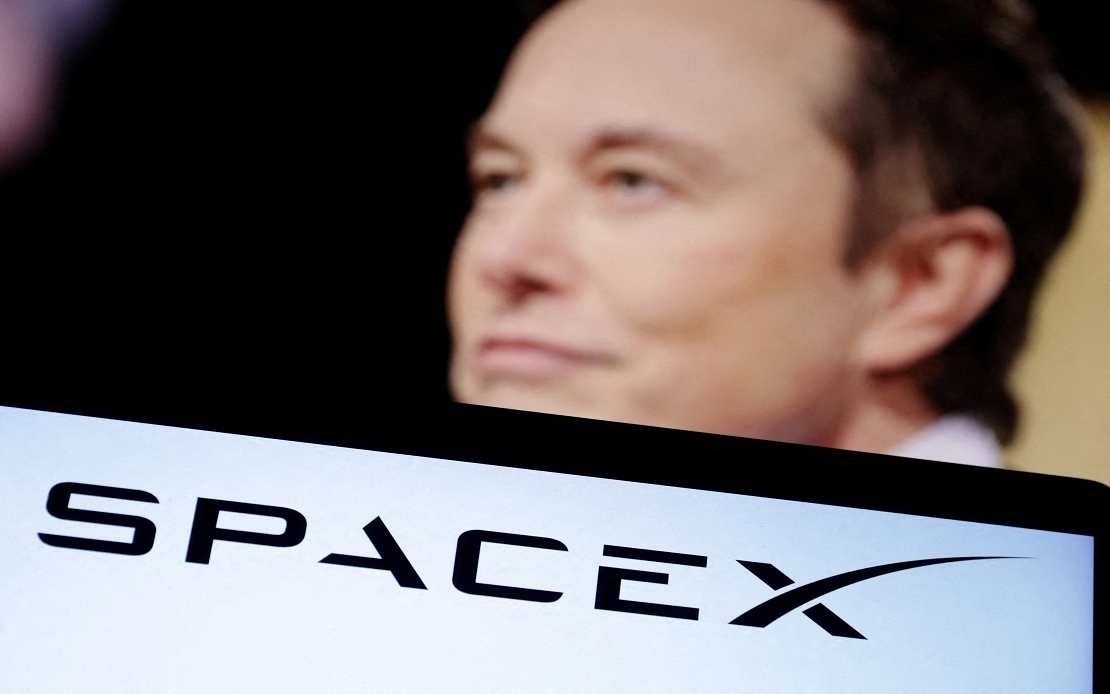
Elon Musk's SpaceX has demonstrated a striking improvement in its loss position during the quarter encompassing its landmark initial public offering, though the company continues to operate unprofitably at a scale that underscores the capital intensity of space operations. The company reported a net loss of US$541 million for the quarter, a dramatic improvement from approximately US$1 billion in losses a year earlier, signalling that the company's operational trajectory is moving decisively in the right direction despite continued cash burn.
Revenue expansion outpaced analyst expectations by a considerable margin, with total sales climbing nearly 92 per cent year-on-year to reach US$7.8 billion. This substantially exceeded the consensus forecast of around US$6.9 billion that market participants had anticipated, demonstrating SpaceX's ability to monetise its sprawling portfolio of commercial and government contracts. The gap between expectation and reality reflects both the strength of demand for SpaceX's services and management's growing confidence in guiding revenue upward.
Starlink, SpaceX's satellite internet constellation, has emerged as the undisputed financial engine of the enterprise. The service generated approximately US$4.3 billion in quarterly revenue, representing a nearly two-thirds increase compared with the same period twelve months prior. This acceleration is particularly noteworthy given the vast infrastructure investments required to continuously expand global coverage and refresh its orbital infrastructure, yet the business is managing to scale revenue faster than many traditional telecommunications operators.
The subscriber growth trajectory reflects Starlink's expanding appeal across multiple customer segments. Total active users increased from 10.3 million to 12 million within just three months, indicating sustained global appetite for satellite-based connectivity. More significantly, the customer base is becoming increasingly diverse, with a growing roster of airline carriers now relying on Starlink for in-flight connectivity. This diversification reduces dependence on consumer subscribers and creates more predictable, contract-based revenue streams that institutional investors typically value more highly.
Operating profit surged 80 per cent to reach approximately US$1.66 billion, providing further evidence that SpaceX is extracting meaningful profitability from its enlarged revenue base. This metric is particularly important for understanding the company's underlying operational health, as it excludes financing costs and other non-operational expenses that can distort the net income figure. The operating margin expansion suggests that SpaceX has achieved meaningful efficiency gains in deploying its satellite internet service at scale.
SpaceX's transition to public markets in mid-June generated US$75 billion in proceeds, establishing a record for space-related offerings. The company priced shares at US$135, implying a valuation near US$1.8 trillion—a striking multiple relative to current earnings that reflected investor enthusiasm for the company's long-term strategic vision. Management justified this elevated valuation by pointing to ambitious expansion plans in artificial intelligence applications, though details on specific AI initiatives remain limited.
The post-IPO stock performance tells a more cautionary tale than the offering's initial reception suggested. In the weeks immediately following the listing, retail investor enthusiasm propelled the share price above US$225, a 67 per cent premium to the issue price. However, this euphoria proved unsustainable, and the stock has since undergone a sharp correction, closing regular trading on Tuesday at approximately US$125—below the original IPO price and representing a 44 per cent decline from its peak. This reversal coincided with the release of the quarterly results, suggesting the market may have reassessed the company's near-term earnings trajectory.
After-hours trading on Tuesday saw shares decline by as much as 8 per cent in response to the financial statements, indicating investor disappointment with the magnitude of the net loss relative to revenue generation. The persistence of significant quarterly losses, despite the $7.8 billion revenue figure, raises questions about the timeline to sustained profitability and whether current market pricing adequately accounts for the capital requirements of space infrastructure deployment.
A significant catalyst looms as the lock-up period for insider and early investor shareholdings expires on Thursday. This contractual window, which typically prevents company founders and venture investors from selling shares immediately after an IPO, represents a critical juncture for SpaceX's stock price. Historically, lock-up expirations create selling pressure as shareholders seek to achieve liquidity, particularly when share prices have already declined from their peaks. The magnitude of insider selling could substantially exceed typical levels if major stakeholders view the current valuation as unattractive.
The financial results must be contextualised within SpaceX's increasingly central role in American space capabilities. The company has become indispensable to the United States space programme, providing essential launch services and orbital infrastructure that government agencies depend upon for national security and scientific missions. This strategic importance provides a degree of revenue stability that complements the commercial Starlink business.
Simultaneously, SpaceX is undertaking massive capital expenditures to develop its Starship vehicle, a reusable super-heavy lift rocket designed to dramatically reduce the cost of space access. The vehicle is currently undergoing test flights and remains years away from operational deployment on significant payloads. These development costs weigh heavily on the company's bottom line and may continue to do so for several years, suggesting that investors should anticipate ongoing losses until Starship achieves operational status and begins generating the revenue SpaceX believes it will capture.
For Malaysian and Southeast Asian observers, SpaceX's financial performance carries implications for regional connectivity ambitions. As Starlink expands its service across Asia-Pacific markets, regulatory and competitive considerations will increasingly affect the company's growth trajectory. Malaysian telecommunications authorities will need to monitor how a potentially loss-making satellite operator with trillion-dollar aspirations may pursue aggressive pricing or subsidy strategies to capture market share, and whether this creates sustainable competition or represents unsustainable dumping of capacity.

