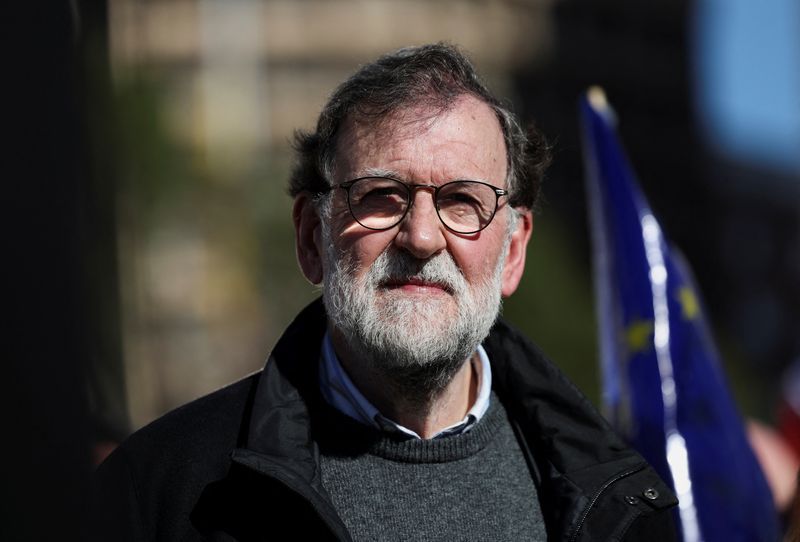
Spain's government moved swiftly to distance itself from controversial comments made by conservative former Prime Minister Mariano Rajoy about France's national soccer team, with Foreign Minister Jose Manuel Albares offering a formal apology to his French counterpart on Tuesday. The rebuke came ahead of a crucial World Cup semi-final clash between the two nations, underscoring the diplomatic sensitivity surrounding remarks that have drawn condemnation across the political spectrum in France.
Rajoy, who served as Spain's premier from 2011 to 2018, published an opinion piece in the online publication El Debate on Friday that appeared to cast doubt on the national credentials of French players. While acknowledging the exceptional quality of France's squad, he wrote that "there are no French players in it," an apparent reference to the ethnic and cultural backgrounds of several team members with African and Afro-Caribbean heritage. The comment sparked immediate outrage among those who viewed it as suggesting that players of colour could not genuinely represent France.
Albares characterised the remarks as "intolerable" and stated that they carried "the poison of racism and xenophobia." Speaking to Cadena SER radio, he emphasised that Rajoy's column failed to represent the values of the Spanish people, asserting that "the overwhelming majority of Spaniards" would reject such sentiments. The Foreign Minister highlighted the fundamental principle at stake, arguing that using physical appearance as a metric for determining citizenship or national belonging represents a serious breach of modern democratic values. His intervention signalled that Madrid would not tolerate such commentary, even from a senior political figure.
Spain's Prime Minister Pedro Sanchez reinforced this position while attending France's National Day celebrations in Paris. Through a post on social media platform X, Sanchez directly criticised those who "measure nationality by a person's surname, birthplace or skin colour," describing Rajoy's words as "shamefully xenophobic." This coordinated response from Spain's government demonstrated that the controversy had reached the highest levels of Spanish political leadership.
Rajoy's spokesperson from his People's Party attempted to frame the column as satirical rather than malicious, claiming it was intended as sarcasm without ill intent. However, this defence struggled to gain traction given the serious nature of the underlying message. The former PM himself remained unavailable for immediate comment, leaving the burden of explanation with party officials who found themselves defending a position that many interpreted as questioning the legitimacy of non-white French citizens.
The timing of Rajoy's column proved particularly damaging, arriving just days after another high-profile incident involving racist remarks directed at France captain Kylian Mbappé. Paraguayan Senator Celeste Amarilla had posted a tirade on social media describing the striker as a "colonised Cameroonian, desperately trying to pass himself off as French." This sequence of events created a broader narrative about racism in football and national representation that transcended the sporting arena.
Mbappé's response to the Paraguayan senator's attack stood out for its magnanimity and principle. Rather than focusing solely on defending himself against the racist assault, the French captain extended his defence to include the Paraguayan players who had faced criticism, demonstrating an understanding that such prejudice harms entire communities. He characterised Amarilla as "despicable and unworthy" of her position, signalling that behaviour of this nature carried consequences regardless of one's status or office.
French officials mounted a comprehensive rebuttal to Rajoy's comments, with Foreign Minister Jean-Noël Barrot declaring them "pathetic" during a television interview. Barrot articulated a vision of French identity that transcends ethnicity, asserting that "France has no skin colour" and that any assertion otherwise represents either ignorance or racism. His remarks encapsulated an official French position that citizenship and national belonging are constitutional matters, not phenotypical ones.
Remarkably, France's far-right opposition party National Rally, often associated with restrictive immigration policies, also condemned Rajoy's statement. Spokesman Julien Odoul described the remarks as "scandalous, shameful, and deplorable," demonstrating that certain commitments to national dignity and the legal definition of citizenship transcend ideological boundaries. His unequivocal labelling of Rajoy as "a racist" showed that even parties with tough stances on national identity rejected overt racial discrimination.
The French Football Federation initiated legal proceedings against Amarilla in response to her comments, filing a criminal complaint that underscored official intolerance for such speech. Paraguay's government similarly disassociated itself from the senator's statements, describing them as contrary to national values. This coordinated international response suggested a broader commitment to preventing racist discourse from becoming normalised within football or political discourse.
The incidents surrounding both Rajoy and Amarilla highlighted enduring tensions within global football about representation, belonging, and the relationship between ethnicity and national identity. For Southeast Asian observers, the controversy offered insights into how European nations grapple with demographic change and the challenge of integrating diverse populations into existing national narratives. The Spanish and French responses, though urgent damage control, also illustrated that democratic governments retain the capacity to enforce standards of conduct around racial respect, even when such enforcement requires high-profile figures to face criticism from their peers.

