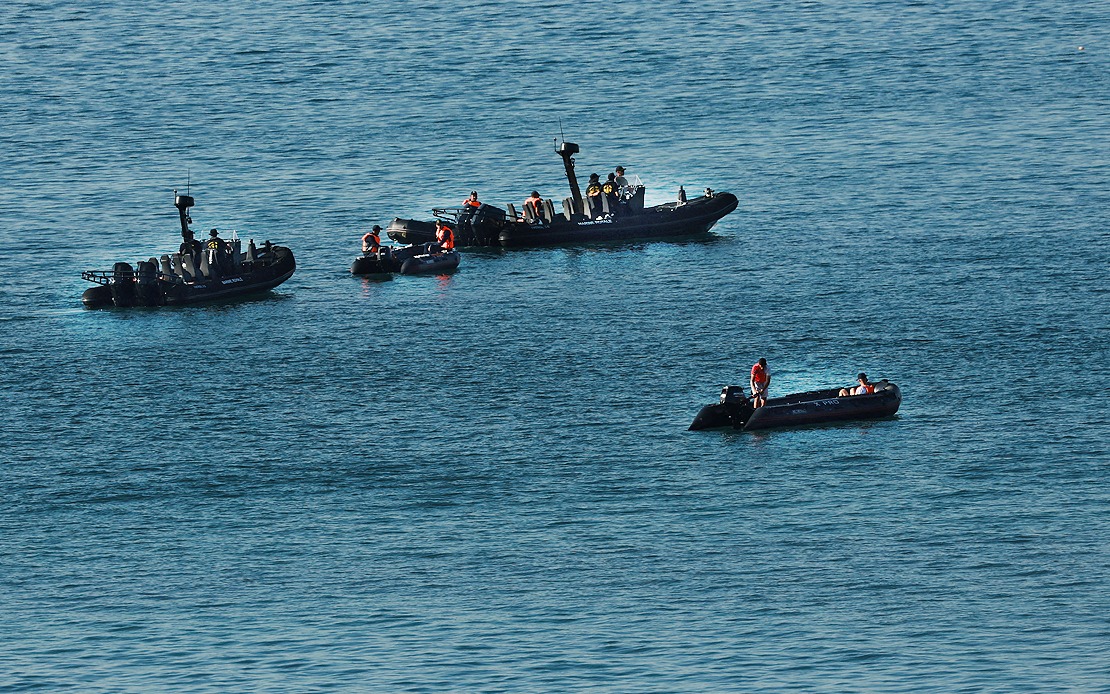
Rescue operations continue along the waters surrounding Ceuta as Spanish authorities grapple with the aftermath of an unprecedented migration crisis that saw tens of thousands of people attempt to enter the Spanish North African territory in recent days. The ongoing search efforts reflect the scale of the humanitarian disaster unfolding in the strategically important enclave, which sits on the Moroccan coast and serves as a gateway to mainland Europe for asylum seekers and migrants.
The confirmed death toll stands at 67 individuals who perished while attempting to swim from Morocco into Spanish territory. These fatalities represent only the bodies recovered so far; authorities fear additional victims may still be in the water or washed ashore in remote locations. The tragedy underscores the desperation driving migrants to risk their lives in potentially treacherous sea conditions, often without proper swimming ability or safety equipment.
Ceuta, home to approximately 85,000 residents, found itself overwhelmed when roughly 50,000 migrants and asylum seekers poured across the border from Morocco within a span of just a few days. This extraordinary influx—equivalent to more than half the city's entire population—created chaos at reception centres, border checkpoints, and along beaches where migrants attempted dangerous sea crossings. The sheer volume of arrivals strained every aspect of local infrastructure and emergency response capabilities.
In response to the unprecedented scale of potential casualties, local authorities have begun preparing a reception facility capable of handling up to 200 bodies. This grim preparation reflects official concerns that the death toll may rise as search efforts continue and additional remains are discovered. The establishment of such facilities, while necessary from a practical standpoint, symbolizes the catastrophic human cost of the migration crisis unfolding at Europe's doorstep.
The Spanish government has since reported that the majority of migrants who entered Ceuta have voluntarily returned to Morocco, suggesting either agreements reached between authorities or migrants recognising the limited opportunities available in the crowded enclave. However, this voluntary return has done little to mollify fierce criticism from fellow European Union leaders, who have targeted Spain's left-wing government for what they characterise as mismanagement of the situation. The political fallout extends beyond immediate recriminations, touching on deeper questions about border control, asylum policy, and the distribution of responsibility for migration pressures across the EU.
To prevent a recurrence of the crisis, Spanish authorities have begun installing physical barriers in the sea off Ceuta. Workers were observed installing buoys designed to create an underwater or surface-level fence that would make unauthorised sea crossings more difficult. This engineering solution addresses a specific legal vulnerability that experts believe contributed to the surge in crossing attempts.
The installation of these barriers is directly linked to a controversial Spanish Supreme Court ruling that created incentives for irregular entry through maritime routes. Under that decision, individuals who enter Spain through unauthorised border crossings via unfortified sections—particularly at sea—qualify for individual asylum assessments. This legal pathway stands in contrast to treatments of migrants apprehended at more heavily fortified land borders. Effectively, the court's ruling created a loophole whereby migrants who successfully crossed by sea gained stronger legal standing than those intercepted elsewhere.
By constructing physical barriers at sea, Spanish authorities aim to eliminate this advantage and reduce the attractiveness of maritime crossing attempts from the Moroccan coast. The strategy reflects a hard-line approach to border management that prioritises deterrence through physical infrastructure. Officials believe that removing the perceived legal benefit of sea crossings will discourage migrants from attempting the dangerous journey, thereby reducing both irregular entries and loss of life.
For Southeast Asian observers, the Ceuta crisis offers instructive lessons about migration pressures, legal frameworks, and the tensions between humanitarian considerations and border control. Malaysia and neighbouring countries face their own complex migration challenges, including irregular arrivals from Myanmar, Bangladesh, and other nations. The Spanish experience demonstrates how courtroom decisions on asylum access can unintentionally amplify irregular migration flows by creating legal incentives that migrants find attractive despite inherent dangers.
The tragedy also reflects the broader dysfunction in international migration management systems. When asylum seekers perceive limited legitimate pathways and face deteriorating conditions in origin countries, they increasingly resort to dangerous informal routes. The 67 deaths off Ceuta represent not mere statistics but failures of multiple systems—origin country governance, transit country cooperation, and destination country asylum policies.
Movement on the Ceuta question illustrates how European nations are progressively adopting deterrence-based approaches to migration control, from physical barriers to legal framework adjustments. Whether such measures effectively reduce irregular migration or merely displace flows to other routes remains contested among policy analysts. The construction of maritime barriers in Ceuta exemplifies this escalating technology of migration control, raising questions about feasibility and efficacy.
The political dimensions cannot be overlooked. Spain's handling of the Ceuta situation has exposed fissures within European Union policymaking on migration, with some nations advocating harsher controls while others emphasise asylum obligations. These divisions reflect deeper ideological disputes about Europe's role as a destination for global migrants and the balance between border sovereignty and humanitarian responsibility. The crisis has also complicated Spain's relations with Morocco, highlighting the critical role transit countries play in international migration management.

