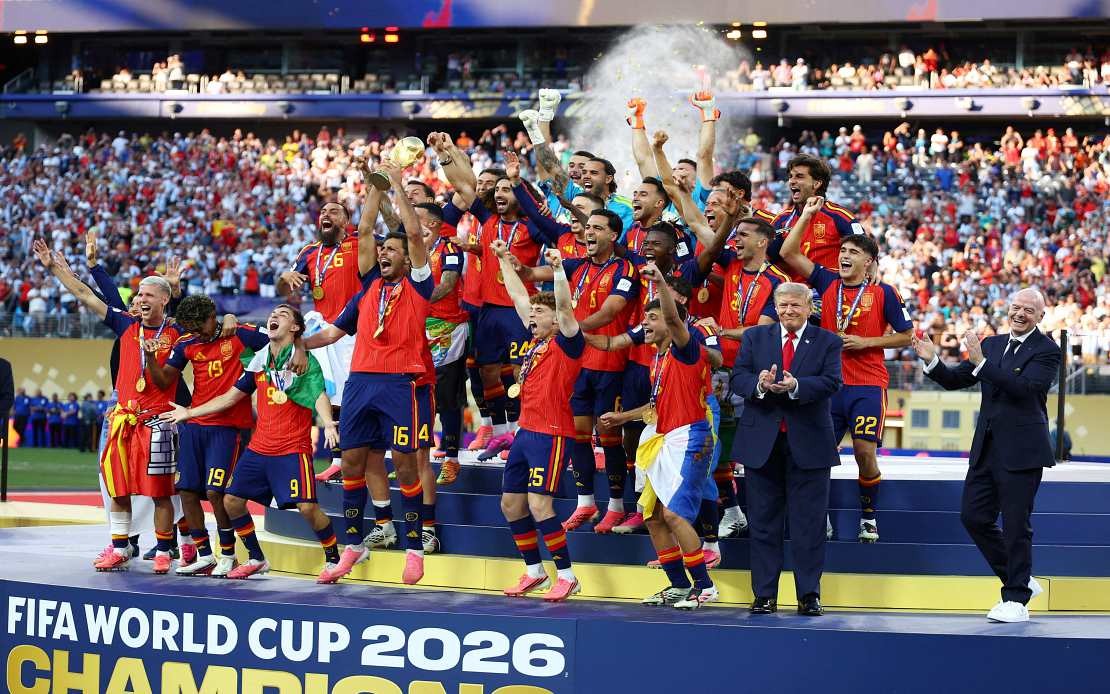
Spain's triumphant football squad is heading home Monday after capturing their second men's World Cup title, with Madrid bracing for one of the largest public celebrations in recent memory. The team, led by captain Rodri, is scheduled to land at Madrid airport at 12.50 pm local time, marking the beginning of a day-long series of festivities that will culminate in a major concert and public gathering.
The Spanish victory came at significant cost to their South American rivals, with Ferran Torres scoring the decisive goal during extra time against Argentina in the championship match held in the United States. The dramatic finish has galvanised national pride across Spain and among Spanish communities worldwide, with football fans already gathering in anticipation of the homecoming parade.
Following their arrival, the national team will proceed directly to the Royal Palace for an official reception hosted by King Felipe VI. This ceremonial component underscores the cultural significance of sporting achievement in Spanish national life, where major athletic triumphs traditionally receive formal recognition from the country's highest offices. The presence of the monarchy at such events reflects the unifying power of international competition and shared national accomplishment.
Prime Minister Pedro Sánchez witnessed the final match firsthand from the stadium in New Jersey, alongside members of the royal family. His subsequent message on X platform—stating "We Are World Champions. Our national team is tremendous"—captured the euphoria sweeping through government circles and the broader public consciousness. For political leaders, sporting victories offer rare moments of genuine national consensus, transcending the partisan divisions that typically characterise domestic politics.
The centrepiece of Monday's celebration will be an open-top bus parade through Madrid's central streets, where organisers anticipate attracting hundreds of thousands of spectators. Such processions serve multiple functions within the Spanish social fabric: they provide citizens with direct access to national heroes, create shared communal experiences, and generate powerful visual records of collective joy that reinforce national identity across generations.
Defender Marc Cucurella articulated the team's perspective on the homecoming, emphasising the importance of inclusive celebration. His comment that "many people couldn't be here and we want to celebrate with everyone" reflects awareness among the squad that their achievement belongs to the entire nation, not merely those fortunate enough to attend matches. This sentiment particularly resonates in an era when global media allows supporters worldwide to experience tournaments simultaneously, creating distributed fan bases across multiple continents.
The festivities will conclude at Cibales Square, where a significant entertainment programme has been organised. The main show is scheduled to commence at 6 pm, with team members expected to arrive several hours later at 9 pm. This extended timeline allows organisers to manage crowd flow and security while building anticipation throughout the afternoon—a carefully choreographed approach that has become standard practice for major public celebrations in European capitals.
Spain's World Cup victory represents their second title in the men's tournament, placing them among an exclusive group of football nations. The achievement comes amid broader European sporting dominance, with continental powers continuing to set the standard in international competition. For Malaysian observers, the Spanish success offers perspective on the level of infrastructure, investment, and systematic development required to maintain competitive excellence at the highest levels of global sport.
The timing of this homecoming also carries symbolic weight within the European sporting calendar. Football victories frequently occur during summer months when political attention often shifts elsewhere, yet the scale of public engagement suggests that this achievement transcends seasonal considerations. The convergence of royal acknowledgement, government presence, and anticipated grassroots celebration reflects how modern nation-states utilise sporting accomplishment as a mechanism for social cohesion and national self-affirmation.
From a Southeast Asian perspective, Spain's methodical approach to team management and their tournament success illustrate principles that regional football federations continue studying. The emphasis on systematic preparation, technical excellence, and institutional continuity—evident in the presence of established captain Rodri and coaching structures—contrasts with more volatile approaches sometimes observed in developing football nations. The homecoming celebration itself becomes part of this narrative, as public recognition of achievement reinforces the value placed on sporting excellence within Spanish society.

