Spanish Prime Minister Pedro Sanchez alleged on Monday that Russia and Israel had engaged in a coordinated disinformation campaign targeting Spain's migration policies, claims he connected to the recent spike in migrant crossings into the contested North African territory of Ceuta. While maintaining that Morocco bore no responsibility for spreading false narratives, Sanchez suggested that external state actors had manipulated public discourse around immigration to destabilise his government and the broader European Union.
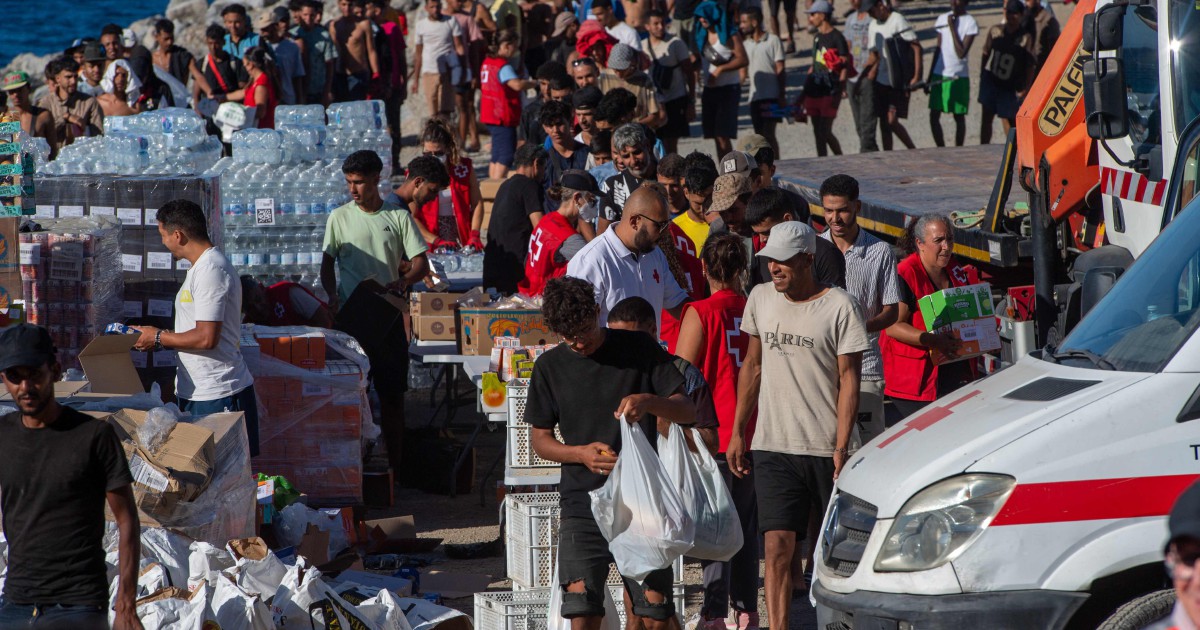
The Ceuta crisis, which unfolded last month, saw thousands of migrants, predominantly from sub-Saharan Africa, attempt to enter the Spanish enclave across the Moroccan border in a compressed timeframe. The sudden surge caught Spanish authorities off guard and created significant political pressure on Sanchez's administration, raising questions about border security, immigration policy effectiveness, and Spain's relationship with Morocco. The Spanish premier's identification of foreign interference now adds a geopolitical dimension to what initially appeared to be a humanitarian and administrative challenge.
Sanchez's allegations reflect broader concerns within European capitals about the exploitation of migration narratives by hostile state actors seeking to amplify social divisions and undermine democratic governments. Russia has long been documented by intelligence agencies and independent monitors as a source of sophisticated disinformation campaigns targeting Western nations, particularly those within NATO and the European Union. The Kremlin has repeatedly used migration-related content to inflame polarisation and sow discord among EU member states, treating the issue as a strategic vulnerability in the bloc's cohesion.
The inclusion of Israel in Sanchez's statement is noteworthy and potentially more controversial than the Russia accusation. Spain has faced mounting domestic pressure regarding its stance on the Israeli-Palestinian conflict, with substantial segments of Spanish society expressing pro-Palestinian sympathies. The Spanish government's positioning on Middle East matters has become increasingly fraught, and allegations of Israeli disinformation could interact with existing tensions between Madrid and Tel Aviv over geopolitical and humanitarian questions. Nevertheless, Sanchez provided limited specifics about the nature and scope of Israeli involvement, leaving room for interpretation and further scrutiny.
The timing of these accusations carries political weight within Spain's domestic context. Sanchez faces persistent criticism from both left-wing and right-wing opposition parties over his handling of migration issues, and framing the Ceuta crisis partly as a foreign interference problem potentially shifts blame away from governmental migration management. This rhetorical pivot allows the Spanish leadership to position itself as defending national sovereignty against external manipulation while maintaining its policy framework. However, such claims also risk appearing as deflection if substantiating evidence does not materialise or if the disinformation campaigns prove marginal to the actual causes of the migrant surge.
Spain's explicit exoneration of Morocco from disinformation involvement represents a diplomatic choice with significance for bilateral relations. Morocco had previously faced suspicion from Spanish analysts and media commentators of deliberately allowing or even facilitating migrant crossings as leverage in disputes with Spain over Western Sahara and other contentious issues. By clearing Morocco of disinformation charges, Sanchez preserved diplomatic channels and avoided escalating tensions with a key partner in Mediterranean security and counterterrorism cooperation. This distinction underscores that not all actors involved in the crisis are being treated equivalently, and that the Spanish government maintains confidence in certain relationships despite the instability.
The broader implications for Southeast Asian observers relate to how disinformation about migration, borders, and demographic change functions as a tool of state competition in an increasingly fractured international environment. Regional governments across Southeast Asia confront their own migration pressures, border management challenges, and susceptibility to foreign interference in digital spaces. The Spanish case illustrates that even wealthy, technologically advanced nations struggle to defend themselves against coordinated campaigns that exploit genuine policy disagreements and genuine humanitarian issues. Countries in the region managing irregular migration, refugee populations, and transnational human trafficking may extract lessons about the intersection of genuine crises and weaponised information.
Intelligence and security communities within Spain and across Europe would likely be conducting detailed technical analysis of disinformation patterns, source attribution, and dissemination networks to substantiate Sanchez's claims. Such investigations typically examine social media activity, funding trails, linguistic patterns, and coordination signatures that distinguish state-sponsored campaigns from organic content. The credibility of Sanchez's allegations would depend substantially on the quality and accessibility of evidence released to international partners and potentially to the public. Without transparent documentation, sceptics might reasonably question whether the accusations reflect established intelligence findings or political convenience.
The Ceuta migrant surge itself warrants separate analytical attention beyond the disinformation question. Thousands of individuals attempted entry into European territory within a brief window, suggesting either extraordinary coordination among migrants or extraordinary failure in Moroccan border control, or both. Understanding the actual mechanics of the crisis—whether migrants were transported in large groups, whether smuggling networks orchestrated the movement, or whether social media and word-of-mouth created a cascading effect—remains essential for evaluating Spain's policy responses and international assistance needs.
Moving forward, Sanchez's government will face pressure to elaborate on its disinformation claims through intelligence briefings to opposition parties, European partners, and potentially NATO allies. The credibility of Spanish strategic analysis depends on demonstrating that the attribution to Russian and Israeli actors rests on solid tradecraft rather than assumptions. Simultaneously, Spain must address the underlying vulnerabilities in its migration management and border security infrastructure that the Ceuta crisis exposed, irrespective of whether foreign disinformation played any role in triggering the initial surge.

