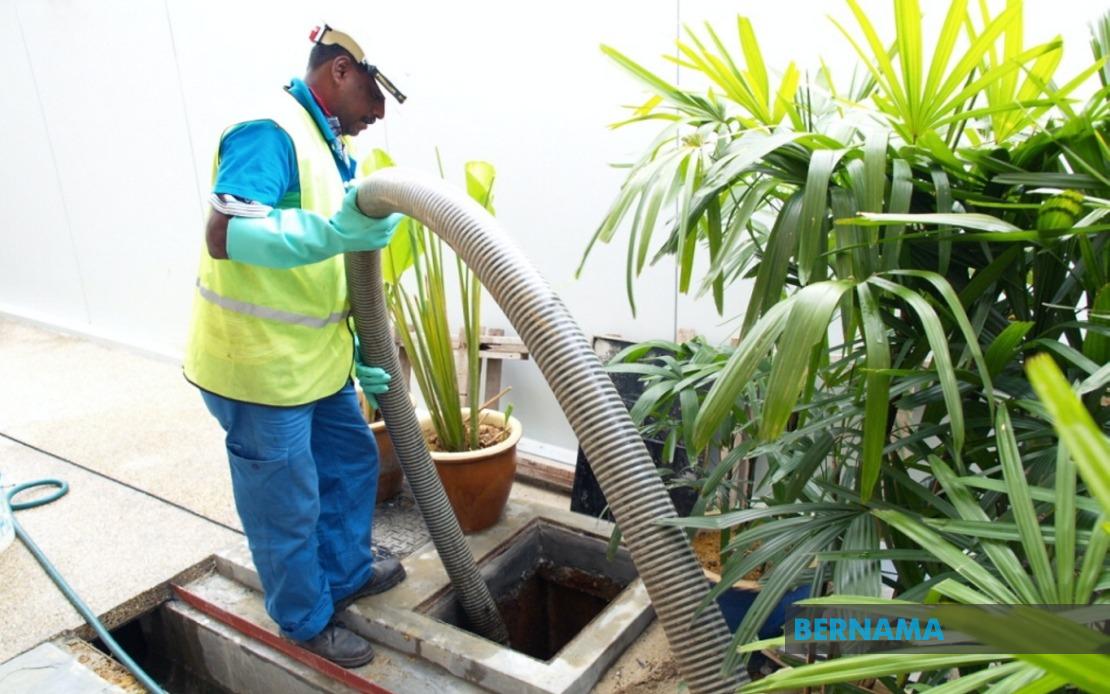
The National Water Services Commission (SPAN) has intensified its enforcement campaign against poor sanitation practices in Sungai Petani, issuing 270 compliance notices to property owners who have neglected septic tank maintenance. The crackdown, announced by SPAN's Operations Division Enforcement Section director Ainal Yusman Mohamad Yusop, represents a significant regulatory intervention in the Kedah town's business district, where aging infrastructure and prolonged maintenance lapses pose potential public health and environmental risks.
The enforcement action unfolded as part of Ops Padi 2, a multi-day inspection campaign that ran from August 4 to 6 and covered 341 premises across Sungai Petani's commercial and residential zones. Of these, 242 were classified as commercial establishments while 99 were domestic properties. All inspected premises had previously received formal notices from Indah Water Konsortium Sdn Bhd (IWK), the concessionaired wastewater treatment operator, requiring them to arrange septic tank emptying. The systematic approach reveals SPAN's determination to enforce compliance across both business and residential sectors, suggesting that the issue transcends specific property types and reflects broader municipal management challenges.
What emerged most strikingly from the inspections was the extent of deferred maintenance plaguing Sungai Petani's aging building stock. Many of the properties inspected date back to the 1970s and 1980s, an era when septic tank systems were often installed as standalone solutions before comprehensive wastewater networks became standard. Ainal Yusman disclosed that numerous premises had gone without proper septic tank servicing for a decade and a half, with some records indicating the last desludging occurred in 1997 or 1999—meaning certain systems had gone unattended for more than two decades. This extended period of neglect places these tanks at risk of structural failure, overflow, and contamination of surrounding soil and groundwater.
The regulatory framework underpinning SPAN's action derives from Section 65(1)(c) of the Water Services Industry Act 2006, which establishes a clear obligation for property owners to maintain their septic systems through licensed service providers or permit holders. This statutory requirement exists precisely because unmaintained septic tanks pose environmental and health hazards, particularly in densely populated urban areas like Sungai Petani where groundwater contamination could affect multiple households. By invoking this provision, SPAN signals that infrastructure maintenance is not discretionary or deferrable but a legal mandate binding on all property owners regardless of whether their premises are commercially operated.
The compliance notices themselves function as formal warnings with teeth. Property owners receiving a notice have fourteen days to respond and initiate septic tank emptying through a licensed operator. This grace period provides a clear, documented opportunity for voluntary compliance before more serious sanctions apply. For Malaysian business owners and property managers unfamiliar with wastewater regulations, the fourteen-day window represents a practical deadline for engaging contractors and scheduling desludging work, costs that many have evidently deferred for years.
Failure to comply with the compliance notice triggers a graduated enforcement sequence that moves from administrative warning to penal action. SPAN indicated that non-compliance would prompt follow-up notices of offence and potentially full investigations, actions designed to progressively pressure property owners into compliance. This escalation framework reflects standard regulatory practice, allowing room for good-faith compliance before resorting to prosecution. However, the ultimate sanction—a fine not exceeding RM50,000 under the Water Services Industry Act—signals serious consequences for persistent defiance, an amount substantial enough to motivate even reluctant property owners to arrange necessary maintenance.
The Sungai Petani enforcement drive carries implications for other Malaysian municipalities where similar patterns of septic tank neglect likely persist, particularly in older commercial districts and areas where wastewater infrastructure development occurred incrementally. The operation demonstrates SPAN's willingness to deploy comprehensive inspection campaigns and issue large-scale compliance notices rather than relying on sporadic complaint-driven enforcement. For property managers and business owners nationwide, the Sungai Petani case serves as a cautionary precedent that regulatory agencies are now actively identifying and pursuing non-compliant premises systematically.
The prevalence of decades-old septic tanks in Sungai Petani also reflects a broader challenge facing Malaysia's water and sanitation sector: the aging of constructed infrastructure without corresponding maintenance discipline. Many properties installed their septic systems decades ago, before modern wastewater concessions took over service delivery across the country. Property owners may view these systems as part of their original investment, paid for long ago, with costs for ongoing maintenance perceived as an unexpected burden. This mindset collision between past capital expenditure and ongoing operational obligations helps explain why enforcement becomes necessary—many owners simply have not internalized that septic tank servicing is a recurring expense, not a one-time capital cost.
The involvement of Indah Water Konsortium, the major concessionaired wastewater treatment provider in Malaysia, underscores that IWK had already issued preliminary notices before SPAN's compliance notices arrived. This sequential approach suggests coordination between the concessionaire and the regulator: IWK identifies non-compliant premises and issues formal notices, while SPAN follows up with enforcement action when property owners ignore IWK's initial demands. Such coordination can prove effective in ensuring that regulatory messages reach non-compliant parties through multiple channels and generate cumulative pressure for compliance.
For Southeast Asian property owners watching Malaysian regulatory developments, the Sungai Petani operation demonstrates growing enforcement muscle in the region's water services sector. As countries in Southeast Asia expand their regulatory frameworks for water and sanitation, similar enforcement campaigns may become routine. Property owners in Malaysia and the region should recognize that environmental and sanitation regulations are transitioning from advisory guidelines to actively enforced legal obligations, with financial penalties for non-compliance becoming genuine threats rather than theoretical warnings.
Moving forward, the effectiveness of SPAN's Sungai Petani campaign will depend partly on whether property owners actually comply within the fourteen-day window and whether SPAN follows through with announced consequences for those who do not. If compliance proves low and SPAN issues the threatened notices of offence and investigations, the precedent will signal to Malaysian property owners that these regulations bite. Conversely, if most property owners comply after receiving notices, it will suggest that clearly communicated enforcement action, even without prosecution, can reshape behavior effectively. Either outcome will likely influence how Malaysian municipalities and other regional authorities approach future infrastructure compliance challenges in aging commercial districts.

