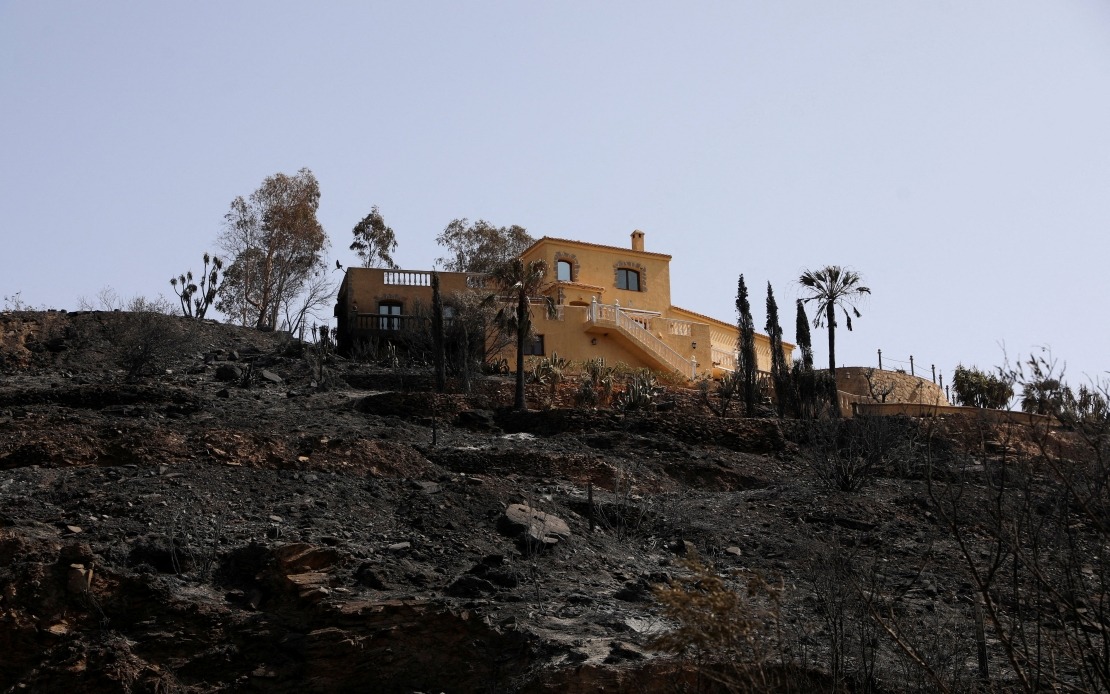
A destructive wildfire raging across Spain's Almeria province in the southern autonomous community of Andalusia has claimed 13 lives, with authorities announcing on Sunday that the uncontrolled blaze has been stabilised after burning across vast tracts of countryside since Thursday. The announcement marks a critical turning point in the emergency response, though officials cautioned that extensive work remains before the fire can be fully extinguished and declared completely under control.
The incident began near the Los Gallardos municipality, a rural area in Almeria, and rapidly expanded to consume approximately 7,000 hectares of vegetation and grassland. The sheer scale of the conflagration overwhelmed initial containment efforts, requiring the deployment of extensive firefighting resources and prompting mass evacuations throughout the region. Seven individuals remain hospitalised for fire-related injuries, with three in serious condition requiring intensive medical care.
According to Spain's state-run broadcaster RTVE, a significant portion of those impacted by the disaster are foreign nationals, underscoring the international dimensions of the tragedy. Ten people are still officially registered as missing, intensifying concerns among emergency responders and families as search efforts continue across the charred landscape. The composition of the affected population reflects the broader demographic reality of southern Spain, where international workers and residents form substantial communities in rural and agricultural areas.
The stabilisation of the blaze has enabled regional authorities to modify their emergency protocols substantially. Having previously maintained strict containment zones with approximately 1,600 residents evacuated from the surrounding area, officials authorised roughly 600 individuals to return to their homes on Saturday. Following the formal stabilisation announcement, the remaining approximately 1,000 evacuees received clearance to begin returning, a process that will likely proceed gradually as safety assessments continue across affected communities.
Investigators are actively pursuing multiple hypotheses regarding the fire's origin, though preliminary evidence suggests that the failure of electrical infrastructure may bear primary responsibility. The leading theory posits that the collapse of an electricity pole or associated power cables sparked the initial ignition, though conclusive determination awaits completion of forensic examinations at the burn site. Such findings would carry significant implications for infrastructure maintenance protocols throughout Andalusia's electrical grid.
Juanma Moreno, the head of Andalusia's regional government, delivered stark assessments during Sunday's briefing, declaring the wildfire the most severe incident in the autonomous community's recent history. He confirmed that the fire had ceased advancing and remained contained within established perimeters, yet emphasised that substantial firefighting and monitoring operations would continue indefinitely. His remarks underscored the unprecedented nature of the disaster within the regional context, signalling both the severity of this particular event and broader systemic concerns.
Moreno's commentary extended beyond immediate emergency management to encompass climate considerations, urging both the general public and governmental institutions to regard climate change with heightened seriousness. He articulated the emerging reality that climatic shifts are fundamentally altering wildfire dynamics across Mediterranean Europe, creating meteorological and environmental conditions that generate increasingly unpredictable and massive conflagrations. These wildfires are demanding ever-greater firefighting resources, professional expertise, and inter-agency coordination.
The Almeria wildfire arrives amid a broader pattern of intensifying fire activity throughout southern Europe and the Mediterranean region. Climatic transformations are generating hotter, drier conditions during summer months, extended drought periods, and more volatile weather patterns that collectively favour rapid fire spread and severely hamper suppression efforts. The challenge facing Spanish and European authorities transcends any single incident, reflecting a structural shift in environmental conditions that will likely persist and intensify throughout coming decades.
For Malaysia and Southeast Asia, the Spanish catastrophe presents cautionary lessons regarding climate vulnerability and disaster preparedness. While the region confronts distinct environmental challenges, including tropical fire risks during severe El Niño episodes and transboundary haze from peatland burning in Indonesia, the principle remains universal: climatic destabilisation is fundamentally altering the frequency, intensity, and geographic distribution of natural disasters. Regional governments must accordingly invest in enhanced firefighting capabilities, improved early warning systems, coordinated cross-border protocols, and climate adaptation strategies.
The incident furthermore highlights the essential role of robust emergency communication infrastructure and evacuation planning in mitigating casualties during large-scale environmental disasters. The relatively successful evacuation of approximately 1,600 people, notwithstanding the tragic loss of life, suggests effective coordination among Spanish authorities. Malaysia and its neighbours would benefit from comparable investments in disaster management frameworks, particularly as climate change increases the frequency of extreme events that demand rapid, coordinated responses across multiple jurisdictions and institutional boundaries.
As recovery operations continue in Almeria, the human, ecological, and economic costs of the disaster will crystallise over subsequent weeks and months. Beyond the immediate fatality count and hospitalised injured, affected communities face displaced populations, environmental degradation, agricultural losses, and psychological trauma. The broader Spanish society confronts questions about infrastructure resilience, fire prevention methodologies, and whether existing disaster management frameworks adequately prepare the nation for increasingly frequent and severe environmental emergencies in an era of accelerating climate change.

