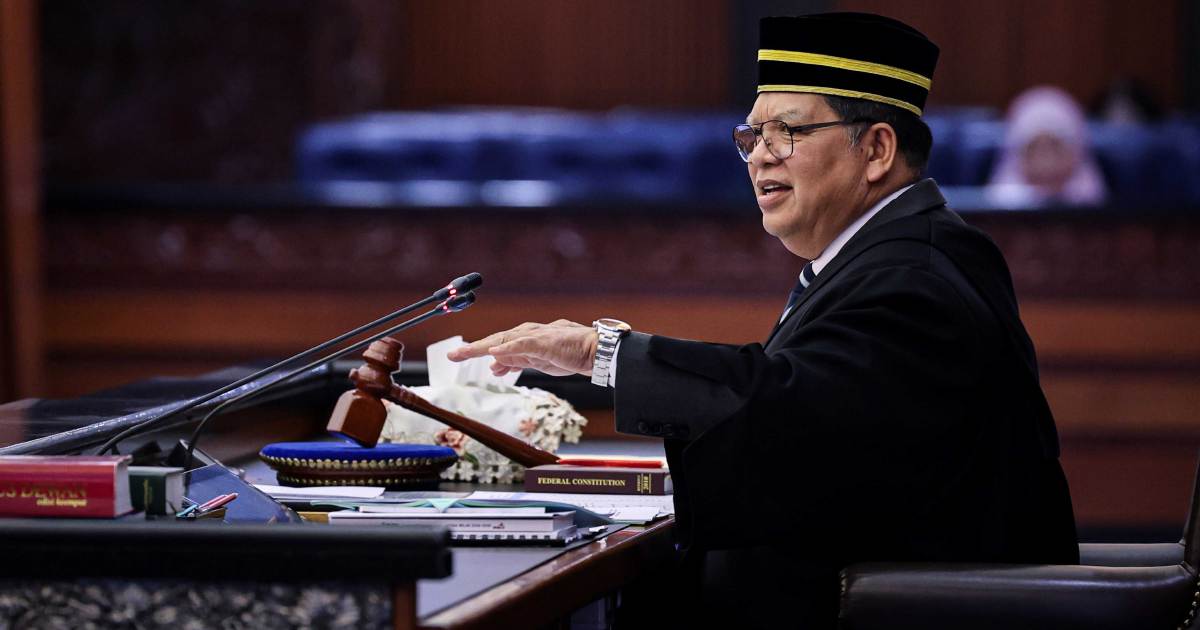
The Speaker of Dewan Rakyat, Tan Sri Johari Abdul, has issued a forceful reminder to members of parliament that regular attendance at legislative sittings remains a fundamental obligation of their elected office. His warning underscores growing concerns about parliamentary discipline and the need for elected representatives to fulfil their constitutional duties with consistency and commitment.
Missing parliamentary sessions without acceptable justification represents a breach of the trust that constituents place in their representatives when voting them into office. In a functioning democracy, the presence of elected members during legislative debates, voting, and deliberations is essential to the legitimacy of parliamentary proceedings. When MPs absent themselves without valid reason, they effectively abandon their responsibility to represent their constituencies on matters of national importance.
The Speaker's intervention reflects a broader institutional concern about attendance patterns at legislative sittings. Parliamentary records have shown variable attendance across different sessions, with some members frequently absent despite the critical nature of matters being debated. This inconsistency undermines the effectiveness of parliament as a check on executive power and dilutes public confidence in the legislative process. Constituents expect their elected representatives to be physically present when crucial decisions affecting their livelihoods are being made.
Valid reasons for absence typically include serious illness, family emergencies, official government duties, or other extraordinary circumstances. Parliament has established frameworks for members to formally notify the Speaker's office when they cannot attend, ensuring that legitimate absences are properly documented. However, unexplained or frequent absences suggest a lack of commitment to parliamentary responsibilities and raise questions about an MP's priorities and dedication to public service.
The enforcement of attendance rules falls primarily on the Speaker, who possesses the authority to document absences and, in certain circumstances, refer the matter to the Privileges Committee for investigation. The Speaker's public statement serves as notice that the institution is monitoring attendance patterns and will not tolerate casual disregard for parliamentary obligations. This mechanism exists to maintain standards and hold members accountable to both their constituents and their parliamentary colleagues.
Malaysia's parliamentary system depends on robust participation from all elected members to function effectively. When legislative sessions proceed without full attendance, discussions may lack diverse perspectives that MPs from different regions and political backgrounds can contribute. Debate quality suffers, decision-making becomes less representative of the broader parliament, and the outcomes may not adequately reflect the complexity of issues being addressed. An MP's physical presence is not merely symbolic—it signals genuine engagement with the legislative agenda.
Beyond institutional concerns, chronic absenteeism raises practical questions about how effectively an MP can serve constituency interests. Representatives who rarely appear in parliament struggle to build the relationships necessary to advocate for their constituents' concerns or to secure amendments to legislation that might benefit their districts. They become sidelined in informal networks where key decisions about policy direction are sometimes shaped before formal votes are held. Their constituents effectively lose their voice in parliamentary proceedings.
The Speaker's reminder also implicitly addresses expectations about professionalism in public office. Elections to parliament represent a significant privilege, with successful candidates chosen from among thousands of potential candidates. The responsibility accompanying this privilege includes regular attendance at the institution unless genuinely prevented. Selective participation or treating parliamentary obligations as optional responsibilities contradicts the gravity of representing a constituency and contributes to public cynicism about whether elected officials truly prioritise public service.
Enforcement of attendance rules ultimately protects the institution's credibility and the democratic process itself. When parliament allows members to frequently miss sittings without consequences, it signals that the work of the institution is not serious business—a message that resonates poorly with voters who expect their representatives to treat office with appropriate gravity. Conversely, consistent enforcement sends the message that parliamentary service carries genuine obligations and that members will be held accountable for fulfilling them.
The Speaker's statement represents an important institutional assertion that parliament operates under defined rules that apply equally to all members, regardless of political affiliation or seniority. This equalisation of expectations reinforces parliamentary norms and helps prevent the emergence of a two-tier system where some members are permitted greater latitude in attendance while others face stricter scrutiny. Consistent application of attendance standards is fundamental to maintaining the legitimacy and effectiveness of Malaysia's legislative branch.