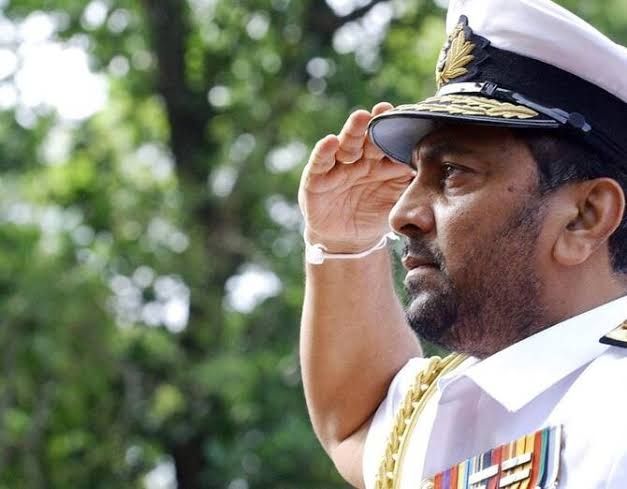
Retired Admiral Wasantha Karannagoda, the 73-year-old former commander of Sri Lanka's navy, has been taken into custody by the country's Bribery Commission following allegations that he facilitated the illegal recruitment of Yoshitha Rajapaksa, son of ex-president Mahinda Rajapaksa, into the armed forces without meeting established qualification requirements. The arrest on Friday represents a significant escalation in the government's scrutiny of the Rajapaksa family and their associates, particularly under the watch of President Anura Kumara Dissanayake, who assumed office in September 2024 after campaigning on a platform of institutional reform and accountability.
The specific charge centres on events dating back to 2006, when Karannagoda allegedly used his influence as navy commander to enable Yoshitha Rajapaksa's enlistment. The recruitment appears to have been the first step in a wider pattern of preferential treatment, as the younger Rajapaksa subsequently received overseas military training funded through questionable means. The Bribery Commission's statement emphasised that Karannagoda had "committed the offence of corruption in the recruitment and training of Yoshitha Rajapaksa," underscoring the institutional nature of what investigators characterise as improper conduct.
Karannagoda occupies a significant position within Sri Lanka's recent military history. He served as navy commander during the concluding phase of the country's protracted conflict with Tamil separatist forces, remaining in post when the civil war formally ended in 2009. His tenure spanned a period marked by intense international scrutiny regarding military conduct, and his continued elevation—he was promoted to Admiral of the Fleet in 2019—reflected the political influence retained by figures from that era under previous administrations. He currently holds no active operational role within the naval establishment.
The arrest must be understood within the broader context of renewed legal action against the Rajapaksa family following the electoral success of President Dissanayake's party. During the presidency of Gotabaya Rajapaksa, Mahinda's younger brother, several cases against the family were shelved or dropped, including murder charges against Karannagoda himself dating from October 2021. The political shift that brought Dissanayake to power has created space for prosecutors to resurrect these investigations and pursue new charges, signalling a fundamental recalibration of judicial independence.
Yoshitha Rajapaksa himself remains entangled in multiple legal proceedings. The 38-year-old is currently out on bail following his arrest last month related to allegations that he misappropriated state resources to fund his attendance at Britain's naval training institution, the prestigious Royal Naval College Dartmouth. Prosecutors are treating this as a case of embezzlement by a public servant's family member, with the training fees sourced from government expenditure. Beyond this, Yoshitha faces additional charges concerning the unexplained sources of wealth used to purchase property while his father held the presidency between 2005 and 2015—a period during which Rajapaksa wielded considerable executive authority.
The explanation offered by Yoshitha Rajapaksa for his financial position has proven unconvincing to investigators. He claimed to investigators that capital for the property purchase derived from the sale of gemstones gifted to him by his paternal grandmother, a source that promptly unravelled under scrutiny. When questioned, the elderly benefactor proved unable to account for how she had originally acquired the valuable stones, creating a chain of unexplained ownership that prosecutors have seized upon as indicative of illicit enrichment.
Karannagoda's legal jeopardy extends well beyond the corruption charge related to Yoshitha's recruitment. The former naval chief faces serious allegations of involvement in extrajudicial executions and war crimes, having been formally sanctioned by the British government in March 2025 over accusations of human rights abuses and extrajudicial killings. He confronts separate conspiracy to murder charges stemming from the deaths of eleven young men between 2008 and 2009, a critical period at the tail end of the civil conflict when control over security forces gave senior military commanders considerable power.
The trajectory of these murder charges illustrates the political contingency that has long characterised Sri Lankan justice. Initially dropped during Gotabaya Rajapaksa's tenure as president, they were revived once Dissanayake took office, demonstrating how prosecutorial zeal has historically fluctuated with changes in political leadership. The president's explicit campaign commitment to resolving longstanding high-profile crimes has provided political cover for these revivals, even as they expose the selective nature of accountability mechanisms.
The Rajapaksa family's legal troubles extend well beyond Yoshitha and the elderly ex-president himself. Gotabaya Rajapaksa, now restricted from international travel, faces scrutiny over alleged connections to the 2019 Easter Sunday bombings, a coordinated attack that claimed 279 lives and represented one of Sri Lanka's most devastating terrorist incidents in recent memory. Multiple family members and close associates have accumulated criminal charges covering various categories of offence, though these cases have languished in the court system pending resolution. The reinvigoration of these prosecutions reflects broader institutional shifts under the current administration.
For regional observers in Malaysia and Southeast Asia, the Karannagoda arrest carries implications beyond Sri Lanka's borders. The case exemplifies how post-conflict societies struggle to establish mechanisms for retrospective accountability when security forces retain political influence. It raises questions about the durability of judicial independence when prosecution strategies shift markedly with changes in electoral outcomes. The Rajapaksa saga also demonstrates how authoritarian-era networks of patronage and resource diversion become entrenched within institutional structures, requiring sustained political will to dismantle.
The arrest of such a high-profile military figure signals that President Dissanayake's government possesses either genuine commitment or at least sufficient political capital to pursue former defence establishment figures, a threshold many post-authoritarian governments struggle to meet. Whether these prosecutions ultimately secure meaningful convictions and restitution, or whether they too eventually succumb to political compromise or legal delays, remains uncertain. The coming months will test both the institutional capacity of Sri Lankan courts and the staying power of reform-minded governance.

