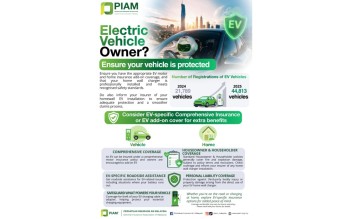
Malaysians with electric vehicles who have installed home charging equipment can take reassurance from industry guidance confirming that standard fire and property insurance policies extend protection against EV-related fire damage. The General Insurance Association of Malaysia (PIAM) has clarified the coverage landscape following a high-profile incident in Cheras where a residential EV charger sparked a blaze causing significant property destruction, raising fresh questions among homeowners about their financial exposure to such emerging risks.
According to PIAM chief executive officer Chua Kim Soon, conventional house owner and fire insurance policies provide coverage for fire-related losses stemming from any ignition source, provided that policyholders maintain compliance with their policy terms and do not engage in fraud or intentional damage. This principle applies even when the fire originates from modern charging infrastructure, a category of home equipment that many insurers are still refining coverage parameters around. The crucial condition, however, is that no policyholder misconduct or deliberate acts triggered the incident, and that the property owner has not breached underlying policy obligations.
The classification of EV charging equipment within the insurance framework depends on the installation type. Permanently installed, hard-wired chargers that are affixed to the property structure typically qualify as fixtures and fittings under the buildings component of residential fire policies. This means they receive similar treatment to other integrated home systems like electrical wiring, plumbing, and built-in appliances. By contrast, portable or unattached charging cables and temporary charging units generally fall outside standard home insurance and instead require coverage under specialised electric vehicle motor policies or supplementary add-on packages that insurers have begun offering to accommodate growing EV ownership across Malaysia.
Homeowners bear a responsibility to implement reasonable precautions and uphold electrical safety standards when operating charging equipment, an obligation that forms part of most insurance contracts. When evaluating claims arising from EV charger incidents, insurers will scrutinise official investigation reports from fire departments and electrical safety authorities to determine whether the loss resulted from negligence, improper installation, non-compliance with building regulations, or deliberate wrongdoing. Uncertified electrical modifications or unlicensed installation work can invalidate claims, making it essential for property owners to engage qualified professionals for any permanent charger setup.
Chua stressed the importance of proactive disclosure, recommending that homeowners formally notify their insurers whenever they install a permanent EV charging system. This transparency serves multiple purposes: it enables insurers to update their understanding of the property's total insurable value, ensures that the sum insured accurately reflects current rebuilding costs inclusive of any electrical infrastructure upgrades, and creates a clear audit trail during the claims process. Failure to declare such modifications can create disputes at claims time, potentially leading to coverage denials or reduced payouts.
Propertyowners should also conduct a thorough review of their existing home insurance declarations to verify that the sum insured amount adequately covers the cost of completely rebuilding their residence in today's market. Home improvements, modern fixtures, and infrastructure additions like EV charging systems can substantially increase a property's replacement value, and outdated insurance limits may leave gaps in coverage if a major loss occurs. This is particularly relevant for Malaysian homeowners who have made substantial renovations or technological upgrades in recent years.
Another critical consideration centres on public liability exposure, a dimension that takes on heightened importance in Malaysia's common residential layouts. In terraced houses, semi-detached homes, and high-rise apartment blocks, an electrical fire originating from one unit's charging system could spread to neighbouring properties, creating liability for the owner whose equipment triggered the damage. While standard house owner policies typically provide a baseline public liability limit of RM50,000, policyholders facing elevated risk exposure can purchase optional coverage extensions to raise these limits, potentially to RM100,000 or higher depending on their insurer's offerings and their assessment of their property's susceptibility to loss spreading.
EV owners should undertake a comprehensive audit of both their motor and residential insurance policies to identify and close any coverage gaps. The dual exposure—protecting the electric vehicle itself and the permanent charging infrastructure at home—requires coordinated protection across two distinct policy types. Some gaps may exist if an owner assumes that their motor policy covers the charger when it actually falls outside that policy's scope, or conversely, if they believe their home policy covers portable charging equipment when it does not. Clarifying these boundaries with their insurer prevents expensive surprises during claims settlement.
The emergence of EV-related insurance considerations reflects Malaysia's gradual transition toward electric mobility. As EV adoption accelerates in Malaysia and across Southeast Asia, the insurance sector continues evolving its product offerings and underwriting criteria to accommodate charging-specific risks. Homeowners installing chargers now have the opportunity to establish clear insurance arrangements while the market remains relatively early in this transition, potentially avoiding complications that may arise later as claims experience accumulates and insurers refine their terms.

